Voyager 1 Nears One Light-Day: Thrusters, Power and the Big Bang
The short version
Voyager 1, launched on September 5, 1977, is about to reach one light-day from Earth, expected at 2:16 a.m. Pacific time on November 18, 2026. The video traces the recent problems the mission team has handled: the 2023 data fault, the revived roll thrusters in March 2025, the February 2026 power drop, and the April 2026 shutdown of the LECP instrument. It also explains the "Big Bang" power-saving maneuver, tested on Voyager 2 and described as still to come for Voyager 1.
Full written account
On November 18, 2026, at 2:16 a.m. Pacific time, Voyager 1 will be exactly one light-day from Earth, about 16 billion miles away. A radio signal sent at that instant takes 24 hours to arrive, and a reply takes another 24. The spacecraft is 49 years old, and the video says no human-made object has reached that distance.
Launch and the choice of Titan
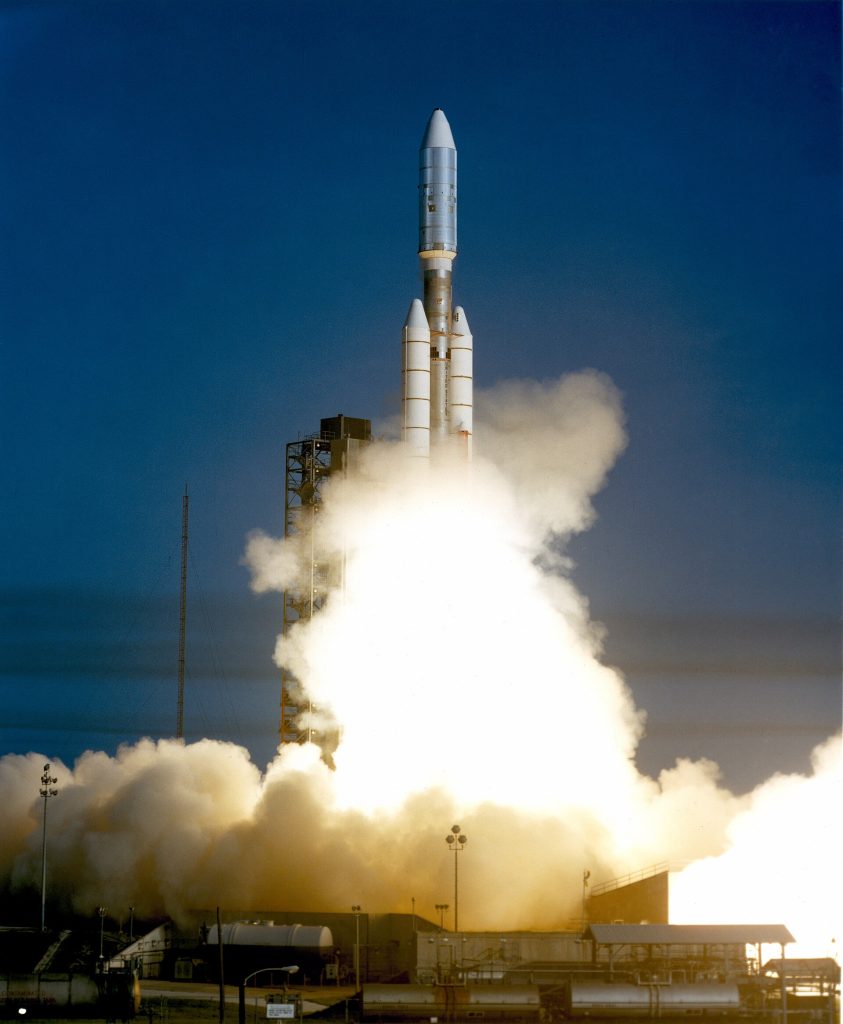
Voyager 1 launched on September 5, 1977, from Florida for a tour of Jupiter and Saturn. It reached Jupiter in March 1979 and Saturn in November 1980. At Saturn, planners chose a close pass of Titan over a path toward Pluto. That bent its trajectory upward and ended further planetary flybys. In August 2012 it crossed the heliopause and became the first human-made object to enter interstellar space. It has left the heliosphere but not the solar system.
A shrinking power supply
Three radioisotope thermoelectric generators power the craft. They produced about 470 watts at launch and lose roughly 4 watts a year. Of ten instruments, seven have been shut down. The cosmic ray subsystem was switched off in early 2025, and the LECP followed in April 2026.
The surprises
In November 2023 Voyager 1 stopped sending usable data because a memory chip had failed. With no spare, engineers split the code into pieces stored in different parts of the remaining memory, and clear science data returned by April 2024.
In early 2025 the backup roll thrusters were clogging with residue. The primary set had stopped working in 2004, and engineers had concluded its heaters failed. Someone asked whether a glitch had instead flipped a switch and cut power to the heaters. There was a risk of a small explosion if the fuel lines had not warmed. The Canberra antenna, Deep Space Station 43, was due to go offline for an upgrade starting in May 2025. Commands were sent, and on March 20, 2025, data showed the heater temperature rising. Todd Barber, who led the propulsion team, said the thrusters had been considered dead and that this was a legitimate conclusion.
On February 27, 2026, during a planned roll for magnetometer calibration, power levels dropped. The video says NASA has not fully explained the cause. On April 17, 2026, NASA announced the shutdown of the LECP, which NASA said should buy about one year. Mission manager Kareem Badaruddin said turning off an instrument is nobody's preference but was the best option available. A half-watt motor was left powered so the instrument could be revived.
The Big Bang
The "Big Bang" turns off power-hungry devices and at the same moment turns on lower-power alternatives, so the spacecraft stays warm. It was tried first on Voyager 2, in July 2026, and NASA announced on August 4 that it worked. It involved turning off two heaters and a digital tape recorder. The video says it had not seen an announcement that the maneuver was completed on Voyager 1. If it works, engineers believe it could free enough power to turn the LECP back on.
The light-day
Project manager Suzy Dodd said a command sent at 8 on a Monday morning would be answered at about 8 on Wednesday. Voyager 1 travels at about 38,000 mph. The video says the generators will probably run out of usable power sometime in the 2030s, and the team hopes to keep both Voyagers running through their 50th anniversaries in 2027.
Questions this video answers
When will Voyager 1 reach one light-day from Earth?
At 2:16 a.m. Pacific time on November 18, 2026 (1016 UTC), at about 16 billion miles.
What is the Big Bang maneuver?
A single coordinated move that turns off power-hungry devices and turns on lower-power alternatives, such as heaters, so the spacecraft stays warm using less electricity.
Has the Big Bang been done on Voyager 1?
The video says it had not seen an announcement that it was completed on Voyager 1. It was done on Voyager 2 in July 2026, and NASA announced on August 4 that it worked.
Which instruments still run on Voyager 1?
After the LECP shutdown, the magnetometer and the plasma wave subsystem.
How did engineers revive the thrusters?
They considered that a glitch had flipped a switch and cut power to the heaters of the primary roll thrusters, then sent commands; on March 20, 2025 the heater temperature was seen rising.
Explore related missions
Connected by the topic: Voyager and Grand Tour probes