Voyager 1 and 2: Planetary Flybys and the Road to Interstellar Space

The short version
A documentary tracing the Voyager probes from their 1977 launches through flybys of Jupiter, Saturn, Uranus and Neptune to their journey beyond the heliosphere. It covers the near-failures at launch, the discoveries on the giant planets and their moons, the Family Portrait image, and the gradual shutdown of instruments as power declines.
Full written account
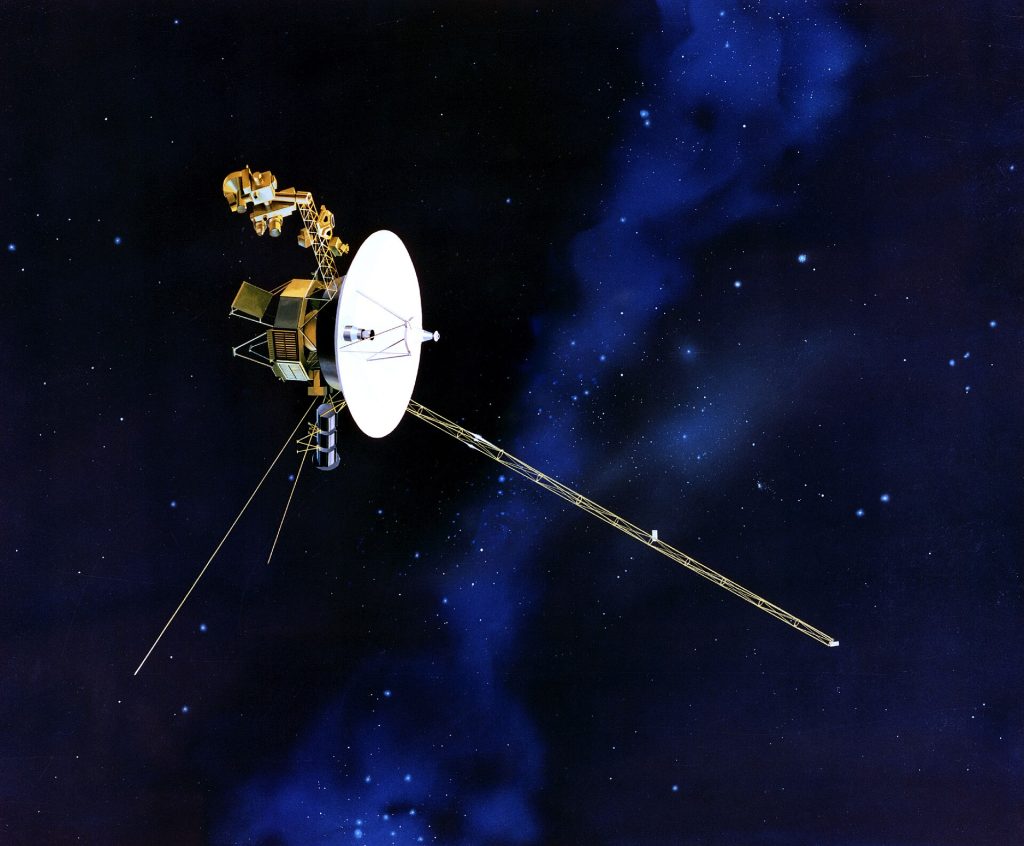
Voyager 1 is about 24 billion kilometers from Earth, and by the video's account it is currently 170 astronomical units from the Sun, a distance growing by 61,000 km every hour. Voyager 2 is closer, at roughly 142 astronomical units. The two identical NASA probes, launched in 1977, were built to explore Jupiter, Saturn, Uranus and Neptune, and went on to become the first spacecraft to study the boundaries of the heliosphere.
Why two probes
The mission was inspired by a planetary alignment in the late 1970s, when Jupiter, Saturn, Uranus and Neptune lined up on one side of the Sun. That made it possible to visit all four in a single mission, using gravitational maneuvers to gain speed. The original plan called for four spacecraft, with a program that also included Pluto. Because of financial difficulties the project was scaled back to two identical spacecraft, built using experience from the Mariner program.
Launch and the first months
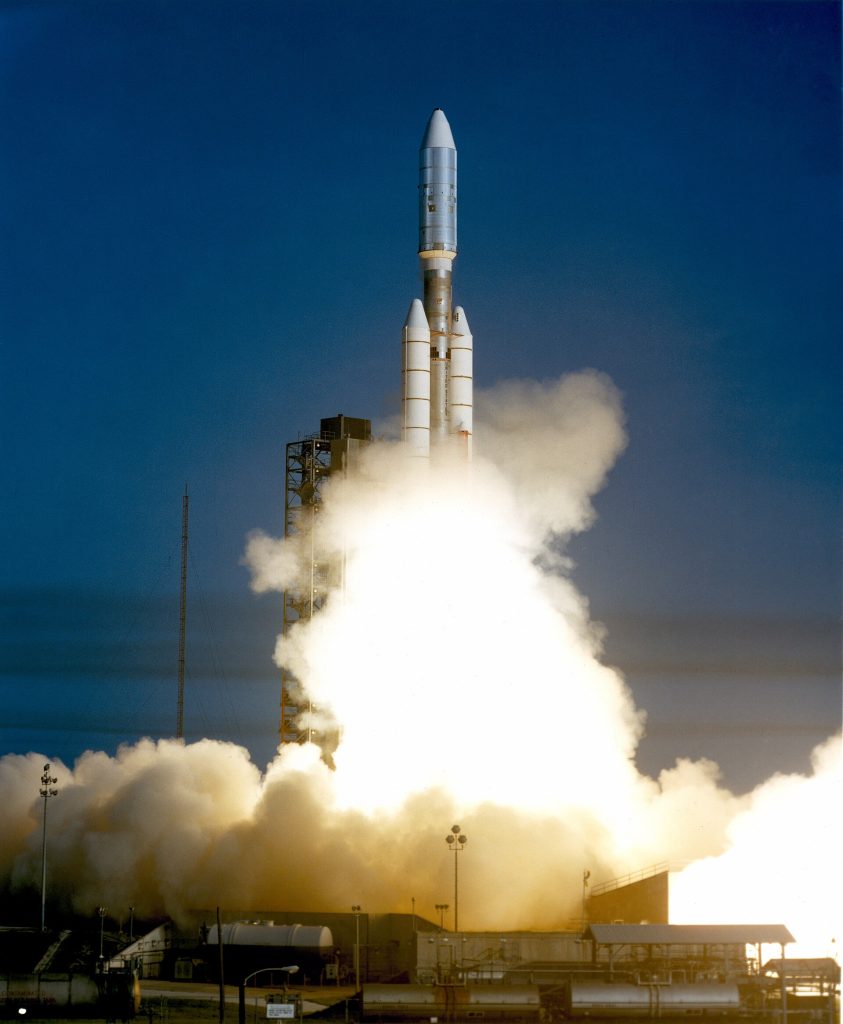
Voyager 2 took off on August 20, 1977. After it left the atmosphere, some systems stopped responding and the trajectory deviated significantly from plan. The software randomly switched off certain systems or put them into backup modes, but engineers regained control and stabilized the flight path.
Voyager 1 was launched on September 5, 1977. Instruments showed a significant leak in the fuel line, and the first stage could not reach sufficient velocity in time. A reserve of 500 kg of fuel placed the spacecraft in its intended orbit. According to NASA staff, the mission was just 3.5 seconds from disaster.
Despite its two-week head start, Voyager 2 was overtaken by Voyager 1 on December 19, 1977, shortly after both reached the asteroid belt, though the two were millions of kilometers apart. In the belt, Voyager 2's main radio transmitter failed, and a backup unit handled communications for the rest of the mission.
Jupiter and its moons
Voyager 1 began observing Jupiter on January 6, 1979. Its two cameras, each able to switch between light filters, gave astronomers their first proper look at the Great Red Spot, a storm raging for over three centuries and large enough to swallow an Earth-sized planet. Radio waves picked up by the antennas and converted to sound became the first voice of space heard on Earth.
On March 5, 1979, at 24 km/s, Voyager 1 passed the moons:
- Amalthea: a dark crimson surface, with temperatures of 90 to 165 K.
- Io: active volcanoes, with jets of liquid sulfur dioxide reaching up to 500 km.
- Europa: icy plains crisscrossed by fissures; the images prompted the hypothesis of a hidden ocean.
- Ganymede: the largest moon in the solar system, 8% larger than Mercury, with its own magnetic field.
- Callisto: multi-tiered craters known as sulci.
Saturn and Titan
Voyager 1 began observing Saturn on August 22, 1980. Mission organizers faced a choice: a close approach to Titan would rule out later visits to Uranus and Neptune. Titan was given priority. On November 12, 1980, Voyager 1 passed about 6,500 km above the haze. Its cameras could not see the terrain, but light and radio signals passing through the atmosphere showed a density 1.5 times that of Earth's, a surface temperature of 94 K, and an atmosphere of 98.4% nitrogen and 1.6% methane. The data underpinned the hypothesis of hydrocarbon seas, later confirmed. The deflection of the trajectory also gave Titan's mass, 80% greater than the Moon's.
The maneuver took Voyager 1 beyond the ecliptic plane, ending any chance of visiting Uranus and Neptune.
Voyager 2 reached the Saturn system on August 22, 1981, on a different path that took in Titan, Hyperion, Enceladus, Iapetus and Pandora, and the pair Helene and Dione, which share one orbit. Near Saturn, the camera platform stuck because of a frozen bearing; manual maneuvering freed it, though some data was irretrievably lost.
Uranus and Neptune
Before Uranus, Voyager 2's onboard computers were reprogrammed so the spacecraft could rotate during flight to keep the camera frame steady, compensating for sunlight about 200 times weaker than near Earth. Observations began on November 4, 1985, at 17 km/s. Voyager 2 found a magnetic field tilted from the rotation axis and offset toward the south pole by about a third of the planet's radius, 13 rings of dark particles from 20 cm to 20 m in size, and 11 previously unknown moons.
Miranda, only 470 km across, proved to have varied terrain, including coronae and the cliff Verona Rupes, stretching at least 116 km and 10 to 15 km high. Voyager 2 passed 29,000 km above its surface.
Voyager 2 reached Neptune four years later, passing just 5,000 km above the upper atmosphere. It showed cirrus clouds of condensed methane casting shadows on lower layers, found abnormally hot upper layers at about 750 K, discovered six moons (Despina, Galatea, Larissa, Proteus, Naiad and Thalassa) and a faint ring system. On August 25, 1989, it approached Triton, which orbits opposite to Neptune's rotation. Triton's cryovolcanoes send jets about 8 km up to the tropopause, where they bend 90° into plumes up to 150 km long.
The Family Portrait and the extended mission
At about 40 astronomical units from the Sun, Voyager 1 pointed its cameras to produce the Family Portrait, a mosaic showing six planets. Mercury was too close to the Sun and Mars showed its night side. Earth appeared as a barely visible blue dot.
Each spacecraft launched with 722 kg of mass, 11 scientific instruments, 16 thrusters and three radioisotope power generators supplying 470 W. Output falls by about 4 W a year, so instruments were shut down: first the cameras, then the radio scanner and ultraviolet spectrometer, astronomical radio observations and the plasma subsystem. Power was saved for the detectors and communication system needed to determine the structure of the heliosphere.
Voyager 1 reached the termination shock in 2004 at about 16 km/s, and crossed the heliopause in August 2012 at around 120 astronomical units, or 16 light hours. In 2021 its charged particle detectors transmitted unexpected signals whose origin remains debated.
Today and the future
Questions this video answers
When were the Voyagers launched?
Voyager 2 on August 20, 1977, and Voyager 1 on September 5, 1977.
When did Voyager 1 enter interstellar space?
Voyager 1 crossed the heliopause in August 2012 and entered interstellar space.
Why did Voyager 1 not visit Uranus and Neptune?
Voyager 1's trajectory after the Titan flyby took it beyond the ecliptic plane, so it could not visit Uranus and Neptune.
What did Voyager 2 find at Neptune?
Voyager 2 flew just 5,000 km above Neptune's upper atmosphere and discovered six moons.
How long will the Voyagers keep contact with Earth?
The energy in the generators is believed to be sufficient to maintain contact until at least 2030.