Falcon Heavy Launches the Roman Space Telescope Toward L2
The short version
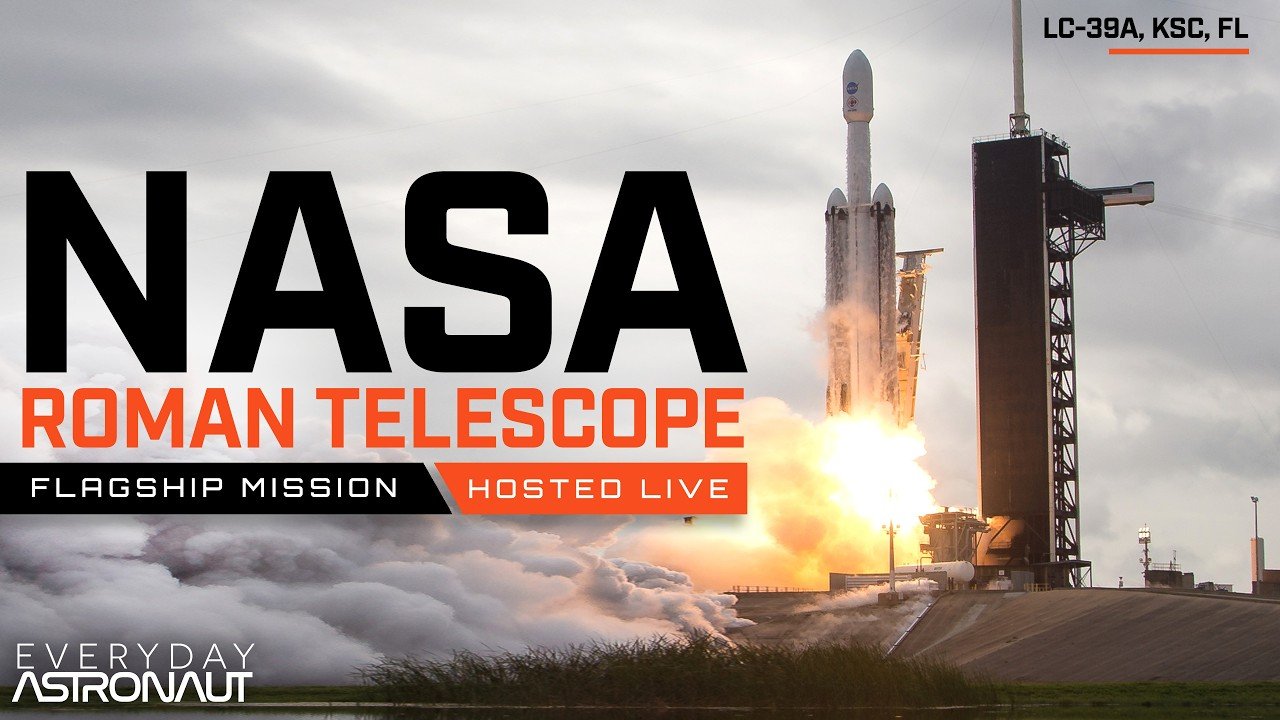
Everyday Astronaut hosted live coverage of Falcon Heavy launching NASA's Nancy Grace Roman Space Telescope from LC-39A at Kennedy Space Center. Both side boosters landed, the second stage reached a nominal orbit, and the telescope separated and was sent toward Sun-Earth L2. The host also explains the telescope's wide field of view, its coronagraph and its refuelable design.
Full written account
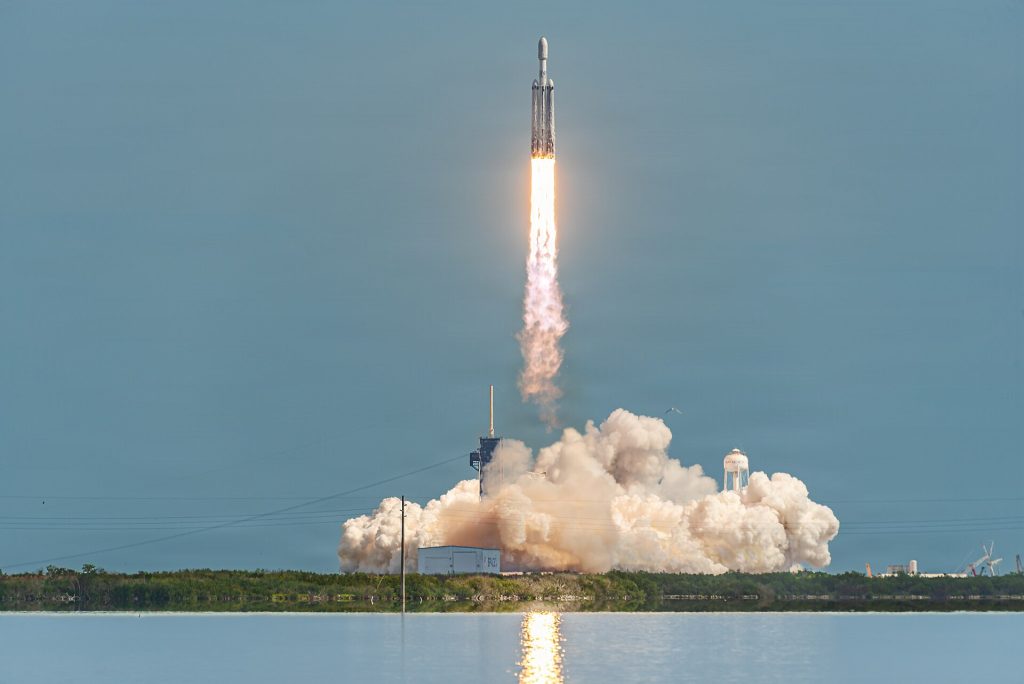
NASA's Nancy Grace Roman Space Telescope lifted off on a SpaceX Falcon Heavy from Launch Complex 39A at Kennedy Space Center at 7:26 a.m. EDT, bound for the Sun-Earth L2 point. The launch was uncrewed and ended in a nominal orbit insertion and a successful payload deployment. It also marked the first time the Falcon Heavy's two side boosters landed back in Florida at two different landing zones while the center core was expended.
The rocket and the pad
Launch Complex 39A is the historic pad from which humans went to the Moon. Falcon Heavy is, in effect, three Falcon 9 boosters joined together, and its 27 Merlin 1D engines power the center core and the two side boosters. This was the 13th Falcon Heavy flight and the second of the year. One side booster was flying for the third time; the other side booster and the center core were new, which gave the vehicle a lopsided look on the pad. Payload mass was quoted at anywhere from about 8,200 to 10,500 kg depending on the source, and weather was forecast at 70% go.
Countdown
RP-1 loading of the second stage began first, and was complete well before launch because the kerosene-type fuel is at room temperature and can be loaded hours ahead. Liquid oxygen is loaded as late as possible because it boils off. Engine chill, in which liquid oxygen flows at a low rate through the engine plumbing to prevent thermal shock, was called about 40 seconds after it was anticipated. The strongback retracted, NASA's launch manager gave a go for launch, and at T-minus 1 minute the flight computers took over the count in startup. The launch director gave the final go.
Ascent and booster return
The vehicle passed max Q, the point of maximum aerodynamic pressure, about 53 seconds into the flight. Booster engine cutoff and side booster separation followed, and each side booster began a boost-back burn, the first of three burns on the way back to Cape Canaveral Space Force Station. The center core continued on with the stage separation, second engine start, and fairing separation at 4 minutes 38 seconds. The side boosters then performed entry burns and landing burns and deployed their legs. Landings were confirmed at Landing Zone 2 and Landing Zone 40, and sonic booms were heard in the area.
Orbit and deployment
The Merlin vacuum engine on the second stage shut down at SECO-1 for a nominal orbit insertion. A second burn, SECO-2, lasted about two minutes, pulling over 3 g and throttling to stay below 4 g, and ended in another nominal orbit insertion. Payload deployment was set for T+31 minutes 31 seconds. Roman separated and flew free toward L2, with the second stage detaching so the telescope would not have to move the stage's dry mass while slewing.
The telescope
The mission is described as a roughly $5 billion flagship. Roman has Hubble's resolution per pixel but sees almost 200 times more sky in a single image, in a roughly 300-megapixel image. It is expected to send up to 1.4 terabytes of data per day, against Hubble's up to 3 gigabytes. Over a 5-year primary mission that could total 20 petabytes. The extended mission is 10 years. It carries a coronagraph that uses about 2,000 actuators on its mirrors to correct for distortions and block starlight, aimed at imaging exoplanets about a billion times dimmer than their stars. This is a technology demonstration, not a primary science instrument. The wide field also lets it watch for exoplanet transits and for rogue planets.
Roman is designed to be serviceable, with a grappling fixture and a port for refueling with hydrazine, though no servicing vehicle exists yet. L2 is about a million miles from Earth, and the transit takes about 30 days, with about 70 more days of checkout before science begins, roughly 100 days after launch. Mission staff described the next steps as pointing the solar panels at the Sun, a midcourse correction, and deploying a high-gain antenna.
Cost and background
SpaceX was awarded $255 million for the launch. Roman was built from surplus reconnaissance-office hardware donated to NASA, and was described as coming in early and under budget. The telescope is named for Nancy Grace Roman, NASA's first chief of astronomy, who held the post in 1958 and championed Hubble.
Questions this video answers
Where and when did Roman launch?
Falcon Heavy lifted off from Launch Complex 39A at Kennedy Space Center at 7:26 a.m. EDT (11:26 UTC).
Where is the Roman Space Telescope going?
Sun-Earth L2, about a million miles from Earth. The transit takes about 30 days.
Did the Falcon Heavy boosters land?
Both side boosters landed, at Landing Zone 2 and Landing Zone 40. The center core was expendable.
How long will Roman operate?
The primary mission is 5 years and the extended mission is 10 years. The telescope is designed to be refuelable, which could extend its life.
When did Roman separate from the rocket?
Payload deployment was set for T+31 minutes 31 seconds, and the telescope was then seen flying free after separation.
Explore related missions
Connected by the topic: Falcon Heavy