Hughes JUPITER 3
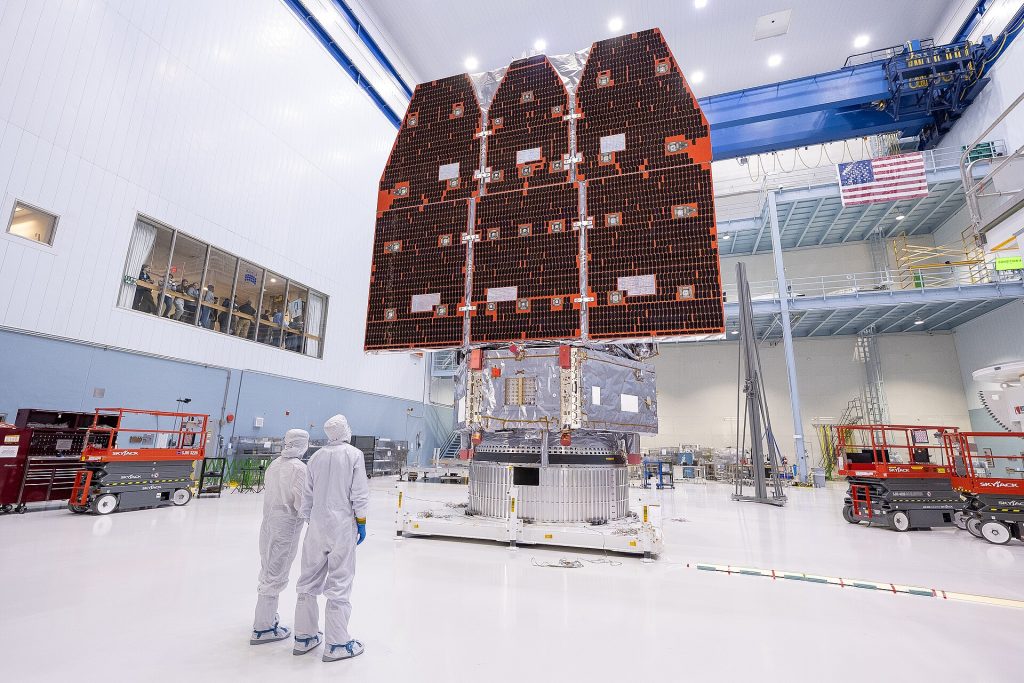
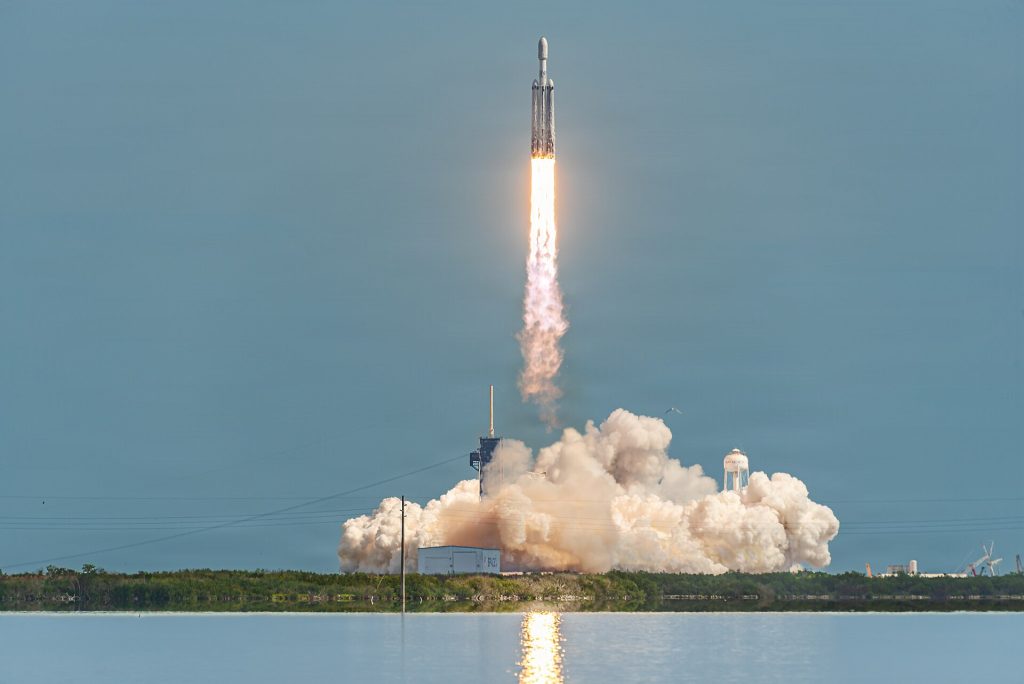
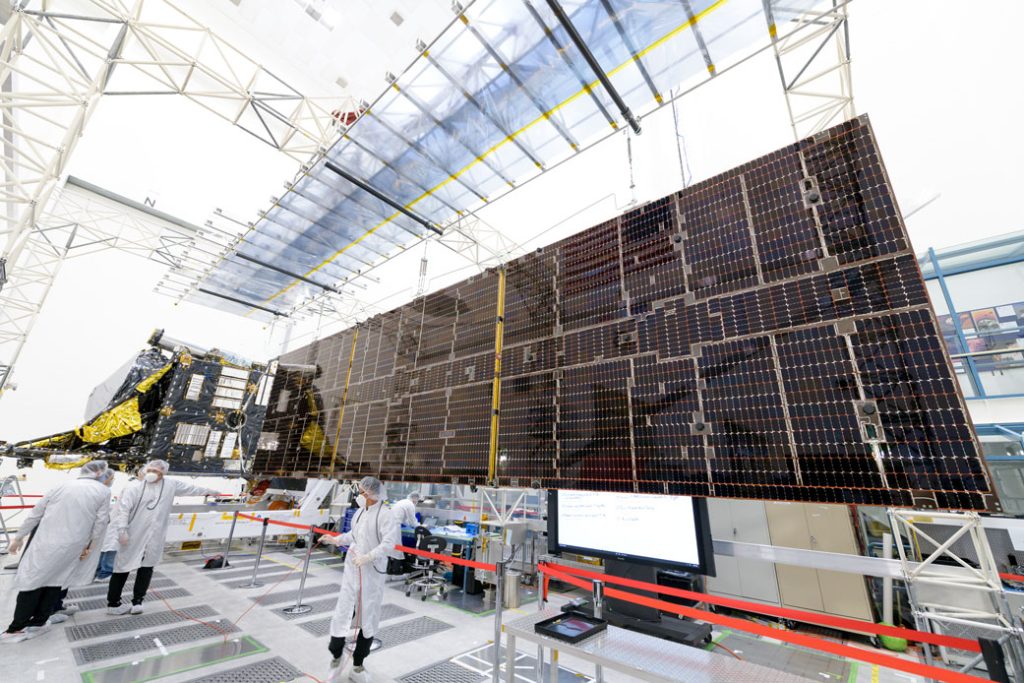
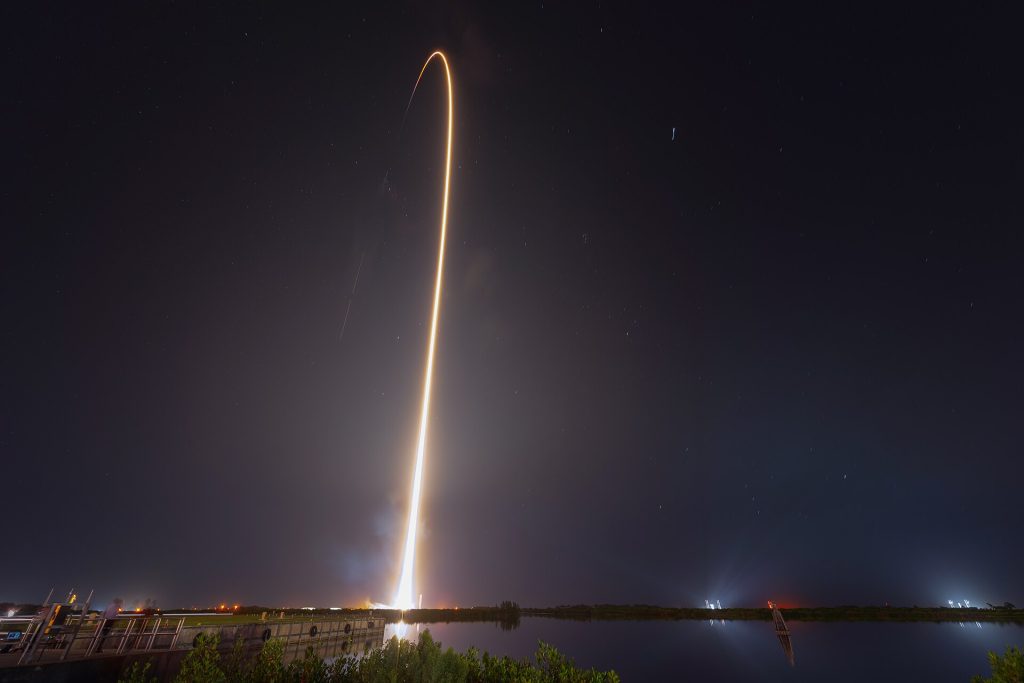
Hughes JUPITER 3 was a communications satellite of over nine tons, built by Maxar for EchoStar's Hughes Network Systems and described on air as the largest commercial communication satellite launched into geostationary orbit. A Falcon Heavy launched it from Kennedy Space Center late on 28 July 2023, after a countdown abort at T-minus 1 minute 5 seconds two days before.
What happened
All times local
-
Watch this moment · 18:55
Countdown aborted
The launch director called an abort at T-minus 1 minute 5 seconds. The vehicle and payload were reported to be in good health and the launch was scrubbed for the night. Video 412 later explained a valve had stuck open on one of the side boosters, so a rocket component could not be pressurised.
-
Watch this moment · 8:32
What was waiting on the pad
The second stage was to debut a medium coast configuration, with an added battery pack and a painted gray stripe on the fuel tank to absorb heat from the Sun. The side boosters were to land at Landing Zones 1 and 2, and the center core was not to be recovered.
-
Watch this moment · 5:00
The second attempt
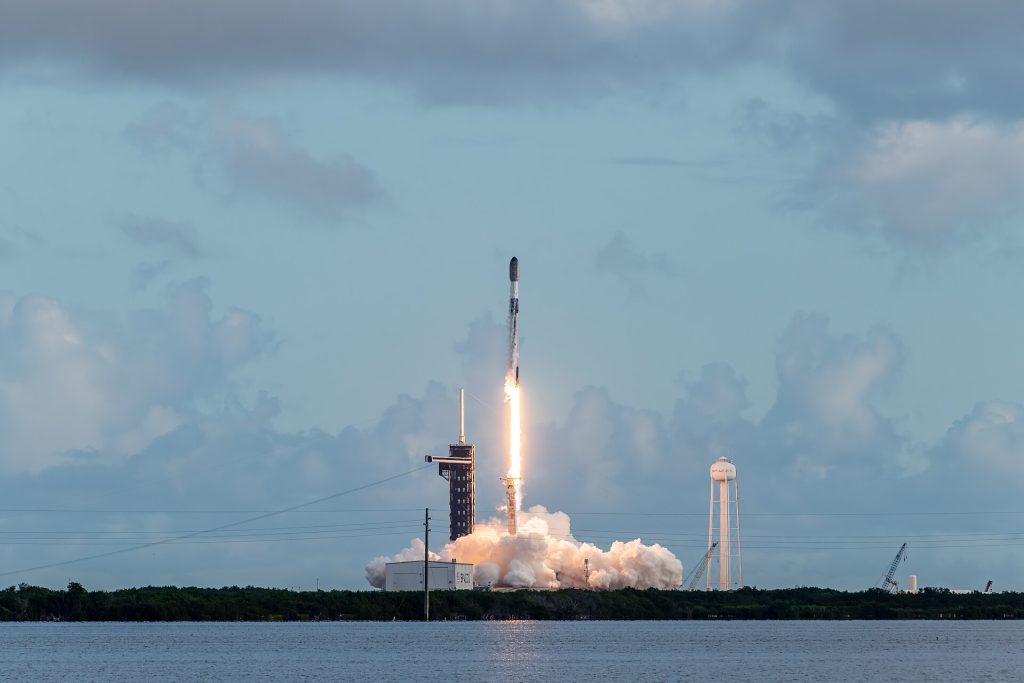
The valve was replaced and checkouts were successful. The Friday countdown followed a Falcon 9 launch from Space Launch Complex 40 at 12:01 a.m. Eastern, SpaceX's 50th mission of 2023.
-
Watch this moment · 20:30
Liftoff
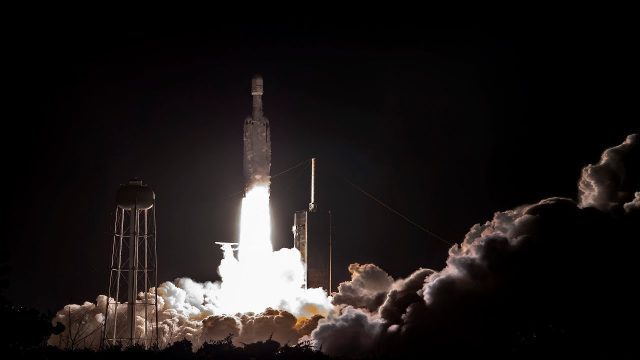
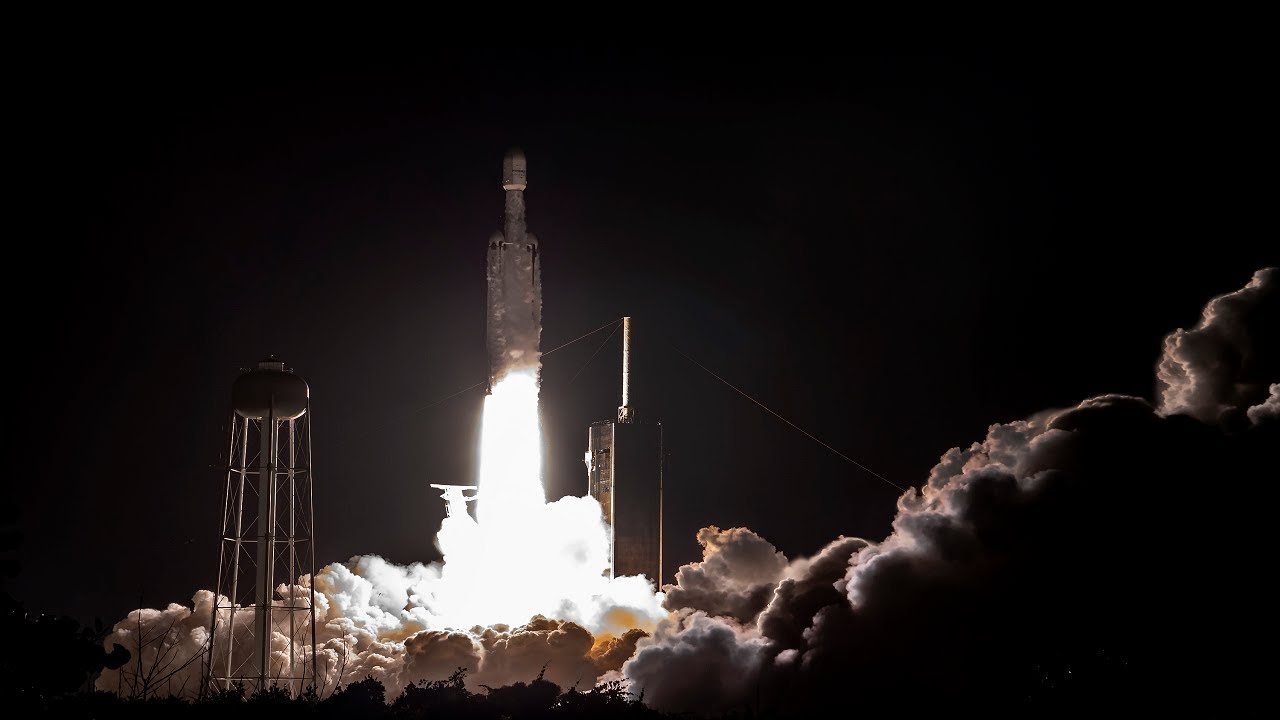
Falcon Heavy lifted off from Launch Complex 39A and passed Max Q. The 27 engines on three cores were not all at full thrust until after liftoff. It was SpaceX's third Falcon Heavy mission of the year and sixth operational one.
-
Watch this moment · 22:27
Side boosters separate
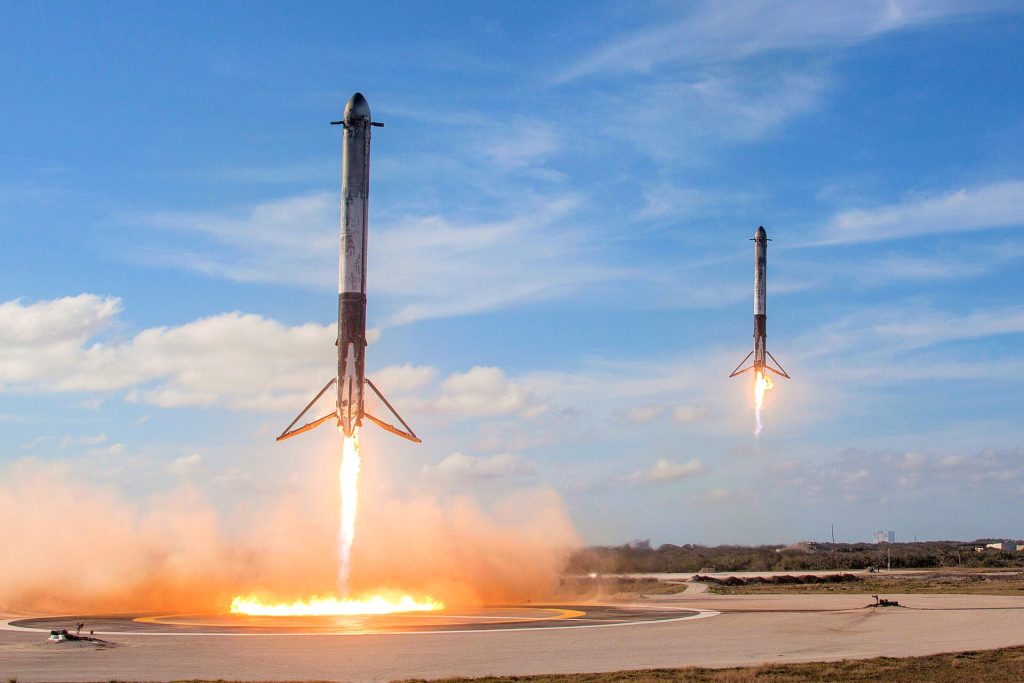
The two side boosters separated from the center core, made boostback burns, a one-engine entry burn and a three-engine landing burn. Both landed at Landing Zones 1 and 2, the 211th and 212th landings of orbital-class rockets in SpaceX's count.
-
Watch this moment · 49:00
Three burns of the second stage
The second stage fired three times. The second burn lasted about two minutes, and the third and last burn came after a long coast, about 3 hours 30 minutes into the flight.
-
Watch this moment · 3:48:55
Satellite deployed
After the final burn, deployment of Hughes JUPITER 3 was confirmed on the way to geostationary orbit.
Key facts
| Vehicle | Falcon Heavy |
|---|---|
| Mission name | Hughes JUPITER 3 |
| Launch site | Kennedy Space Center LC-39A |
| Crew size | 0 |
| Outcome | Success |
Videos about this mission
The videos, in date order
Drag, zoom or press play to watch them on this page.
July 2023

Drag to explore dates · Select a video to preview.
Dates are when each video was first published on YouTube.
The satellite
Hughes JUPITER 3, also called EchoStar 24 in the webcast, was built by Maxar. It weighs over nine tons and, per a Hughes video shown in the broadcast, stands 26 feet tall when stowed, with 14 solar panels, 300 spot beams and total throughput of more than one terabit per second. It supports HughesNet satellite internet in rural areas of the United States and Latin America, and Hughes was exploring service for rural Canada.
Launch Complex 39A was built for Apollo. In video 419 the host recalled that it supported Apollo 11 in July 1969, then Saturn V and Space Shuttle launches, and was leased to SpaceX in 2014. SpaceX said it had launched 66 missions and 38 humans from the pad.
Why a Falcon Heavy
Falcon Heavy is essentially three Falcon 9 first stages strapped together, 27 engines in all, with a 28th Merlin vacuum engine on the second stage. The hosts gave the first-stage thrust as 5 million pounds, equal to 18 Boeing 747s at takeoff. The heavy satellite needed that and more: the center core had no landing legs or grid fins and was expended because the mission required more performance. The side boosters flew for the third time, having supported USSF-44 and USSF-67. Fairing halves were flight-proven, on their fifth and sixth flights.
What the next flight changed
The webcasts do not follow JUPITER 3 after deployment, so its first service is not covered here. For the rocket, the stuck valve was replaced, and the medium coast second stage, new on this flight, did its long burn sequence as designed.
Questions and answers
Why was the first launch attempt scrubbed?
At T-minus 1 minute 5 seconds the launch director called an abort. A valve had stuck open on a side booster, which prevented pressurisation of a rocket component.
When did Hughes JUPITER 3 launch?
At 11:04 p.m. Eastern on 28 July 2023 from Launch Complex 39A, per the SpaceX webcast.
What is special about the satellite?
It weighs over nine tons and was described as the largest commercial communication satellite launched into geostationary orbit.
What happened to the rocket's boosters?
The two side boosters landed at Landing Zones 1 and 2. The center core was expended.
How long until the satellite was released?
About 3 hours 30 minutes after liftoff, after the second stage's third burn.
Sources: The facts and written text on this page come from the 2 videos on this page, by SpaceX.