Falcon Heavy Launches Hughes JUPITER 3 After a Valve Scrub
The short version
Falcon Heavy launched the Hughes JUPITER 3 (EchoStar 24) satellite on July 28 at 11:04 p.m. ET from LC-39A at Kennedy Space Center, after an abort on Wednesday's attempt caused by a stuck-open valve on a side booster. Both side boosters landed at Landing Zones 1 and 2, while the center core was expended. The second stage completed three burns and the satellite was deployed.
Full written account
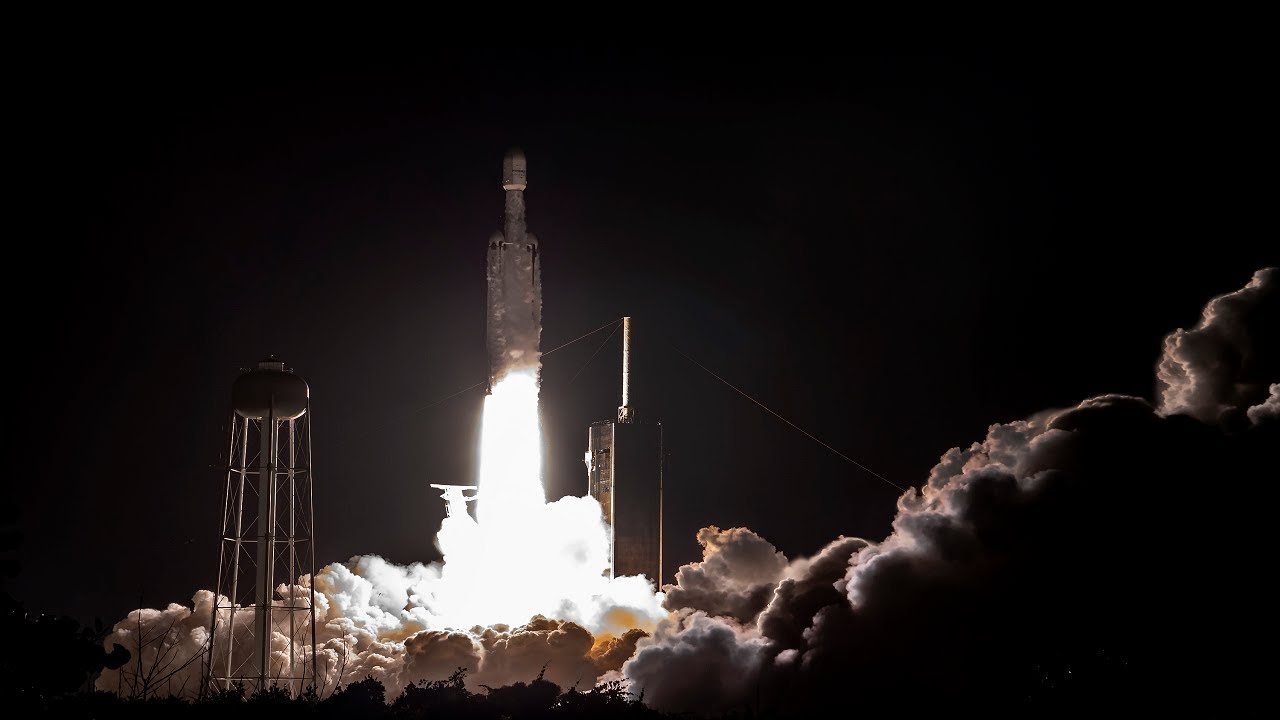
Why did a Falcon Heavy launch the largest commercial communication satellite ever sent to geostationary orbit without trying to recover its center core, yet still bring both side boosters back to land? On Friday, July 28, 2023, at 11:04 p.m. ET, SpaceX launched the Hughes JUPITER 3 mission from Launch Complex 39A (LC-39A) at Kennedy Space Center in Florida. The satellite, also called EchoStar 24, was bound for a geosynchronous transfer orbit and was deployed after three second stage burns.
A scrub and a stuck valve
The mission had already stood down once. On Wednesday's launch attempt, an abort was called around the T minus one minute mark. A valve had stuck open on one of the side boosters, preventing pressurization of a rocket component. SpaceX replaced the valve, checkouts were successful, and the team worked toward an on-time liftoff at 11:04 p.m. Eastern on Friday.
The weather forecast improved during the countdown: a 25 percent chance of violation early on, later 10 percent. Propellant loading began around T minus 50 minutes. The broadcast also noted that, contrary to an earlier statement, there was no recycle opportunity the next day.
It was the second SpaceX mission in less than 24 hours. A launch from Space Launch Complex 40 had lifted off at 12:01 a.m. Eastern the same day and was SpaceX's 50th mission of 2023. JUPITER 3 was the company's third Falcon Heavy mission of the year and its sixth operational Falcon Heavy mission overall.
The satellite
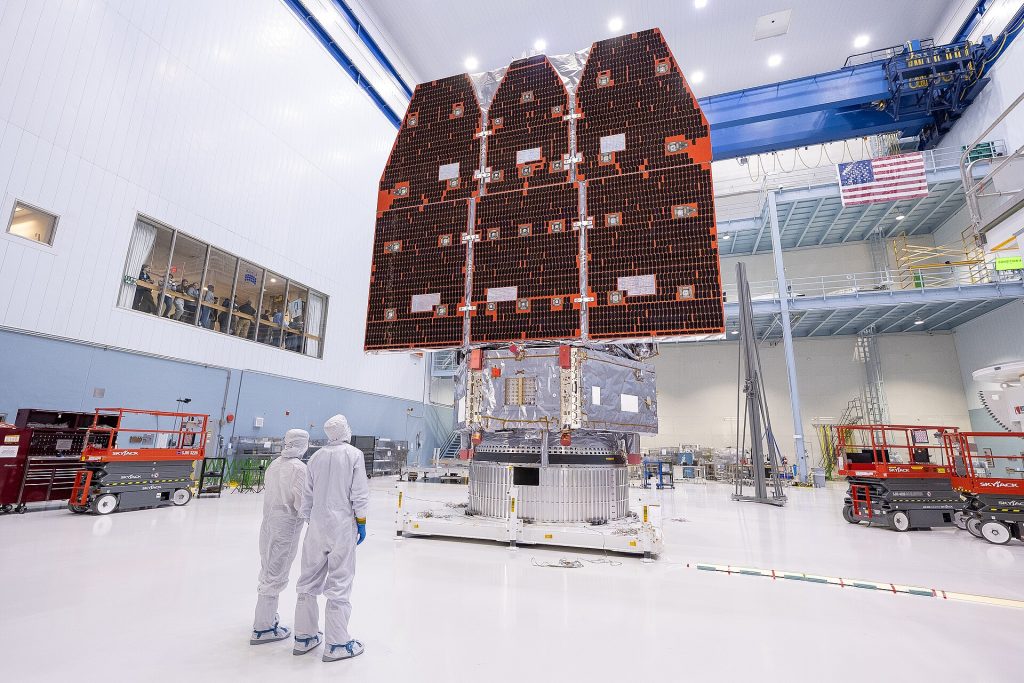
JUPITER 3 was built by Maxar and weighs over nine tons. Hughes, the Hughes Network Systems division of customer EchoStar, described it as the world's largest commercial communication satellite: 26 feet tall when stowed, with 14 solar panels when unfurled. It doubles the size of the earlier Jupiter satellite, brings total throughput to more than one terabit per second, and uses 300 highly concentrated spot beams to reach nearly 80 percent of the population across North and South America.
It is meant to meet demand for HughesNet satellite internet in rural areas of the United States and Latin America, and for Explore service for rural customers in Canada. It will also support enterprise and government applications and expand HughesNet across Mexico, Brazil and South America.
The vehicle and the performance trade-off
Falcon Heavy is essentially three Falcon 9 first stages strapped together. Each of the three cores has nine Merlin 1D engines, 27 in total, and the 28th engine is the Merlin Vacuum engine on the second stage. Together the first-stage engines produce 5 million pounds of thrust, which the broadcast equated to 18 747s at takeoff. Not all engines run at full thrust at once until after liftoff.
The mission required more performance than would allow recovery of the center core, so it flew without landing legs or grid fins and was expended. The side boosters were each flying for the third time, having previously supported USSF-44 and USSF-67. To shorten the entry burn and increase performance, they used a one-engine entry burn.
The second stage debuted a new medium coast configuration. It adds a battery pack, a painted gray stripe on the fuel tank that absorbs heat from the Sun to keep propellant warm, and other hardware so the stage's systems operate as long as needed. The two fairing halves were also flight proven, one flying for the fifth time and the other for the sixth. SpaceX planned to recover them with its vessel Doug.
Countdown and ascent
Before liftoff, the clamp arms opened and the strongback retracted from the vehicle. Liquid oxygen loading was completed on the side cores and then the center core, and Falcon Heavy entered startup, when the flight computers take over the countdown and the stages begin pressurizing. After the final go from the launch director, the rocket lifted off. It passed through Max Q, the peak mechanical stress, with the center core throttled to reduced power and the side boosters throttled down before booster engine cutoff.
At about two and a half minutes the side boosters separated and began boostback burns, while the center core burned for roughly another minute. After main engine cutoff, stage separation and second engine start one, the fairing halves separated.
Two landings
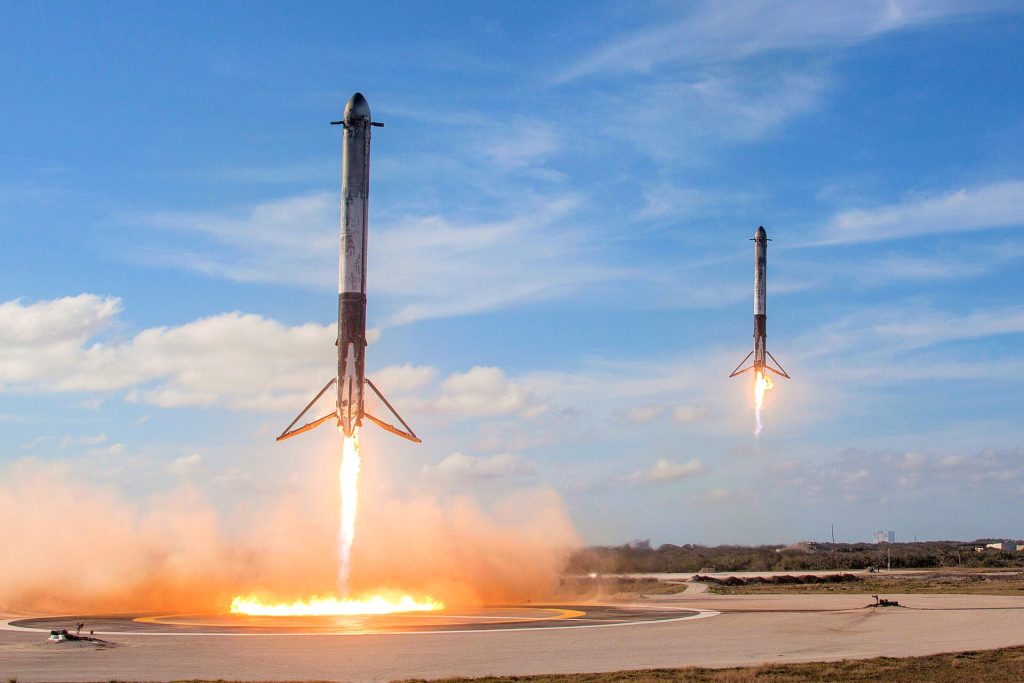
The side boosters flew an entry burn, then a three-engine landing burn, and landed simultaneously at Landing Zone 1 and Landing Zone 2. Landing Zone 2 was built to support dual booster landings. They were the 211th and 212th successful landings of an orbital class rocket, and the broadcast showed the landing legs deploying before touchdown.
To geostationary transfer orbit
Second engine cutoff one brought a nominal orbit, followed by a coast. The second burn, about two minutes long, ended with nominal orbital insertion. The third and final burn, expected to last just under 30 seconds, came around T plus three hours and 33 minutes, and mission control again confirmed nominal orbital insertion. Payload deployment followed, and SpaceX confirmed the successful deployment of JUPITER 3. SpaceX thanked EchoStar, Hughes Network Systems, the range and the FAA.
Questions this video answers
When did Hughes JUPITER 3 launch?
Falcon Heavy lifted off on July 28, 2023 at 11:04 p.m. ET from LC-39A at Kennedy Space Center.
Why was the first launch attempt aborted?
An abort was called around T-minus one minute on Wednesday because a valve stuck open on one of the side boosters, preventing pressurization of a rocket component. The valve was replaced.
Was the center core recovered?
No. The mission needed more performance, so the center core had no landing legs or grid fins and was expended.
What is JUPITER 3?
A Maxar-built satellite for EchoStar's Hughes Network Systems division, described as the largest commercial communication satellite ever launched to geostationary orbit, weighing over nine tons.
Explore related missions
Connected by the topic: Falcon Heavy