Falcon Heavy JUPITER 3 Countdown Aborted at T-1:05, Launch Scrubbed

The short version
SpaceX's webcast for the Falcon Heavy launch of the Hughes JUPITER 3 (EchoStar 24) satellite from Launch Complex 39A at Kennedy Space Center. The countdown was aborted at T minus one minute and five seconds and the launch was scrubbed for the night. The vehicle and payload were reported in good health, with the next attempt planned for the following day around the same time.
Full written account
SpaceX's webcast for the Hughes JUPITER 3 mission followed a Falcon Heavy countdown from Launch Complex 39A at Kennedy Space Center that ended in an abort at T minus one minute and five seconds. The launch director called the abort, and the launch was scrubbed for the night. The vehicle and payload were reported to be in good health.
The mission and its payload
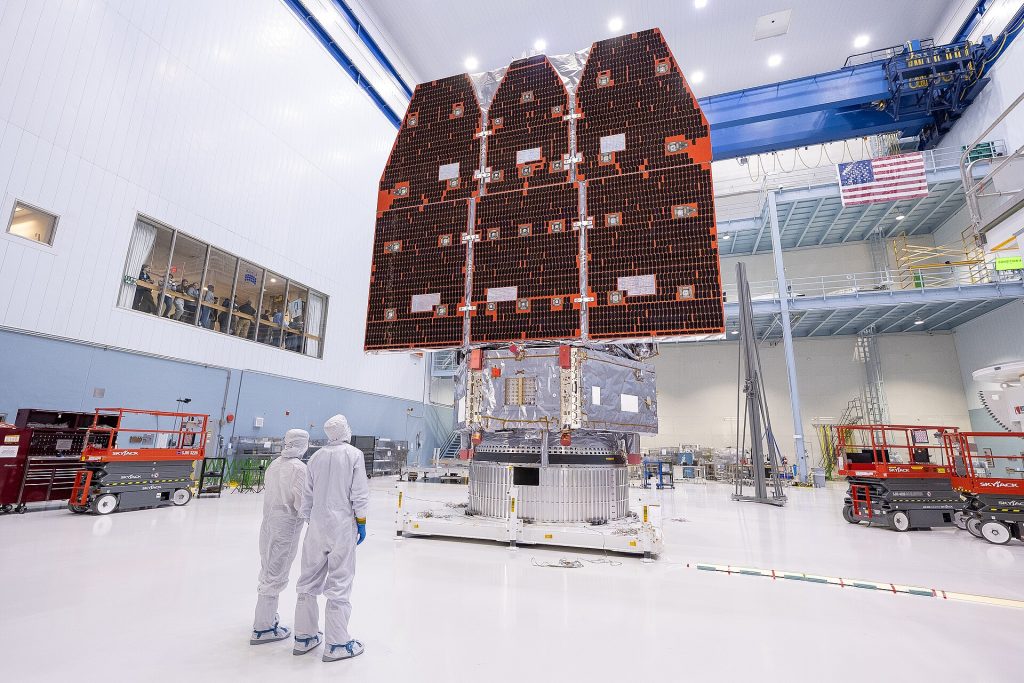
The flight was to carry the Hughes JUPITER 3 EchoStar 24 satellite for customer EchoStar and its Hughes Network Systems division. The satellite was built by Maxar and was described as the largest commercial communication satellite ever to launch into geostationary orbit, weighing over nine tons. It was to support HughesNet satellite internet in rural areas of the United States and Latin America, and explore service for rural customers in Canada. Hughes described it as 26 feet tall when stowed, with 14 solar panels, 300 spot beams and total throughput of more than one terabit per second.
The launch was SpaceX's third Falcon Heavy mission of the year and the sixth operational Falcon Heavy mission overall. Liftoff was targeted for 11:04 PM Eastern, with a backup opportunity the next day at the same time.
The vehicle
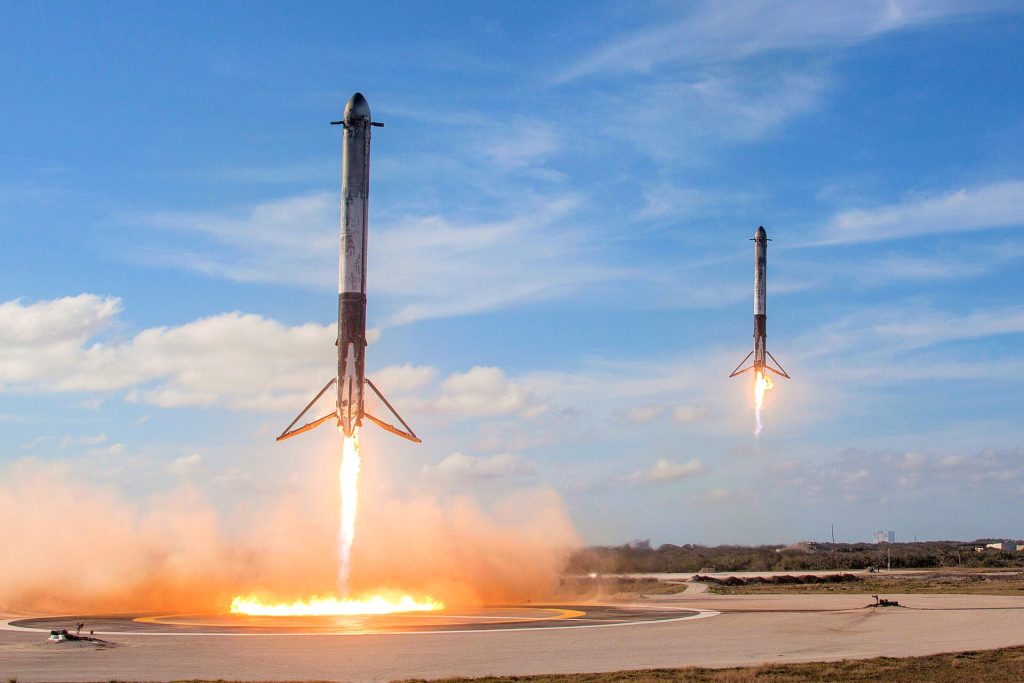
Falcon Heavy was described as essentially three Falcon 9 rockets strapped together, using 27 engines across the two side boosters and the center core. A 28th engine, the Merlin vacuum engine, powers the second stage. The side boosters were each flying for the third time, having previously supported USSF-44 and USSF-67. They were to land at Landing Zones 1 and 2, with Landing Zone 2 built specifically for dual booster landings. A one-engine entry burn was planned to shorten the entry burn and increase performance.
The center core was not to be recovered: it had no landing legs or grid fins because the mission required more performance. The second stage debuted a medium coast configuration, with an added battery pack and a painted gray stripe on the fuel tank to absorb heat from the Sun. Payload deployment was scheduled after three second stage burns, around T plus three hours and 30 minutes. Both fairing halves were flight proven, flying for their fifth and sixth times, and recovery was planned with the vessel Doug.
Historic Launch Complex 39A
The pad was originally built to support the Apollo program and supported Apollo 11, carrying Neil Armstrong, Buzz Aldrin and Michael Collins in July 1969. After Saturn V and Space Shuttle launches, it was leased to SpaceX in 2014. SpaceX said it had launched 66 missions and 38 humans from the pad, and this mission would have been its 249th overall and 67th from 39A.
The abort
Tanks were pressurizing ahead of strongback retraction, and the clamp arms opened around the vehicle. Clouds around the rocket were liquid oxygen boiling off the tanks. Then an abort was called out during the final minute of the count. The host said the purpose of a countdown is to catch potential issues before flight, and that if the team or vehicle sees anything slightly off, they stop the count. The next attempt was set for the following day around the same time.
Questions this video answers
Did Falcon Heavy launch JUPITER 3 in this broadcast?
No. An abort was called during the countdown at T minus one minute and five seconds, and the launch was scrubbed for the night.
Was the rocket or satellite damaged?
The webcast host said the vehicle and payload were in good health.
When was the next launch opportunity?
The next opportunity was the following day around the same time.
What is the JUPITER 3 satellite?
It was described as built by Maxar for EchoStar and its Hughes Network Systems division, weighing over nine tons and billed as the largest commercial communication satellite ever launched to geostationary orbit.
Will the Falcon Heavy center core be recovered?
No. The center core had no landing legs or grid fins because the mission needed more performance.
Explore related missions
Connected by the topic: Falcon Heavy