Roman Space Telescope: Hubble-Sized Mirror, 200 Times the View
The short version
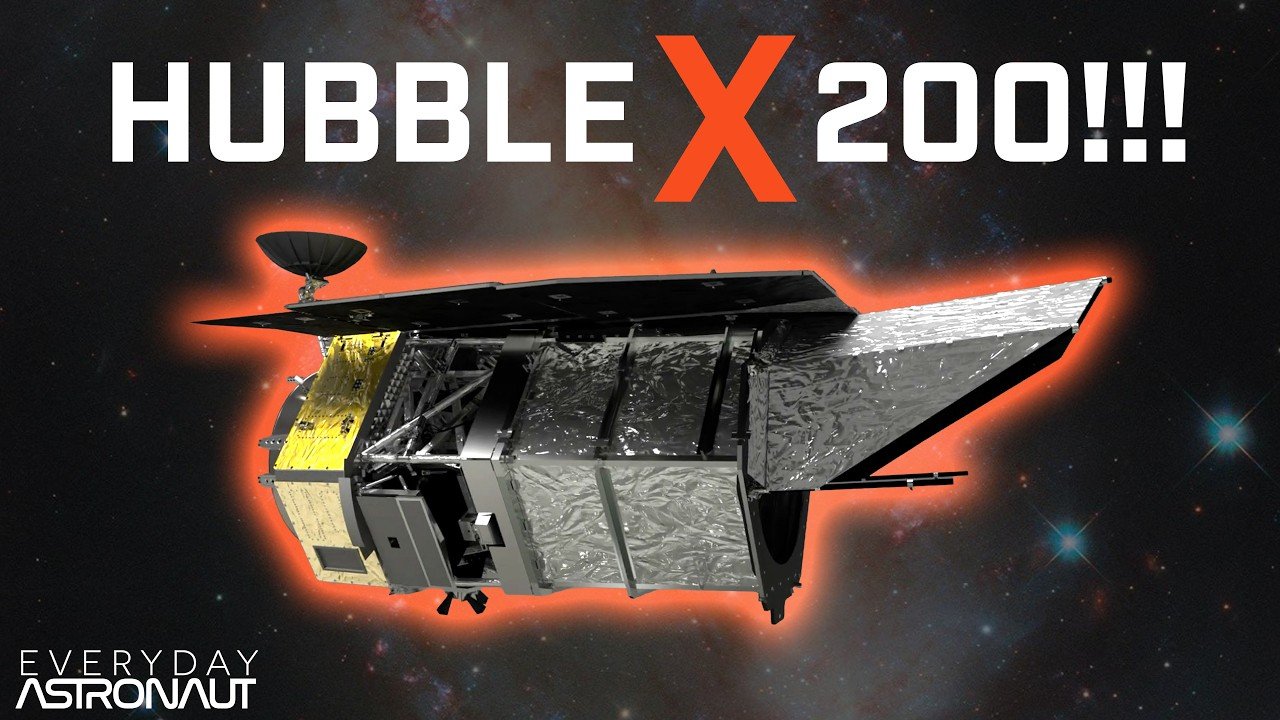
The Nancy Grace Roman Space Telescope is a NASA flagship infrared survey telescope with a Hubble-sized 2.4 m mirror and a 300-megapixel wide field instrument. It will launch on a Falcon Heavy to Sun-Earth L2 and carries a coronagraph technology demonstrator. The video compares it with Hubble and Webb and notes it was completed under budget and ahead of schedule.
Full written account
How can a telescope the size of Hubble be roughly 100 to 200 times more powerful? The Nancy Grace Roman Space Telescope, a NASA flagship mission formerly called the Wide Field Infrared Survey Telescope (WFIRST), answers with newer sensors and a much wider field of view.
Size and mass
Roman is 12.7 m long and 4.4 m wide, against Hubble's 13.2 m and 4.3 m. Both share a 2.4 m primary mirror. Roman's mass is 10,500 kg, Hubble's at launch was 11,110 kg, and Webb's was 6,200 kg. Webb's deployed sun shade is 21.2 m by 14.2 m, with a 6.6 m primary mirror.
Wide field
Roman's wide field instrument is about 300 megapixels, built from 18 Teledyne H4RG-10 detectors of 4,096 by 4,096 pixels each. Per-pixel resolution on a star is about the same as Hubble's, but the angle of view is far wider, so one Roman image equals about 200 Hubble images. Faster slewing and resetting give about 1,000 times the surveying speed: in one month Roman can observe what would take Hubble a century. Repeated looks at the same sky can reveal changes such as supernovae or exoplanet transits and help study general relativity and dark energy models.
Complement to Webb
Webb is more detailed in a small region and has about seven times the mirror area ratio. Roman's pixel scale is 0.11 arc seconds per pixel; Webb reaches 0.063 with its long-wavelength sensors. Roman can watch large areas, and Webb can then zoom in on whatever turns up.
Data
Roman will send up to about 1.4 terabytes per day, compared with up to about 3 GB for Hubble and about 60 GB for Webb. Over a 5-year primary mission that could be 20 petabytes. There is no proprietary period, so data is released immediately and is fully public.
Coronagraph and refueling
The coronagraph technology demonstrator cancels starlight using discs with complex patterns and light-blocking stops. To counter micro-distortions, 2,304 actuators in a 48 by 48 grid adjust the instrument's mirror in steps as small as 10 picometers. The goal is to directly observe exoplanets 1 billion times dimmer than their star.
Roman can be grappled robotically and refueled in space, extending life beyond the 5-year primary mission and a 10-year extended potential. It uses hydrazine for 24 thrusters: 16 of 5 newtons and 8 of 22 newtons.
Destination and launch
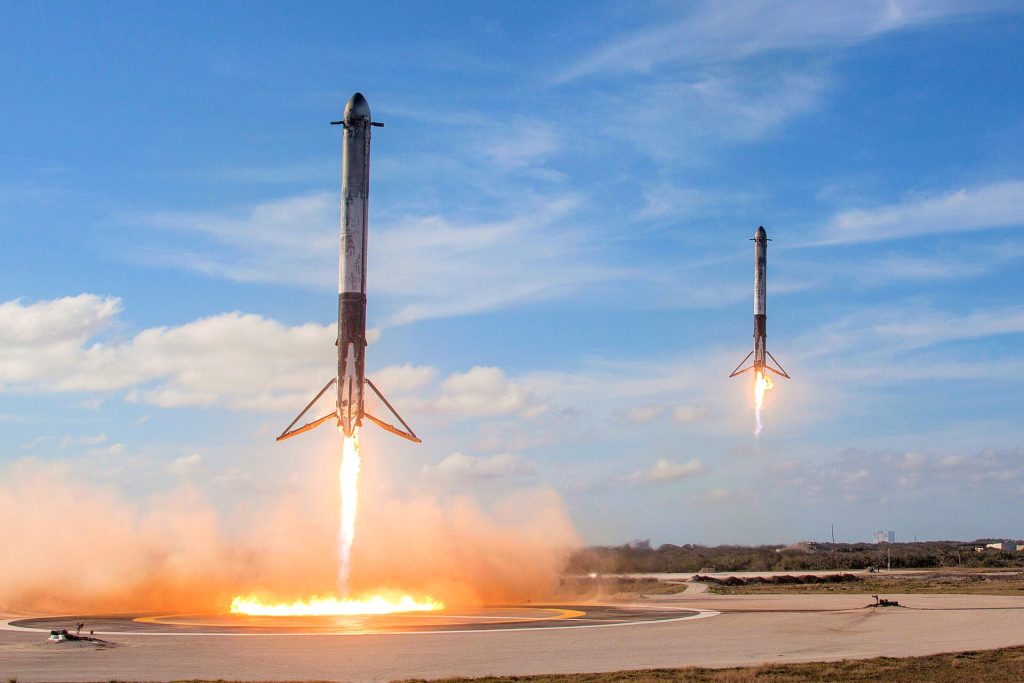
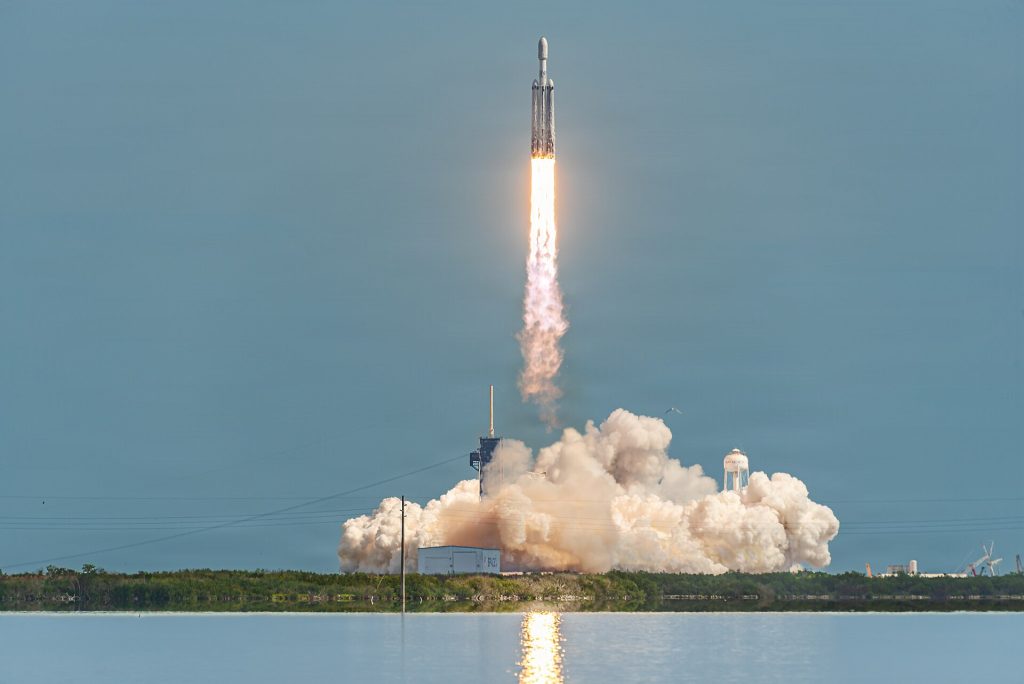
Roman is heading to Sun-Earth Lagrange point 2, about 1.5 million kilometers from Earth, the same region as Webb. It will ride a SpaceX Falcon Heavy, light enough that the side boosters can still be recovered. It takes about 30 days to reach L2, followed by about 70 days of checkout, with science operations beginning after about 100 days.
The telescope was completed under budget and ahead of schedule. Its main hardware was donated by the National Reconnaissance Office, a surplus reconnaissance satellite that NASA adapted for astronomy.
Questions this video answers
What is the Nancy Grace Roman Space Telescope?
It is a NASA flagship space telescope, formerly known as the Wide Field Infrared Survey Telescope (WFIRST), renamed after NASA's first Chief of Astronomy.
Where is Roman going?
It will go to the Sun-Earth Lagrange point 2 (L2), about 1.5 million kilometers from Earth, where James Webb also operates.
What rocket will launch Roman?
Roman will ride on SpaceX's Falcon Heavy. It is light enough that the side boosters can still be recovered.
How does Roman compare to Hubble?
Its wide-field view means one Roman image equals about 200 Hubble images, and it has about 1,000 times the surveying speed.
How long after launch will Roman start science?
It takes about 30 days to reach L2, then about 70 days of checkout. Science operations should begin after about 100 days.
Explore related missions
Connected by the topic: Falcon Heavy