Voyager 1 Pale Blue Dot: Why the Cameras Looked Back in 1990

The short version
On February 14, 1990, after 12 years of travel, Voyager 1 was commanded to turn its cameras back toward the inner solar system at Carl Sagan's request. Across 60 frames it recorded a family portrait of the planets, in which Earth occupied 0.12 of a pixel. The video also covers the Golden Record and Voyager 1's distance from home today.
Full written account
On February 14, 1990, after 12 years of travel, NASA's Voyager 1 turned its cameras back across the solar system from a distance of 6 billion kilometers. In the resulting image, Earth occupied 0.12 of a single pixel.
Background
Voyager 1 had already completed its primary reconnaissance of Jupiter and Saturn, returning portraits of ringed worlds and volcanic moons. It was speeding at over 60,000 km per hour and was preparing to power down its imaging cameras to conserve electrical energy for its long drift into the dark.
The request
Before the cameras were shut off, astronomer Carl Sagan asked NASA mission control to command Voyager to rotate its scan platform one last time and point its cameras backward toward the inner worlds it had left behind. Many scientists objected, arguing that turning the optics toward the Sun risked burning out the vidicon sensors for no real scientific data.
The command and the frames
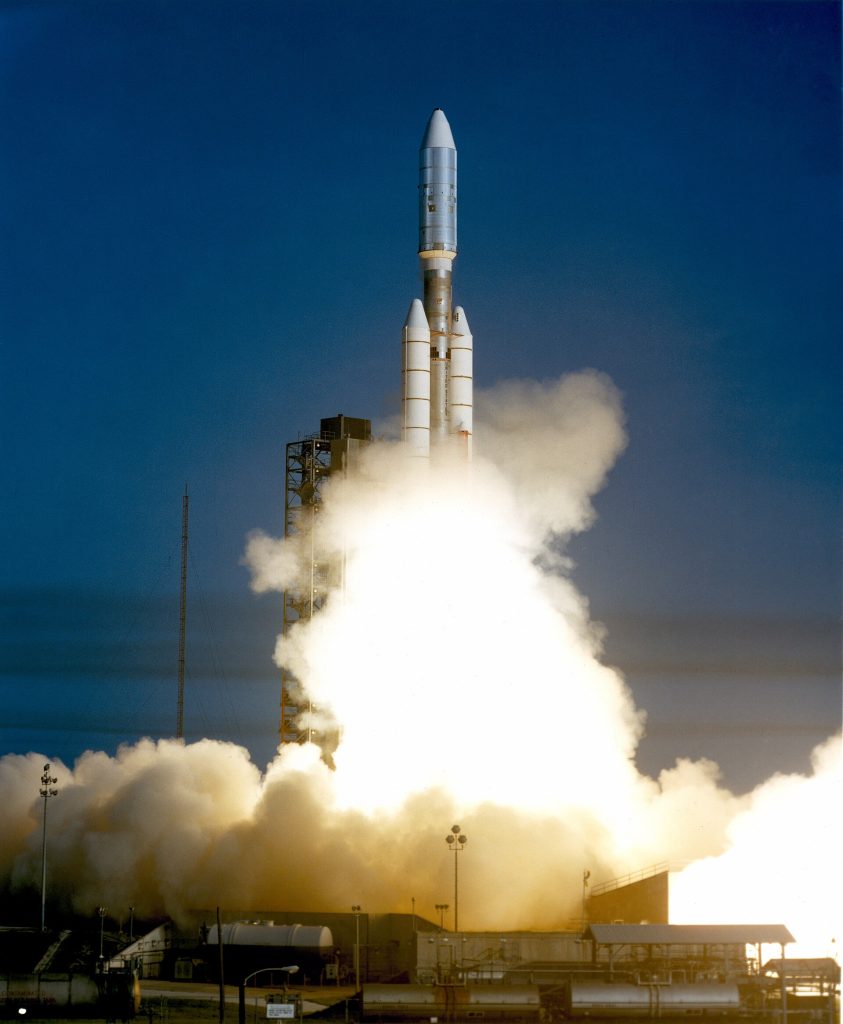
The commands took over 5.5 hours, traveling at the speed of light, to cross the 6 billion kilometer distance. Across 60 frames, Voyager used its narrow-angle and wide-angle cameras to capture a family portrait of the planets: Neptune, Uranus, Saturn, Jupiter, Venus and Earth were recorded as faint specks of light against the void. The image data was then beamed back to Earth over weeks of faint radio pulses.
What the image shows
Earth did not appear as the blue marble seen by the Apollo astronauts from lunar orbit. It occupied 0.12 of a picture element, caught in a stray beam of sunlight scattered off the spacecraft's camera housing. The sunbeam that surrounds Earth in the photograph is sunlight scattering off the camera's lens baffles.
The Golden Record and Voyager today
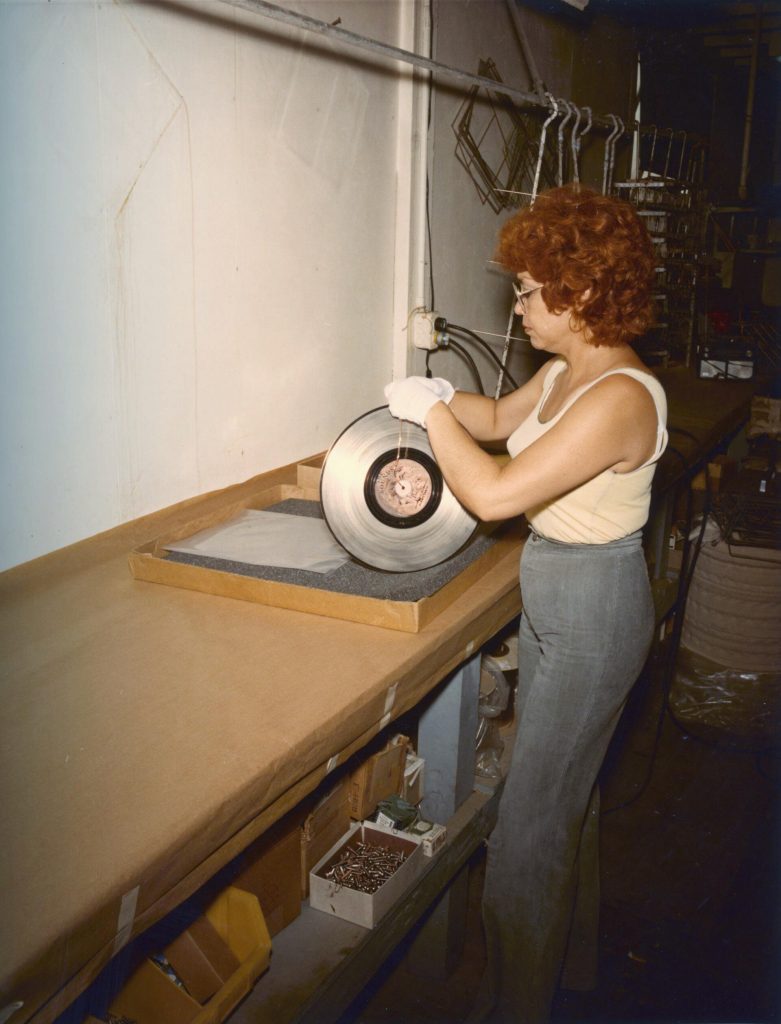
Affixed to the side of Voyager 1 is a 12-inch gold-plated copper phonograph record carrying greetings in 55 languages, the sounds of wind and rain, and the heartbeat of a young woman in love.
Voyager 1 is now over 24 billion kilometers from home, traveling through the interstellar medium. At its current speed it will take 40,000 years to pass within 1.6 light-years of the nearest star, Gliese 445. Its plutonium generators are slowly dying and its instruments are shutting down one by one.
Questions this video answers
When was the Pale Blue Dot image taken?
On February 14, 1990, after Voyager 1 had travelled for 12 years.
Who asked for the camera to be turned around?
Astronomer Carl Sagan asked NASA to command Voyager to rotate its scan platform and point its cameras backward.
Why did some scientists object?
They argued that pointing the optics toward the Sun risked burning out the vidicon sensors for no real scientific data.
How big is Earth in the image?
Less than a single pixel, stated as 0.12 of a picture element.
How many frames did Voyager take?
60 frames, using its narrow-angle and wide-angle cameras.
What is on the Golden Record?
A 12-inch gold-plated copper phonograph record with greetings in 55 languages, the sounds of wind and rain, and the heartbeat of a young woman in love.
Explore related missions
Connected by the topic: Voyager and Grand Tour probes