Perseverance: Inside JPL Before the Seven Minutes of Terror
The short version
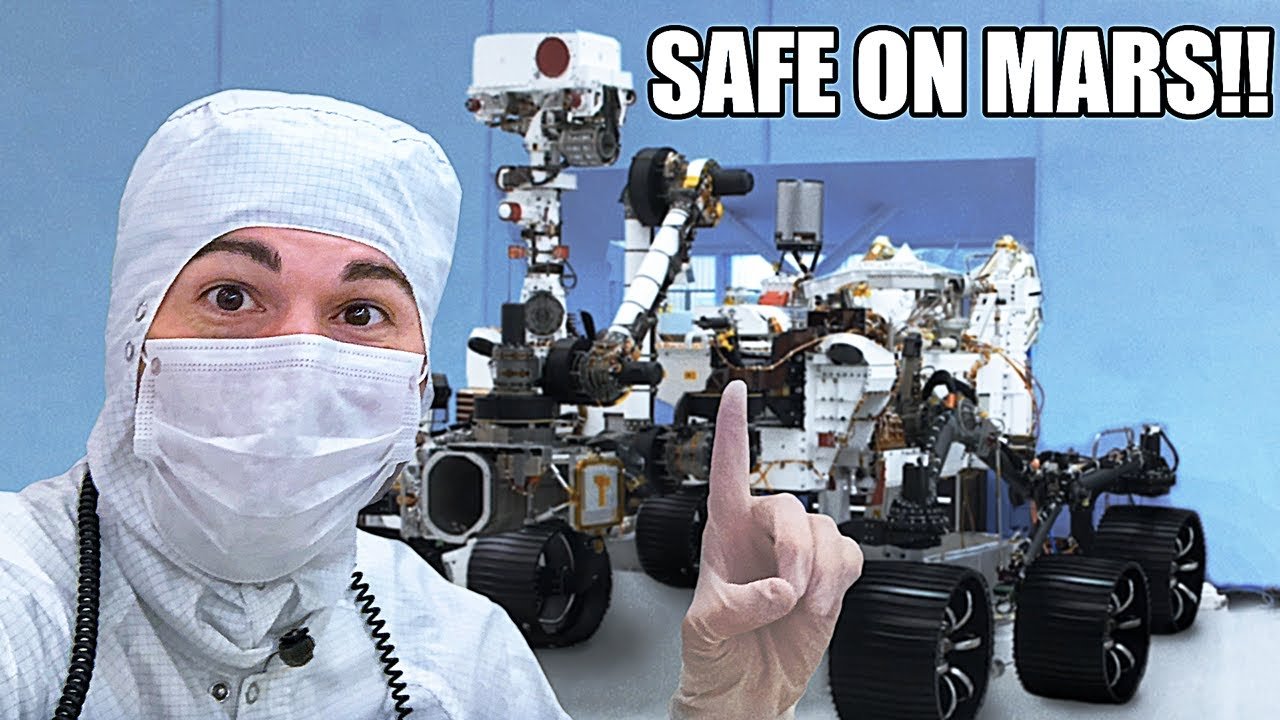
Engineer and YouTuber Mark Rober tours NASA's Jet Propulsion Laboratory ahead of the Perseverance landing on Mars, explaining the why, where, how, what and who of the mission. He shows the rover, its sample-caching system, Ingenuity and MOXIE, and walks through the entry, descent and landing sequence and its timeline.
Full written account
Perseverance, NASA's next Mars rover, was about to end a seven-month journey to Mars by navigating itself autonomously through seven minutes of entry, descent and landing, going from 15 times the speed of a bullet to a touchdown of about three miles per hour. Mark Rober, who worked nine years at NASA's Jet Propulsion Laboratory, seven of them on the Curiosity rover, walked through what to expect.
Why Jezero crater
The video says that 3.5 billion years ago Earth and Mars were pretty similar: both had liquid water at the surface and magnetic fields protecting them from the Sun's radiation. Perseverance is landing in Jezero crater, the bottom of an ancient lake the size of Lake Tahoe. Scientists believe the base of a river of fresh water offers the best chance of finding evidence of past biological life on Mars.
The landing target is also much tighter than before. Comparing the uncertainty ovals of Pathfinder in 1997, Phoenix in 2008 and Curiosity in 2012 with Perseverance, Rober notes a smaller target gives more options of places to land and can shave a year or more off the drive time to the science location.
The rover
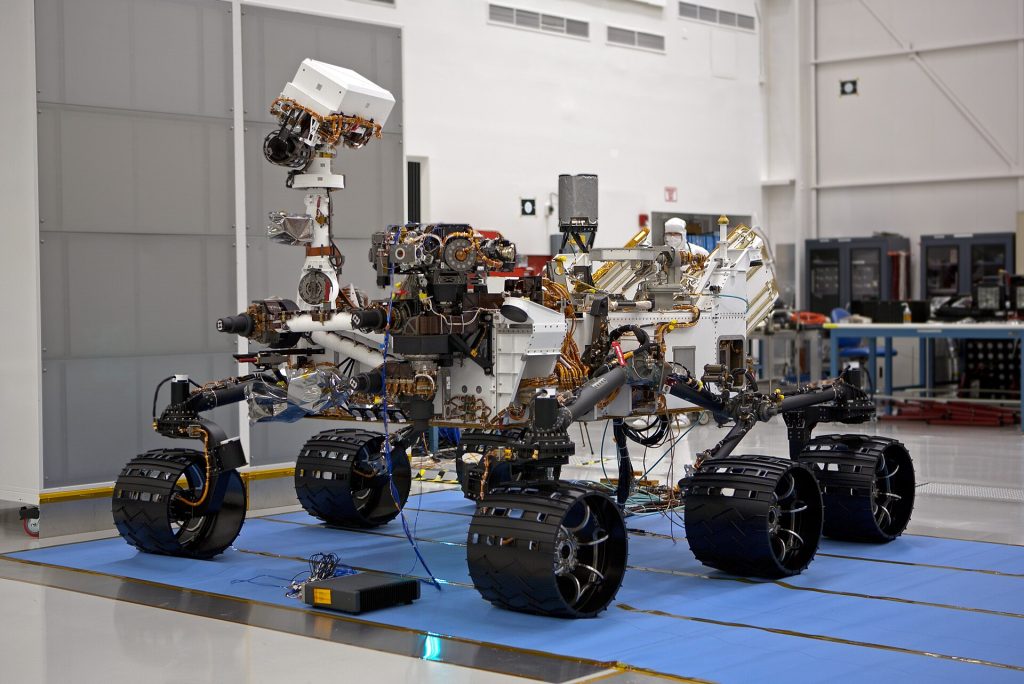
Perseverance is described as the most complex thing humans have built and sent to another planet. It has laser, x-ray and radar capabilities, 19 cameras and a nuclear powered battery system. Its science instruments are completely different from Curiosity's because the science objectives changed.
The drill is hollow and cores out a chunk of rock the size of a piece of chalk. A miniature robot arm inside the body manipulates the sample tube, and the rover leaves behind 43 separate samples for a future mission to collect and send back to Earth.
Two other pieces of technology ride along:
- Ingenuity, a mini helicopter drone stowed on the underbelly, which would be the first powered flight on another planet.
- MOXIE, an instrument that converts CO2 into oxygen for future explorers to breathe and for rocket fuel.
The team builds two spacecraft, one that goes to Mars and one kept on Earth for testing. The rover had spent about a year and a half in the clean room, starting as just a chassis.
Seven minutes of terror
As the video was edited, the spacecraft was gliding toward Mars at 48,144 miles per hour. Entry, descent and landing takes seven minutes to go from 13,000 miles per hour to 0, with no help from Earth.
- The heat shield glows like the surface of the Sun on first hitting the upper atmosphere, while thrusters steer.
- Aerobraking gets rid of 99% of the energy; a supersonic parachute handles the rest.
- The heat shield is popped off so the radar can view the ground.
- Still at 200 miles per hour under the parachute, the craft cuts loose from the back shell and fires rockets.
- The rover is lowered on a 21 foot rope, so the rockets do not kick up debris, and the descent stage flies off.
Signals take about 12 minutes to reach Earth, so by the time word of reaching the atmosphere arrives, the vehicle has already been on the surface for at least five minutes, alive or dead. Historically, only about half of Mars landing attempts have been successful. The landing livestream starts Thursday February 18th at 11:15 AM Pacific, with atmosphere entry at 12:48 PM and touchdown at 12:55. Footage from the 23 cameras and 2 microphones is expected a few days later.
Curiosity's landing
Rober closes with his own footage from Curiosity's landing eight years earlier, ending with the call "Touchdown confirmed. We're safe on Mars."
Questions this video answers
Where was Perseverance landing on Mars?
A rover named Perseverance was to land in Jezero crater, the bottom of an ancient lake the size of Lake Tahoe.
What is Perseverance's sample task?
It has a hollow drill bit to core out chalk-sized rock samples and leave behind 43 separate samples for a future mission to collect and return to Earth.
What are the seven minutes of terror?
It is the nickname for the entry, descent and landing, which takes about seven minutes from the top of the atmosphere to the surface, all done autonomously.
What drone does Perseverance carry?
Ingenuity, a mini helicopter drone stowed on the rover's underbelly, which would be the first powered flight on another planet.
What is MOXIE?
It tests MOXIE, an instrument that converts CO2 into oxygen for future explorers to breathe and for rocket fuel.
Explore related missions
Connected by the topic: Mars exploration