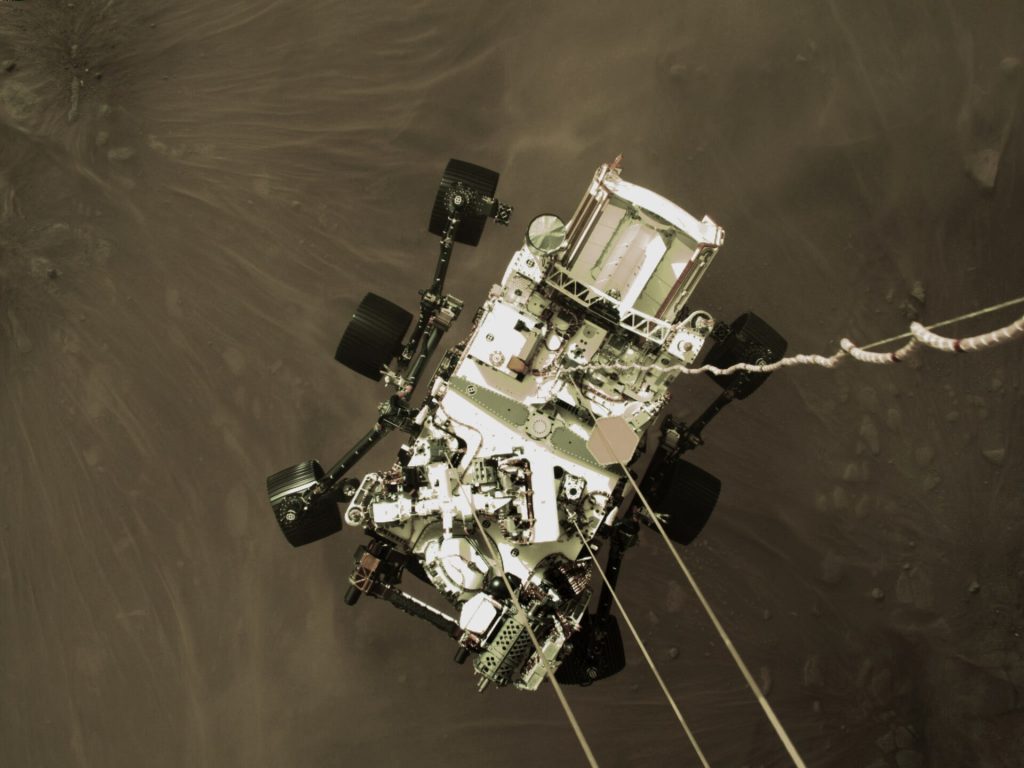
Curiosity at 14: Keeping a Mars Rover Running by Remote Control
The short version
Curiosity was built for a mission of about two years and has been on Mars for fourteen. The video follows how its team has kept it working remotely: a 13-kilo rock stuck on its drill in April 2026, holes in its wheels, a drill fault in December 2016 and a declining power supply. It also describes a backup plan to break off a damaged wheel against a rock.
Full written account
In April 2026 Curiosity drilled a hole in a rock, lifted its arm, and the rock came with it: a slab half a meter across, 13 kilos on Earth, stuck on the drill. The nearest person who could pull it off was more than 300 million kilometers away. The team shook the arm, and nothing happened. Four days later they turned the arm and shook it again; sand trickled off but the rock stayed. On 1 May they tilted the arm further, rotated it, shook it and spun the drill bit, and the rock let go and cracked on the ground. It took six days and three tries, and every command took almost 19 minutes to arrive.
A rover nobody can touch
Curiosity landed in August 2012 inside Gale Crater. It is the size of a small SUV, with a laser for zapping rocks and two chemistry labs inside. Its job is to climb the mountain in the middle of the crater layer by layer and find out whether microbes could ever have lived on Mars. It was built for about two years and has spent fourteen on Mars.
A radio signal takes between 3 and 22 minutes to reach it, depending on where the planets are, so the team sends a to-do list and the rover works on its own. For testing, there is a near-identical twin called Maggie in a sandpit at a NASA lab in California, where anything new is tried first. A stripped-down version built for driving, with no computer on board, is called Scarecrow.
Holes in the wheels
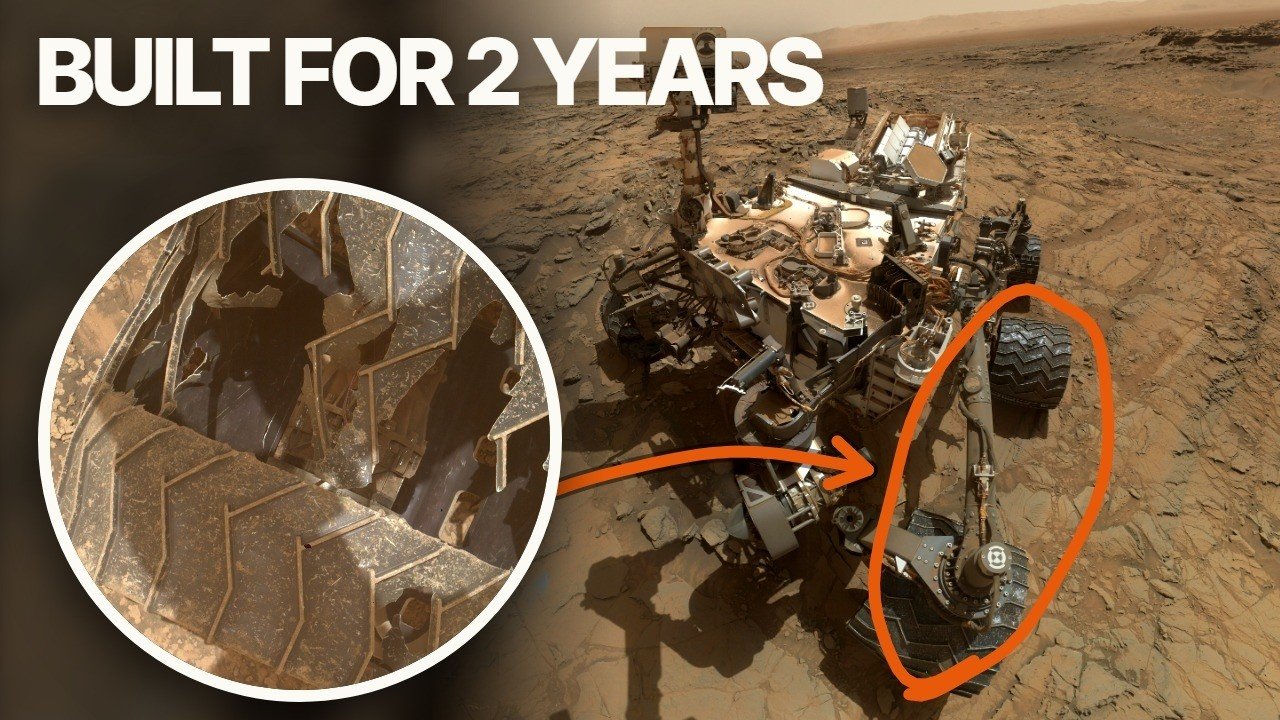
In late 2013, a little over a year after landing, new photos showed a hole in a wheel that one driver said was "much larger than we had expected." The wheels are half a meter across and machined from solid aluminum, but between the treads the skin is three-quarters of a millimeter thick, about as thick as a credit card. Gale Crater had rocks sharpened by wind into points and cemented into the ground, and Curiosity's suspension made it worse, as the back wheels keep pushing the others into them.
The team planned routes from orbit photos to steer around the sharpest ground. A try at sand in August 2014 failed when the wheels slipped so badly that the rover had to back out. In 2017 new software let the rover feel which wheel was climbing a rock and adjust each wheel's speed. In tests on Earth it cut the load on the front wheels by a fifth. The holes continued but slowed. Perseverance later got wheels with thicker skin and twice as many treads.
Drilling by hand
In December 2016 the motor that pushes the drill bit out between two prongs kept stalling. Curiosity had drilled 15 rocks, and for almost a year and a half it could not drill another. The fix was to leave the bit permanently extended and use the whole arm to push it into the rock. Without the prongs bracing against the rock, a slight sideways push could jam the bit, so the team taught the arm's force sensor, originally meant to stop the arm if it hit something hard, to feel the drill drifting and correct.
The twin's force sensor had stopped working before launch, so engineers performed what NASA called invasive surgery to fit a new one, followed by months of double shifts, weekends and holidays. On 20 May 2018 Curiosity drilled a rock called Duluth and collected its first sample in a year and a half.
The storm and the power budget
That summer a dust storm grew until it wrapped the entire planet. Opportunity, more than 8,000 km away, ran on sunlight. It sent its last picture on 10 June 2018, and over the next eight months NASA sent it more than a thousand commands without an answer. Curiosity kept working, because its power comes from a plutonium generator that turns heat into electricity.
That generator is also what is slowly wearing out. At landing it made about 114 W; roughly every 80 Martian days it loses another watt, and after 14 years about half is gone. Driving takes up to 500 W, so Curiosity drives on its batteries and spends most of its life asleep charging them. In 2025 the team taught it to talk to an overhead satellite while driving, moving its arm or taking pictures, and to go to sleep when it finishes the day's list early.
Plan B: break the wheel
Questions this video answers
How long did it take to free the rock from Curiosity's drill?
Six days and three tries, with each command taking almost 19 minutes to reach the rover.
What are Maggie and Scarecrow?
Maggie is a near-identical twin of Curiosity in a sandpit at a NASA lab in California, where new procedures are tried first. Scarecrow is a stripped-down rover built for driving, with no computer on board.
How did the team restore drilling after the December 2016 fault?
They left the drill bit permanently extended and used the whole arm to push it into the rock, teaching the arm's force sensor to feel the drill drifting and correct. Curiosity drilled the rock Duluth on 20 May 2018.
Why does Curiosity survive dust storms that ended Opportunity?
Opportunity ran on sunlight, while Curiosity's power comes from a plutonium generator that works day or night.
Could Curiosity become the longest-working rover on Mars?
The video says that if nothing breaks first, it passes Opportunity's 5,111 Martian days around Christmas 2026.
Explore related missions
Connected by the topic: Mars exploration