Voyager 1 Reaches One Light-Day: Power, Memory and the Golden Record
The short version
Voyager 1, launched by NASA on September 5, 1977, is still operating in interstellar space and on November 18, 2026 is due to become the first human-made object to reach one light-day from Earth, about 25.9 billion kilometers away. The video traces its Jupiter and Saturn flybys, the Golden Record, the Pale Blue Dot photo, the 2023 chip failure and its dwindling power.
Full written account
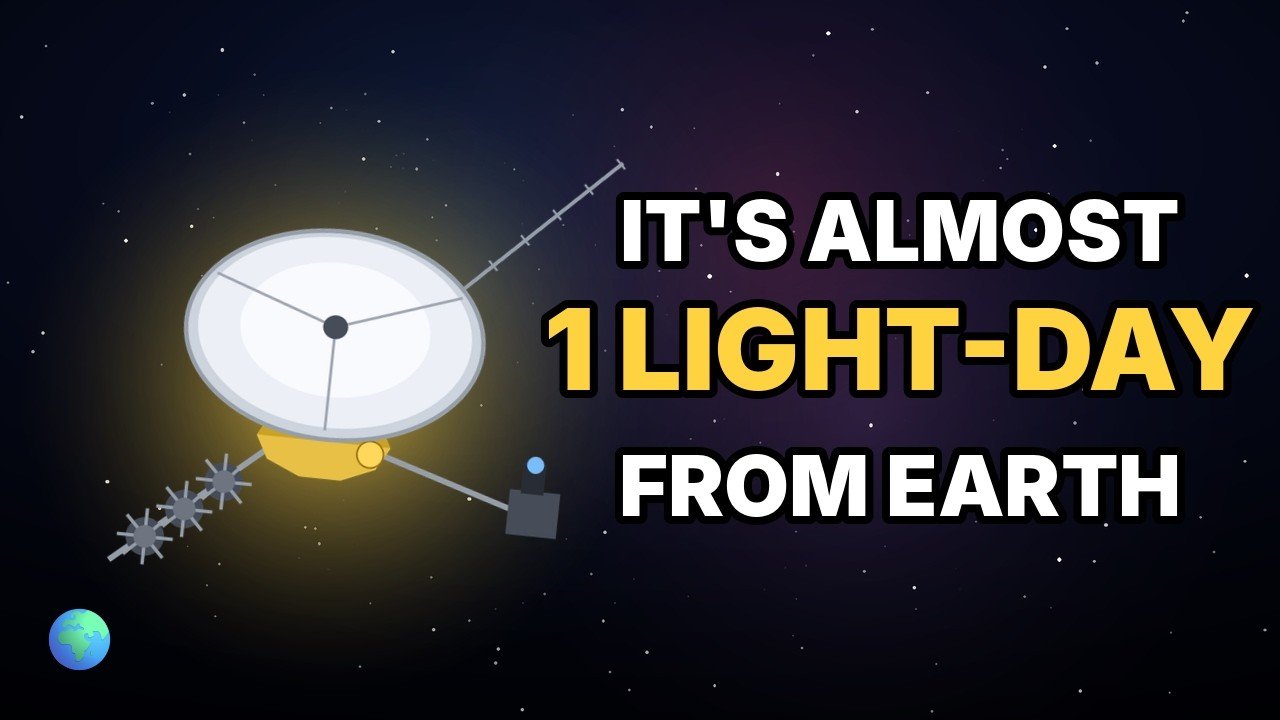
On November 18, 2026, Voyager 1, launched in 1977, is due to become the first human-made object to reach one full light-day from Earth, about 25.9 billion kilometers away. A command sent to it will take 24 hours to arrive, and the reply another 24 hours to return. How did a machine with about 69 kilobytes of memory get there?
A 175-year alignment
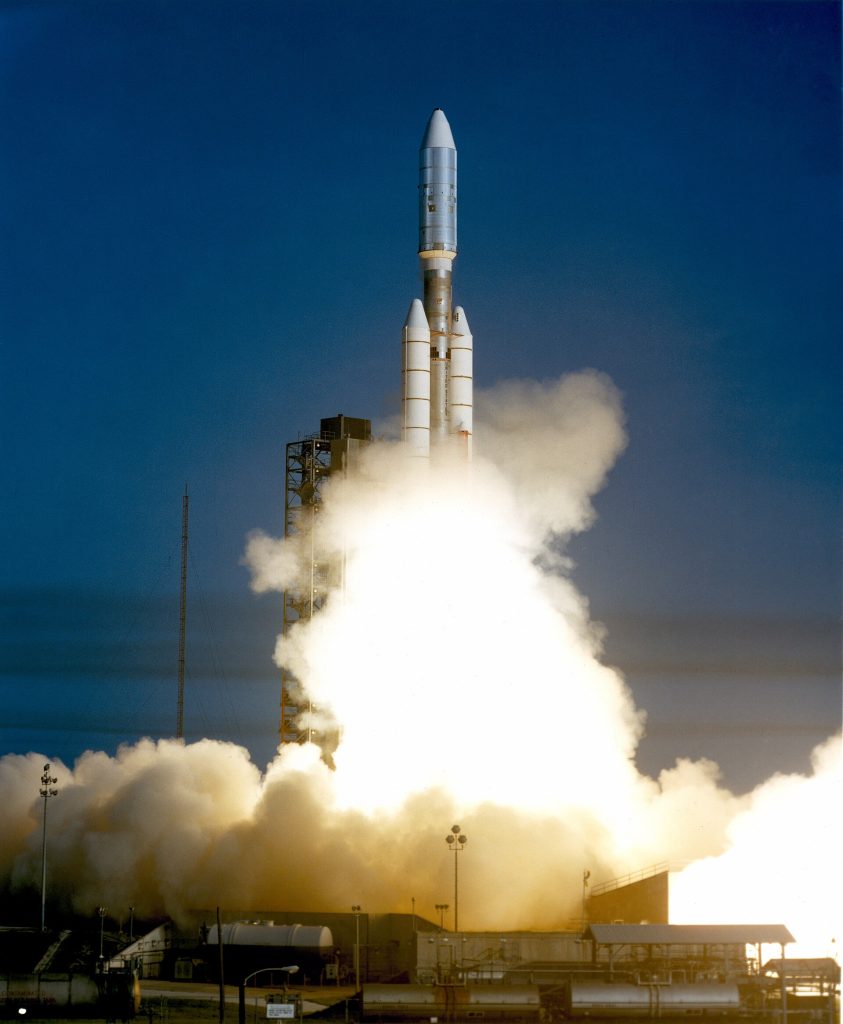
In the 1960s, NASA engineer Gary Flandro noticed that Jupiter, Saturn, Uranus and Neptune were drifting into line on the same side of the sun. Such an alignment comes around once every 175 years and lets a spacecraft use each planet's gravity as a slingshot. NASA launched two probes in 1977: Voyager 2 on August 20, and Voyager 1 on September 5, on a faster route that would overtake its twin.
The Grand Tour
In March 1979 Voyager 1 flew past Jupiter and saw active volcanoes erupting on the moon Io, the first ever seen beyond Earth. It reached Saturn in November 1980. To get a close look at the giant moon Titan, it swung past at an angle that flung it up and out of the plane of the planets, and it has not visited another planet since. It coasts at around 61,000 km an hour.
Golden Record and Pale Blue Dot
Bolted to the spacecraft's side is a 12-inch gold-plated copper disc carrying greetings in 55 languages, 115 images, the sounds of rain, wind and whales, and 90 minutes of music from Bach to Chuck Berry. Instructions for finding the contents are drawn in pictures on its cover, and its makers expected it could last a billion years.
On Valentine's Day 1990, at the request of astronomer Carl Sagan, Voyager 1 turned its camera back and photographed Earth from 6 billion km away, where the planet showed up as less than a single pixel. Thirty-four minutes later its cameras were switched off for good to save power.
Interstellar space and the 2023 failure
On August 25, 2012, Voyager 1 crossed the heliopause, the edge of the sun's bubble, and became the first human-made object to reach interstellar space. In November 2023 it began sending back gibberish. A single failed chip had corrupted part of its memory. Engineers could not repair the chip, so they split the code into pieces and squeezed it into other parts of the memory, sending every command across 24 billion kilometers. In April 2024 the spacecraft started making sense again.
Running out of power
Its nuclear battery loses about 4 watts every year, and engineers have been switching instruments off one by one. Only two science instruments are still running, and no one knows exactly how much time it has left. Even after it goes silent it will keep flying: in about 40,000 years it will drift within two light years of the star Gliese 445.
Questions this video answers
When does Voyager 1 reach one light-day from Earth?
On November 18, 2026, when it will be about 25.9 billion kilometers away.
What happened to Voyager 1 in 2023?
In November 2023 it began sending back gibberish after a single failed chip corrupted part of its memory. Engineers split the code into pieces and stored it in other parts of the memory, and in April 2024 it started making sense again.
What is on the Golden Record?
Greetings in 55 languages, 115 images, sounds of rain, wind and whales, and 90 minutes of music from Bach to Chuck Berry.
How much power does Voyager 1 have left?
Its nuclear battery loses about 4 watts every year, and only two of its science instruments are still running. No one knows exactly how much time it has left.
Explore related missions
Connected by the topic: Voyager and Grand Tour probes