Euclid Launch on Falcon 9: ESA’s Dark Universe Telescope Lifts Off
The short version
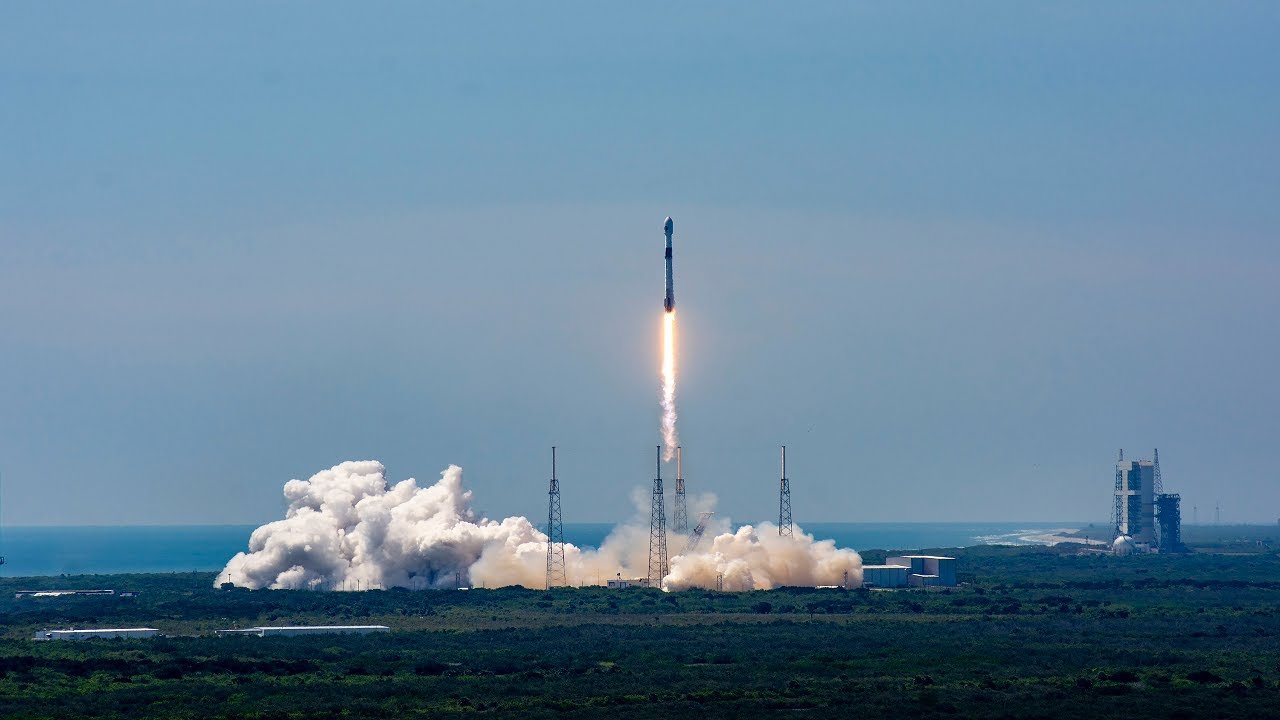
SpaceX launched ESA's Euclid space telescope on a Falcon 9 from Space Launch Complex 40 in Florida at 11:12 a.m. ET on July 1, 2023, toward a Sun-Earth L2 transfer orbit. The first stage, previously used on Ax-2, landed on the drone ship A Shortfall of Gravitas, and Euclid separated from the second stage after the second burn. The webcast also covers Euclid's science goals of studying dark matter and dark energy.
Full written account
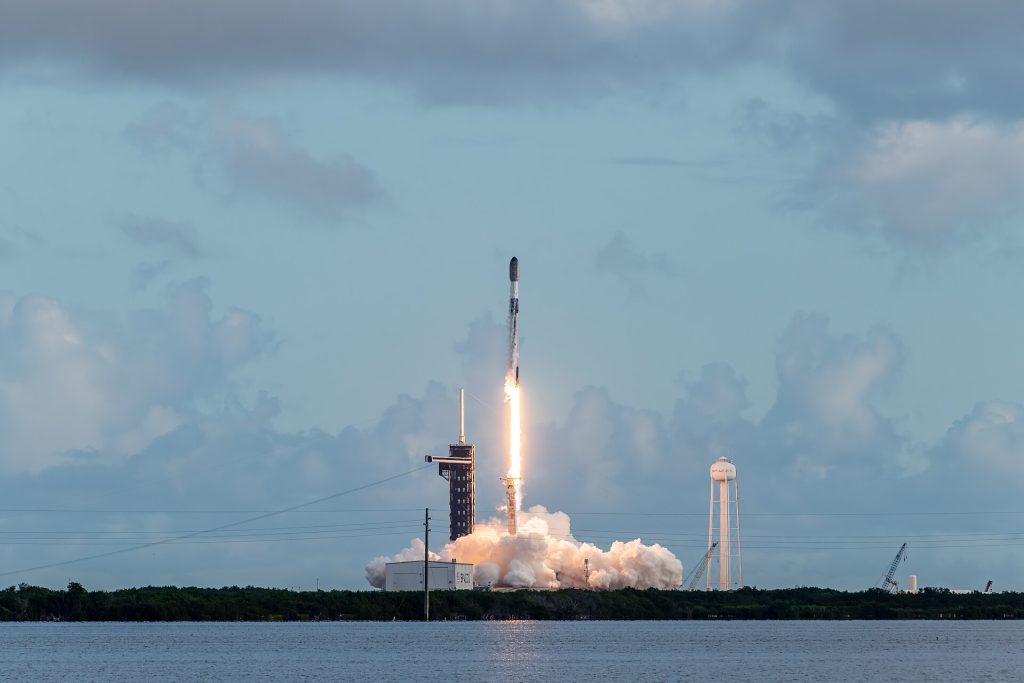
SpaceX's Falcon 9 launched ESA's Euclid space telescope on Saturday, July 1, 2023, at 11:12 a.m. Eastern time from Space Launch Complex 40 at Cape Canaveral Space Force Station in Florida. It was the first time SpaceX had flown a payload bound for a Sun-Earth Lagrange point 2 orbit, a destination nearly 1 million miles beyond Earth's orbit. The telescope's goal is to answer what the universe is made of by mapping dark matter and dark energy.
A first for SpaceX
The launch was SpaceX's 243rd overall mission and its 44th of 2023. The first stage had already flown once, supporting the Ax-2 mission about six weeks earlier. The two fairing halves were brand new. A backup launch opportunity was available the next day at the same time, but the countdown ran to liftoff on schedule.
The vehicle was rolled out from the hangar the day before and raised vertical a couple of hours later. In the final minutes the transporter erector, or strongback, retracted after the clamp arms opened. Both stages held about 1 million pounds of kerosene fuel and liquid oxygen. At T minus 60 seconds the rocket's flight computers took over the countdown, and the Merlin 1D engines were lit just inside T minus 2 seconds.
Why L2
The launch team described the Sun-Earth L2 transfer orbit as ideal for space-based astronomy. A telescope there, like the James Webb telescope, can keep the Sun, Earth and Moon behind it while staying close enough to send large amounts of data to Earth and receive solar power.
The mission
Euclid is named after Euclid of Alexandria, the Greek mathematician and founder of geometry, because the density of matter and energy is linked to the geometry of the universe. Visible stars and galaxies make up less than 5% of the universe's total matter and energy, and dark matter and dark energy account for the rest. ESA's Director of Science said galaxies spin too quickly for the stars and gas they contain, galaxy clusters show too much mass, and the expansion of the universe is accelerating for reasons current equations do not explain.
The telescope is to observe billions of galaxies across 10 billion years of cosmic time and more than a third of the sky, producing a 3D map with time as the third dimension. ESA built and operates the spacecraft, with contributions from the Euclid Consortium and NASA. Over 3,500 people from 21 countries were involved. Thales Alenia Space led the build, and Airbus Defence and Space provided the telescope and payload module. Mission control is at ESA's European Space Operations Center in Darmstadt, Germany, and ESA's ESTRACK deep space antenna network was upgraded for the data volume. The Euclid Consortium has more than 2,000 scientists from more than 300 institutes in Europe, the US, Canada and Japan.
The mission is planned to last six years. A month-long commissioning phase during the trip is followed by two months of performance verification, and ESA expected to share first images in the fall. ESA's Director General Josef Aschbacher said he was sure Nobel prizes would be won based on the data.
The flight
Sequence of events as called out in the webcast:
- Max Q came at about T plus 1 minute, with the engines throttled down to pass through it.
- Main engine cutoff, then stage separation, then the Merlin vacuum engine's first ignition (SES-1).
- Fairing separation came less than a minute after SES-1. Recovery vessel Doug was to retrieve the halves.
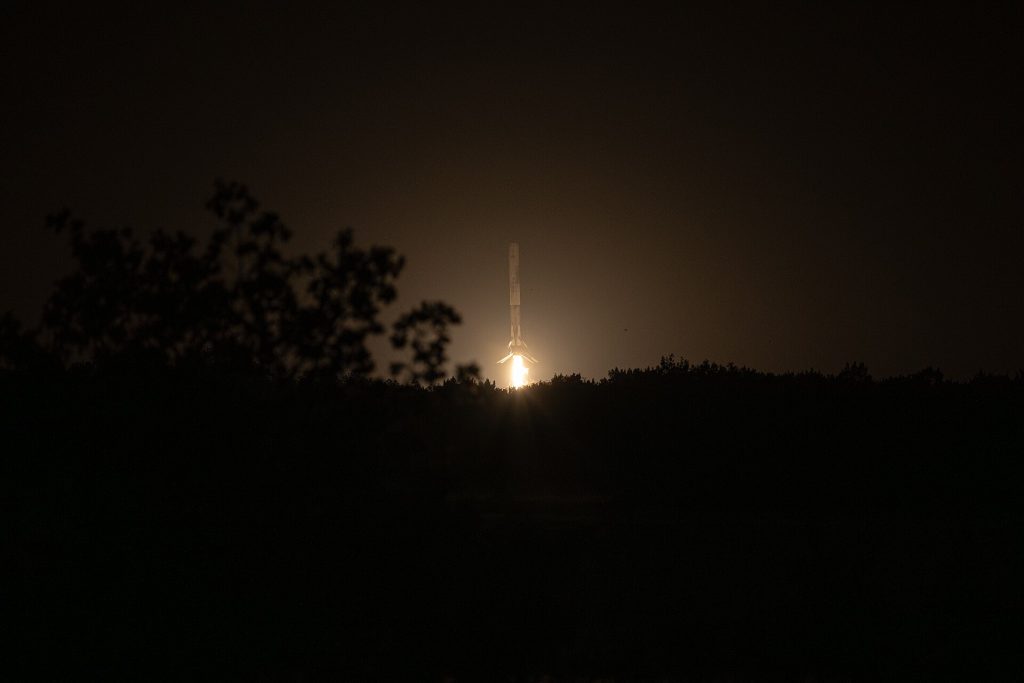
- At about T plus 4 minutes the first stage was heading back. Its entry burn used three engines for about 20 seconds, and a single center engine fired for the landing burn.
- The booster landed on the drone ship A Shortfall of Gravitas in the Atlantic. It was the booster's second landing and SpaceX's 204th successful recovery of an orbital class rocket, counting Falcon 9 and Falcon Heavy first stages.
- SECO-1 produced a nominal orbit insertion call. After a coast, the second burn, SES-2, lasted about 90 seconds and ended with SECO-2 and another nominal orbit insertion.
- Euclid separation was confirmed, and the spacecraft was seen drifting away from the second stage.
Questions this video answers
When and where did Euclid launch?
On July 1, 2023 at 11:12 a.m. ET from Space Launch Complex 40 at Cape Canaveral Space Force Station in Florida.
What rocket launched Euclid?
A SpaceX Falcon 9, whose first stage was flying for the second time after supporting the Ax-2 mission.
Where is Euclid going?
To a Sun-Earth L2 transfer orbit, nearly 1 million miles beyond Earth's orbit.
What is Euclid's goal?
To explore dark matter and dark energy by making a 3D map of the universe, observing billions of galaxies across 10 billion years of cosmic time.
Was the booster recovered?
Yes, it landed on the drone ship A Shortfall of Gravitas, SpaceX's 204th successful orbital-class booster recovery.
Explore related missions
Connected by the topic: Falcon 9