Roman Space Telescope: Falcon Heavy Launch and Path to L2
The short version
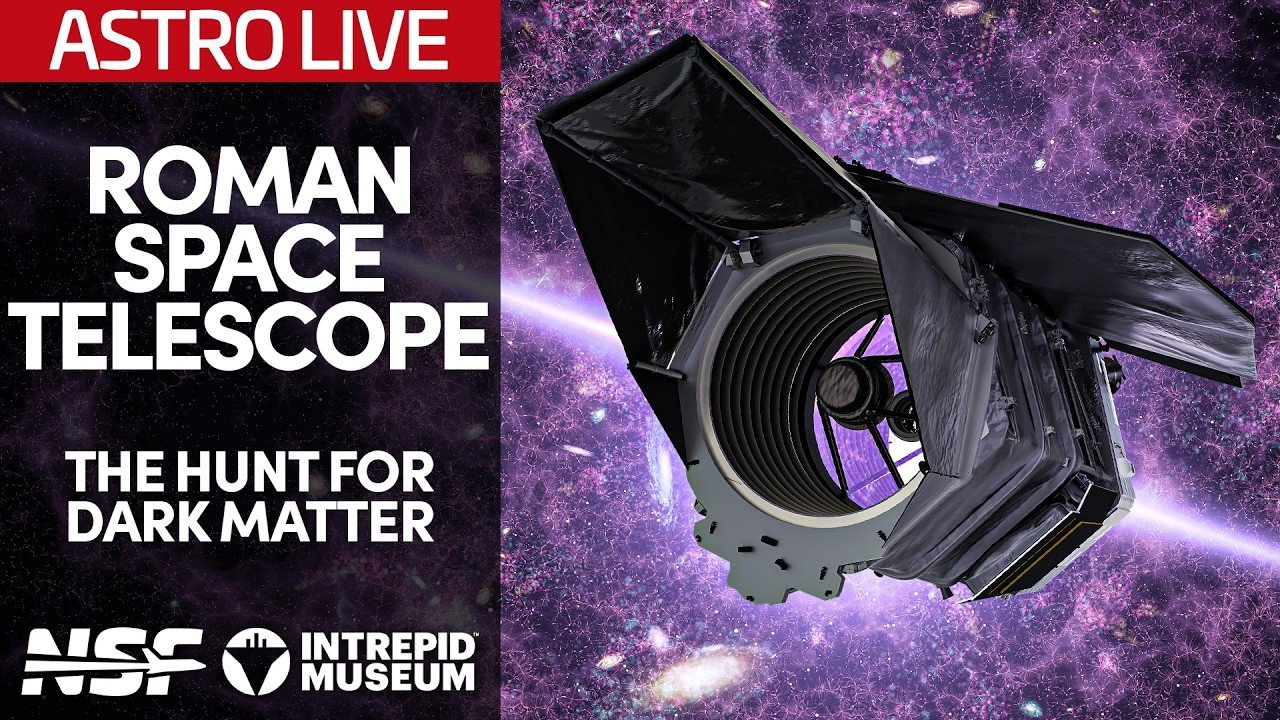
A live conversation with two Goddard team members about the Nancy Grace Roman Space Telescope, which launched on a Falcon Heavy on August 30 and is traveling to Sun-Earth L2. They cover its wide-field survey design, the dark matter and dark energy science, the coronagraph technology demonstration, mirror cleaning and the post-launch checkout, with first images expected early next year.
Full written account
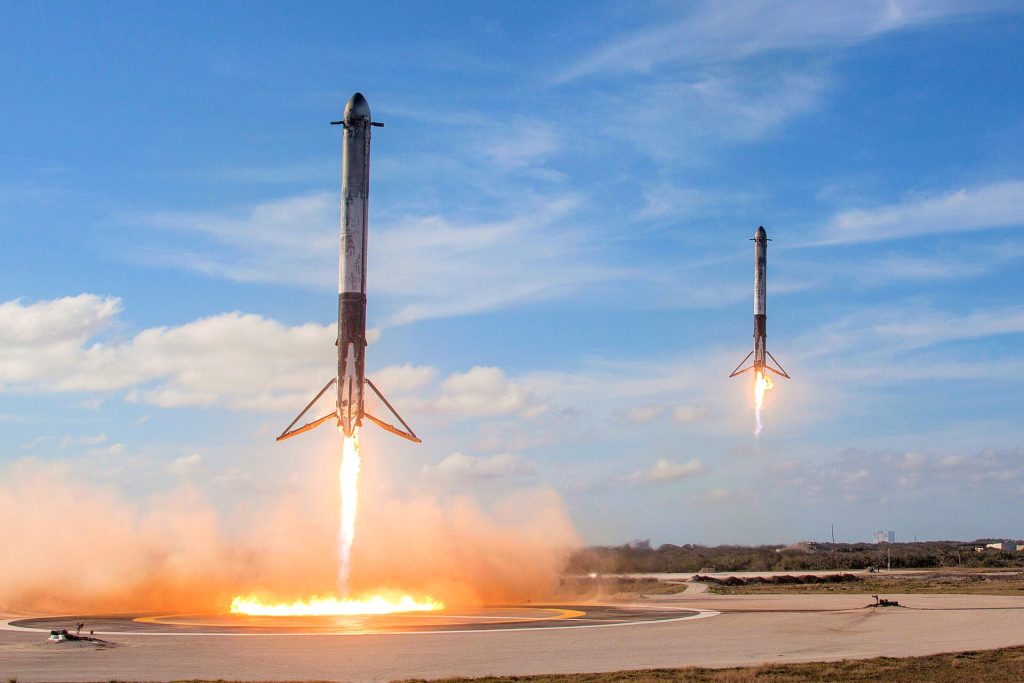
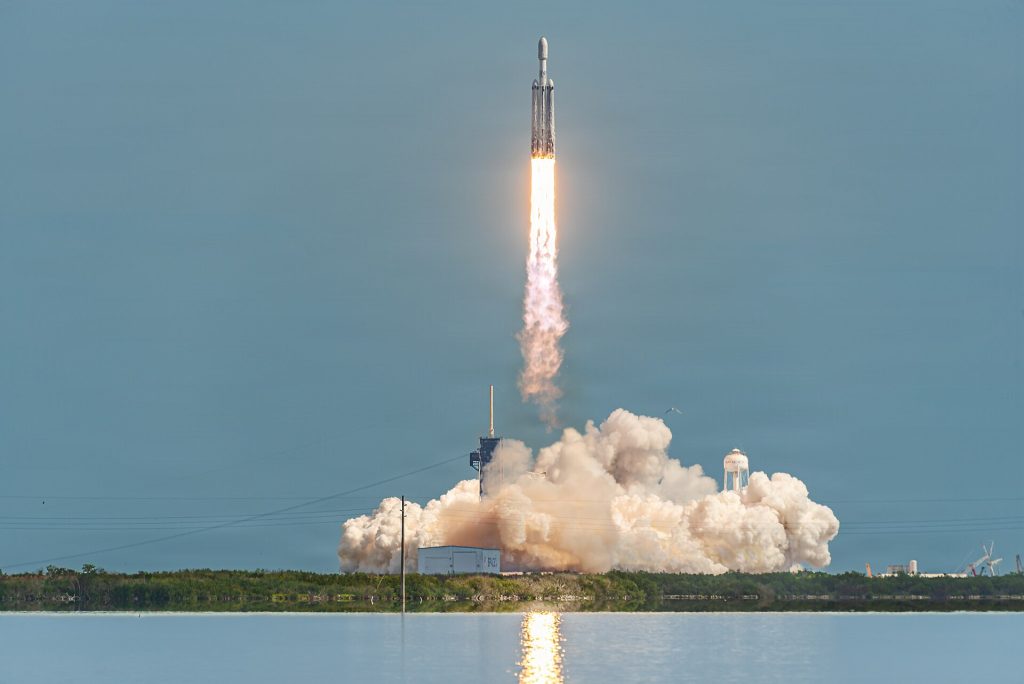
Why does a telescope that is not the sharpest, deepest or most zoomed-in in NASA's fleet matter so much? The Nancy Grace Roman Space Telescope launched on a SpaceX Falcon Heavy on August 30 at 7:20 a.m., and its value lies in how much sky it sees at once. Two Goddard Space Flight Center team members, Rebekah Hounsell and Elaine Stewart, discussed the mission with NASASpaceflight and the Intrepid Museum on Astro Live. The telescope is traveling to the Sun-Earth Lagrange point L2, which they described as about a million miles away.
A survey telescope among specialists
Stewart, who also worked on the James Webb Space Telescope, described the three observatories as cosmic pieces of a puzzle. Hubble has operated for over 30 years. Webb, launched in 2021, is an infrared telescope that looks at very specific targets. Roman is a survey mission with a field of view 100 to 200 times greater than Hubble's.
Hounsell called Hubble the legacy, Webb a cosmic scalpel and Roman the statistical sample. She illustrated the difference with Andromeda: covering half of the galaxy with Hubble takes something like 400 pointings, while Roman needs two for the entire galaxy.
What it is built to find
The science was set by the decadal survey, which put dark energy and dark matter at the top of the community's questions. Roman has three core community surveys:
- The galactic bulge time domain survey, which looks for exoplanets, partly through gravitational microlensing, where a second blip appears if a lensing star has a planet.
- A high latitude wide area survey, which studies galaxy shapes and lensing, an effect tied to dark matter.
- A high latitude time domain survey, which targets type 1A supernovae. These helped show that the universe's expansion is accelerating, which led to the idea of dark energy.
Hounsell, who helped optimize the design of the high latitude time domain survey, said the visible universe is only about 5% of what makes it up. She is excited about the furthest, faintest supernovae. She said recent studies using more supernovae challenge models held for more than 20 years, and that Roman could confirm that dark energy is evolving or show that it is constant. Roman is also expected to find something like a hundred thousand planets, against a confirmed count she gave as around 6,445.
The coronagraph
Roman carries a coronagraph built at the Jet Propulsion Laboratory. It is a technology demonstration using deformable mirrors, whose curvature can be adjusted, to block a host star's light so that light reflected from a planet can be seen directly. Hounsell said it is aimed at Jupiter-like planets. It is meant to prove the concept for the Habitable Worlds Observatory, which Stewart said will likely launch in the 2040s and which is in pre-Phase A.
Cleaning a mirror with a brush
Stewart led contamination control during assembly and testing of the optical telescope, and a year earlier she was cleaning the primary mirror. A team of 20 people worked with her. They used very fine brushes, lightly touching the surface, and then a mixture of heptane and isopropyl alcohol that evaporates quickly, since no liquid should remain on the mirror. Inspection was done with white and ultraviolet light, with the clean room lights off. Particles under five microns cannot be seen, and a hair is around 30 to 40 microns, so the team removed larger fibers and clusters that would affect images most. It took many years to verify the method and prove it to management.
The mirror is about 2.4 meters across, similar to Hubble's. Stewart said it came from the DoD, and it was refurbished, recoated and reimagined at L3Harris in Rochester, New York. The guests described it as lighter than Hubble's, with a thinner coating. The Wide Field Instrument has 18 sensors, which one host compared to a 300-megapixel camera.
Launch, deployment and what comes next
For launch the telescope was folded, with the deployable aperture cover closed to protect the mirror from particulate shaken loose by vibration and acoustics. The solar arrays, the high gain antenna and the cover deployed within a couple of days of launch. Stewart said there were not as many deployments to worry about as on Webb. Testing deployables on Earth requires offloading gravity, and deploying a zero-gravity design under gravity can damage hardware.
The launch was so accurate that Roman has more fuel than anticipated, which extends its expected 5-year mission. The team is turning on and calibrating instruments, including the star trackers. Roman's first photons on sky were released, showing the strut pattern and the 18 sensors. The first image release is expected early next year. Data comes down at something like 1.4 terabytes a day and will be public right away, through the Roman Research Nexus and MAST.
The show's next episode, on November 15, covers NASA's Space Launch System.
Questions this video answers
When did Roman launch?
It launched on August 30 aboard a SpaceX Falcon Heavy, at 7:20 a.m.
Where is Roman going?
To the Sun-Earth Lagrange point L2, nearly one million miles from Earth.
How does Roman differ from Hubble and Webb?
It is a survey mission with a field of view 100 to 200 times greater than Hubble's, while Webb looks at specific targets.
When will the first images be released?
Early next year, after the instruments are calibrated and checked out.
Is the launch fuel situation good?
The launch was so precise that more fuel remains on board than anticipated, which extends the expected 5-year mission lifetime.
Will Roman data be public?
Yes, the data will be public right away, available through the Roman research nexus and MAST.
Explore related missions
Connected by the topic: Falcon Heavy