Would a Voyager 3 Still Carry a Golden Record? Storage Compared
The short version
The video looks at the golden records on Voyagers 1 and 2, launched in 1977, and asks whether a hypothetical Voyager 3 would carry one today. It explains how the record is built and protected, what may happen to it over billions of years, and why fused quartz storage, though more durable, would be hard for finders to read. It concludes that a metal version of a vinyl record might still be the best choice.
Full written account
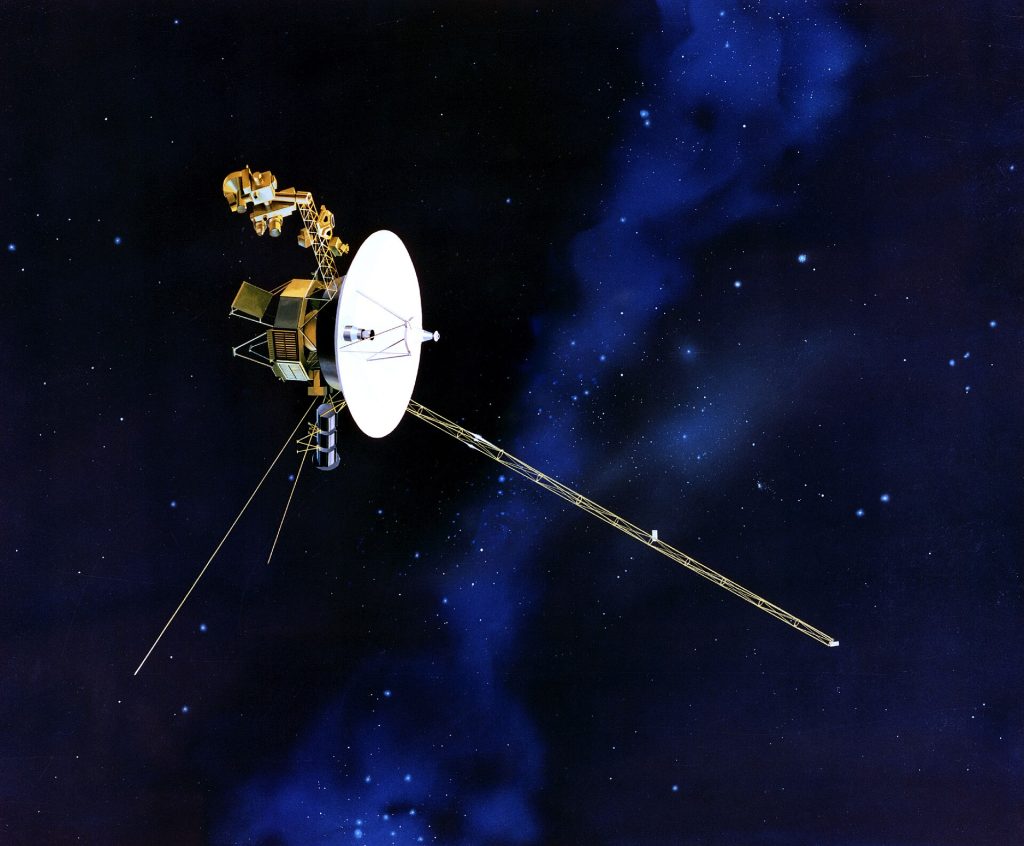
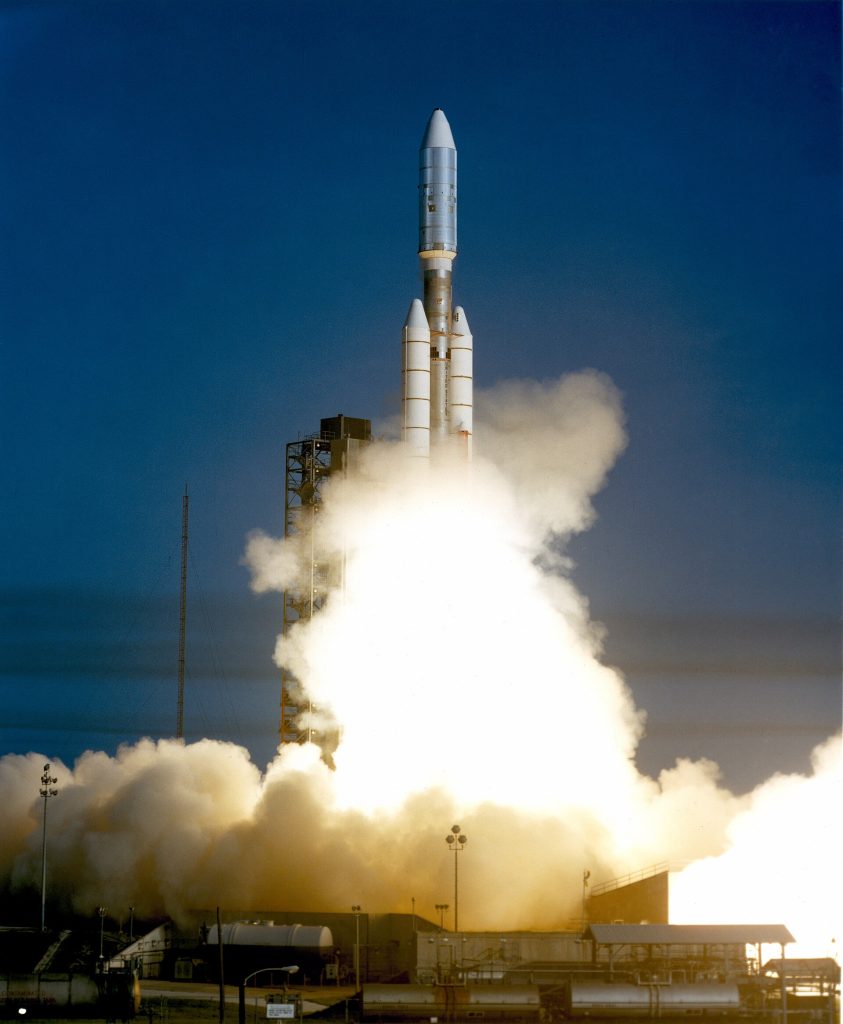
Voyager 2 was launched on 20 August 1977 and Voyager 1 on 5 September 1977. Each carries a gold-plated copper record meant to tell the story of Earth to anyone who finds the probes. If a follow-up called Voyager 3 were launched today, would it carry the same thing?
Why the Voyagers carry a message
The Voyagers were not the first spacecraft sent on trajectories out of the solar system. Pioneers 10 and 11, launched in 1972 and 73, each carried a small metal plaque giving their name and place of origin. For the Voyagers a more ambitious message was proposed: a time capsule. Because the probes travel slowly compared to light, it would take them between 77,000 and 84,000 years to reach Proxima Centauri, 4.2 light years away, and they are not heading toward it. They need about 20,000 years just to pass through the Oort cloud.
What is on the record
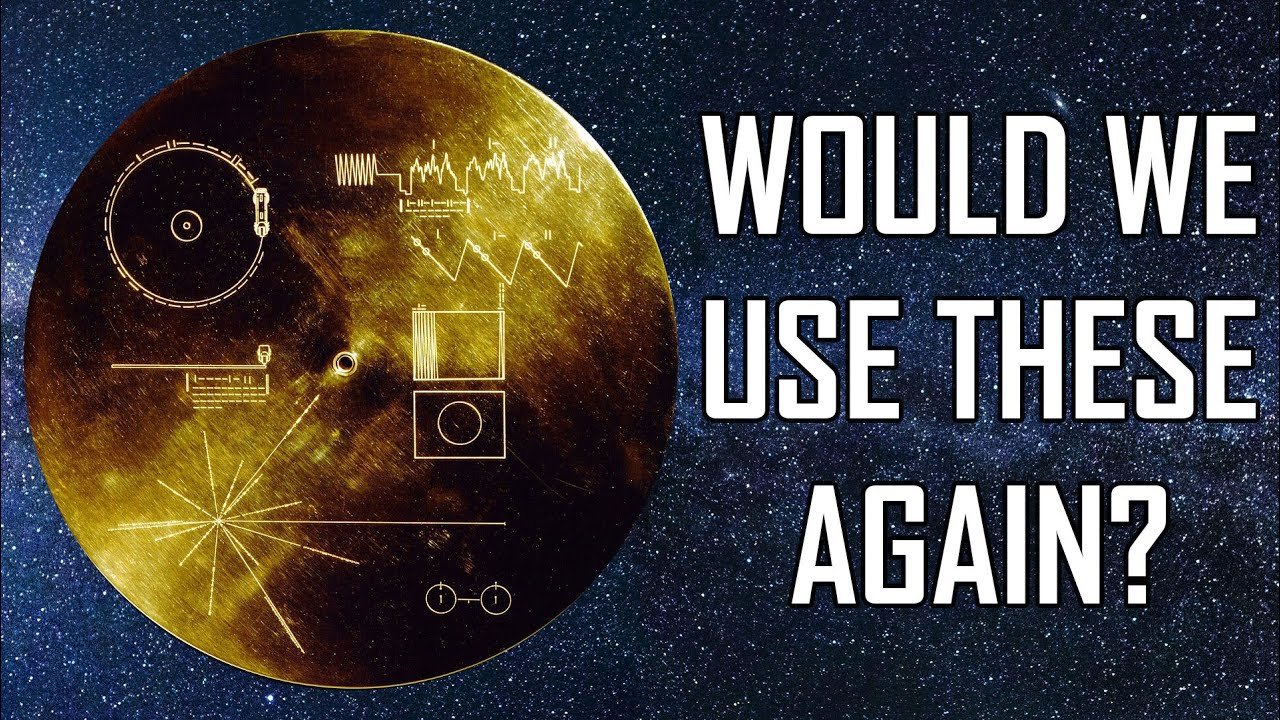
The idea came from Carl Sagan, with Frank Drake, John Lomberg and NASA helping assemble the content. It holds 115 images, natural sounds, music, greetings in 55 languages, and printed messages from President Carter and UN Secretary General Waldheim. The images were scanned like an old-style TV and encoded in analog form as 512 vertical lines. In the late 1970s, options for encoding data to survive for billions of years were limited, and a metal copy of a vinyl disc was judged the most efficient way to compress this variety of data. The popularity of the Pioneer plaques also suggested it would be good PR.
How the record is built
It is a gold-plated copper record that can be played and comes with its own stylus. Its design speed is 16 and 2/3 RPM instead of 33 RPM. Twelve copies exist: two in space, the rest at NASA centers.
The probes travel at about 56,000 to 61,000 km/h, so interstellar dust impacts, solar wind particles and cosmic rays can knock atoms out of the metal, like sand blasting with atomic nuclei. To protect it, the record has an aluminium cover plated with ultra-pure uranium 238. Uranium is dense and blocks x-rays, gamma rays and cosmic rays about five times more effectively than lead. A finder could also use the ratio of remaining uranium to other elements to work out the age of the record and probe. The cover doubles as an infographic showing where the probe came from and how to play the record.
The record's long future
Nick Oberg of the Kapteyn Astronomical Institute in the Netherlands and a colleague calculated the probes' likely encounters. Voyager 1 and 2 will pass the red dwarf Ross 248 in about 30,000 years, and complete one orbit of the Milky Way in about 500 million years. Each would pass within 150 AU of at least one star. Voyager 1 moves further above and below the galactic plane, into areas with more dust, so Voyager 2's cover will likely stay legible while Voyager 1's might erode.
Both records are calculated to last about 5 billion years or more, by which time they will be caught up in the merger of the Milky Way and Andromeda. Oberg's models give a 1 in 5 chance that they are kicked out into the space between galaxies.
Could modern storage do better?
The most resilient storage yet developed is fused quartz, written with a femtosecond laser at nanoscale. A 12 cm disc can hold up to 360 terabytes and is estimated to last at least 14 billion years. But reading it needs highly sophisticated technology, and any electronic reader sent along would decay long before the quartz. That would defeat the purpose of showing who we were in the simplest, easiest to understand form. So the 1970s technology of a metal vinyl-style record might still be the best thing to send.
Questions this video answers
When were Voyagers 1 and 2 launched?
Voyager 2 launched on 20 August 1977 and Voyager 1 on 5 September 1977.
What is the golden record made of?
It is a gold-plated copper record, not gold-plated vinyl, and it can be played. It comes with its own stylus.
How fast should the golden record be played?
Its design speed is 16 and 2/3 RPM instead of the normal 33 RPM, so a custom speed controller would be needed on Earth.
How many copies of the golden record exist?
There are 12 copies: two in space and the rest at various NASA centers.
What does the record cover do?
It is aluminium plated with ultra-pure uranium 238. It shields the record from x-rays, gamma rays and cosmic rays, and shows where the probe came from and how to play the record. The remaining uranium ratio could also be used to date the record.
Why not use fused quartz storage on a new Voyager?
Quartz discs could store up to 360 terabytes and are estimated to last at least 14 billion years. Reading them would need highly sophisticated technology that would take far more explaining than a record cover allows.