Voyager, Pioneer and New Horizons: Where the Probes End Up
The short version
Five spacecraft, Pioneer 10 and 11, Voyager 1 and 2 and New Horizons, are on one-way trajectories out of the solar system. The video covers how the Grand Tour idea led to the Pioneer and Voyager probes, how each spacecraft is built and powered, and which stars they may pass in the far future. Some upper rocket stages and spin-down weights are also on escape trajectories.
Full written account
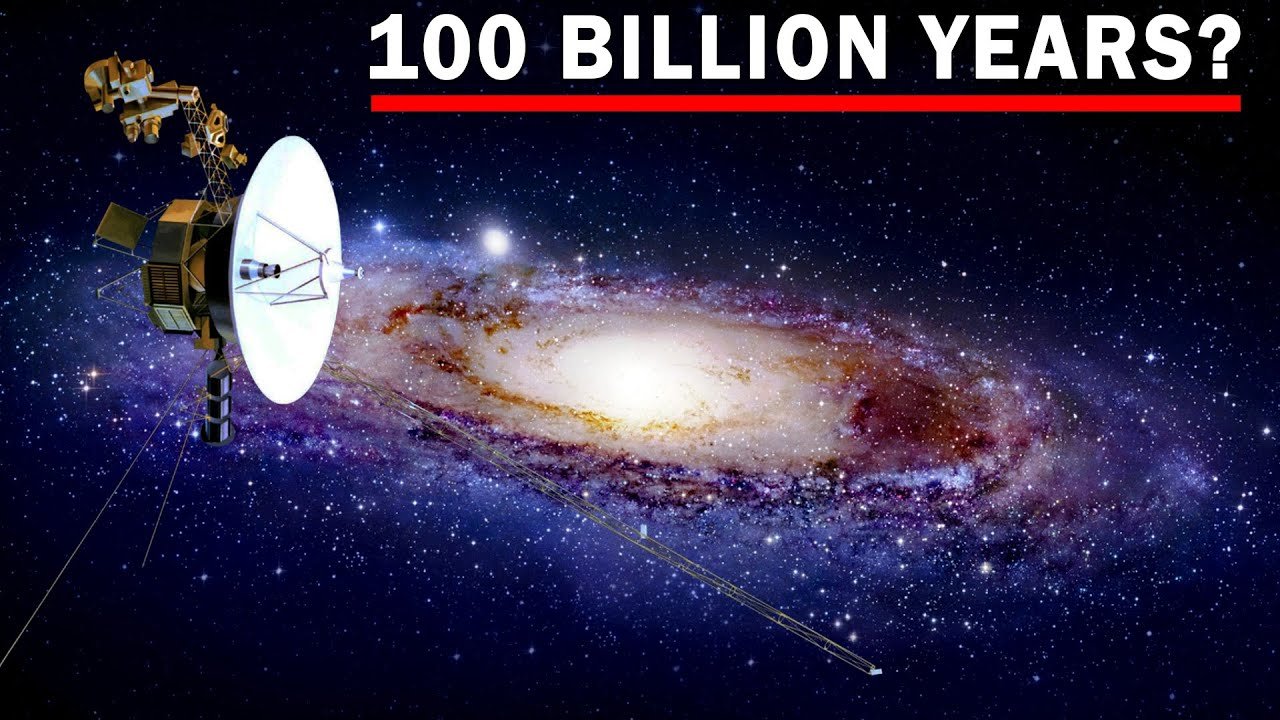
Five man-made objects are on course to leave the solar system: Pioneer 10, Pioneer 11, Voyager 1, Voyager 2 and New Horizons. Voyager 1 and 2 have already crossed the heliopause, the boundary where the solar wind and the interstellar wind are in equilibrium. Calculations suggest it could take 10 to the power of 20 years before such an object collides with a star.
The Grand Tour idea
In 1964, Gary Flandro at NASA's Jet Propulsion Laboratory noticed an alignment of the outer planets that occurs every 175 years and would next occur in the late 1970s. It would let one spacecraft visit all the outer planets using gravity assists. The Grand Tour initially called for four spacecraft, but its estimated cost of a billion dollars coincided with cost cutting after Apollo began, and it was cancelled and replaced by the two-probe Voyager program.
Pioneer 10 and 11
Pioneer 10 launched on March 3, 1972 and reached Jupiter in November 1973. Pioneer 11 launched on April 5, 1973. TRW Incorporated was awarded the contract in February 1970. The probes weighed about 260 kg and were powered by four radioisotope thermoelectric generators using plutonium 238. They were designed for two years of power, but Pioneer 10 kept going for 29 years. Their 2.74 m dish and twin 8 watt transceivers sent data at 256 bits per second.
Jupiter's radiation belts proved 10 times higher than designers predicted. Pioneer 10 received an integrated dose of 2,000 rads from electrons and 56,000 rads from protons, yet survived, though false commands were generated by data corruption. On June 13, 1983 it crossed the orbit of Neptune, the first man-made object to leave the proximity of the major planets. Communications were lost in January 2003, and its last known heading was toward Aldebaran in Taurus. Pioneer 11 passed Jupiter in 1974 and Saturn in 1979; contact was lost in November 1995.
The Voyagers
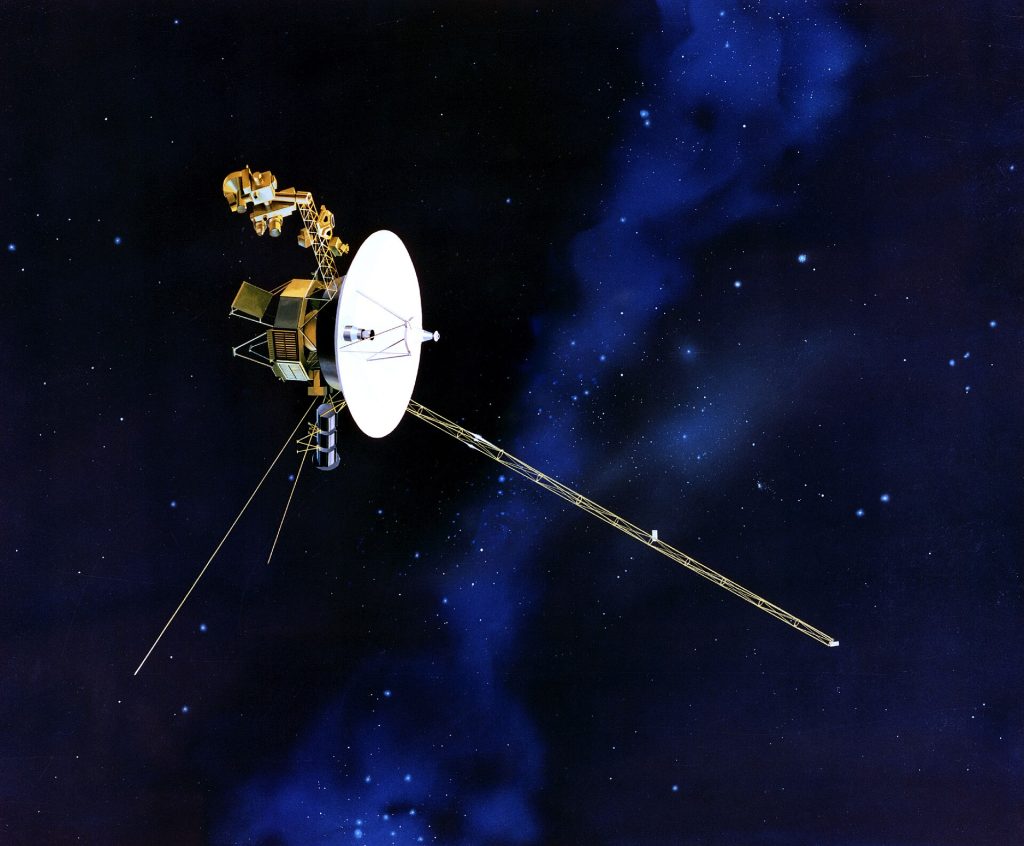
Voyager 2 launched in August 1977 and Voyager 1 followed 16 days later. At 773 kg each, they were near three times the weight of the Pioneers, with 3.7 m dishes and three radioisotope generators. Six computers carried a total of 32 kilobytes of memory, and a tape recorder could hold about 67 megabytes. Once Voyager 1 reached Saturn, the option to visit Titan meant it could not go on to Pluto, because the trajectory would take it out of the plane of the solar system.
By 2011 the plutonium output had dropped to 76% of the initial figure, and thermocouple degradation reduced it to about 57%. There may be enough power for communications until around 2032. Voyager 1 is moving at 3.6 AU per year and in about 40,000 years will be within 1.6 light years of Gliese 445. Voyager 2, at about 3.3 AU per year, will pass within 1.7 light years of Ross 248 in about 40,000 years.
New Horizons
Launched in 2006, New Horizons flew past Jupiter in 2007 and Pluto on July 14, 2015. It weighed 470 kg at launch. At Pluto it passed within 7,800 miles of the surface at 38,000 mph, and signals took four and a half hours to reach Earth. It has four computers and its power is expected to last until at least 2050. Its third stage and the yo-yo despin weights are also on escape trajectories, though their exact paths are uncertain because they cannot communicate.
Questions this video answers
Which objects are leaving the solar system?
Pioneer 10, Pioneer 11, Voyager 1, Voyager 2 and New Horizons, plus some associated upper stages and weights.
When was Pioneer 10 launched and when was contact lost?
It launched on March 3, 1972, and communications were lost in January 2003.
How long might Voyager be able to communicate?
It is estimated there may be enough power for communications until around 2032.
Where is Voyager 1 heading?
Toward the solar apex in Hercules, and in about 40,000 years it will be within 1.6 light years of Gliese 445.
How long until the probes might hit a star?
It has been calculated it could take 10 to the power of 20 years, though they may come close to stars much sooner.
Explore related missions
Connected by the topic: Voyager and Grand Tour probes