Pallas-1, Spectrum and Starship Flight 14: September Space Updates
The short version
A September 18th news round-up covering launches from the first half of September, including the debut orbital successes of China's Pallas-1 and Isar Aerospace's Spectrum. It also covers Starship flight 14 plans (a fully orbital flight of about nine hours), SpaceX stepping back from Falcon 9, and Rocket Lab's court challenge to Blue Origin's Mars Telecommunications Orbiter award.
Full written account
Two rockets that had never reached orbit before launched successfully in the first half of September, and SpaceX is reportedly stepping away from Falcon 9. A September 18th round-up of space news covers these stories and the lead-up to Starship flight 14.
New rockets
On September 1, China's Galactic Energy flew the maiden launch of Pallas-1, a liquid-fuelled rocket with seven kerosene and liquid oxygen engines. It stands 52 m tall, is 3.5 m in diameter and weighs about 283 tons at liftoff, aiming to carry 7 tons to low Earth orbit. Its first stage has grid fins and landing legs for future recovery, though this mission was not to attempt that. Stage separation was shown and the team celebrated, but almost three weeks later no orbital elements had been published, so it is possible the flight was intentionally suborbital.
On September 5, Isar Aerospace's Spectrum flew to orbit from Andøya, Norway on a mission called Onward and Upward. Its first attempt in 2025 failed soon after launch. Spectrum has nine Aquila engines on the first stage and a vacuum-engine second stage, burning liquid oxygen and liquid propane. This made it the first rocket to reach orbit on propane and the first successful orbital launch from western Europe. It made a circularization burn 50 minutes after launch, deployed five CubeSats and deorbited its stage.
Other launches
- September 2: Electron launched a Japanese X-band radar satellite for Strix from Mahia, the 94th Electron launch.
- September 3: a GSLV launched EOS 5, about 2.4 tons and the heaviest payload the vehicle has launched, from Satish Dhawan.
- September 11: a surprise Electron launch, the 95th, from Mahia.
- September 15: Vega C flew its first dual-manifest launch with a Vespa adapter, deploying Sentinel 3C and then Flex, which looks for chlorophyll fluorescence.
- September 16: Soyuz 2.1B launched Progress MS-35 from Baikonur after a rollback for third-stage issues, carrying about 2.5 tons of cargo, expected at the ISS on the 19th.
Starship flight 14
Flight 14 moved to September 28th. On flight 13 the booster relit only eight of 13 engines for landing, which SpaceX believes was due to ice in the tanks. More filtering and software changes are planned. No catch of the booster or ship will be attempted. The ship is planned to orbit six times over about nine hours, passing over Hawaii for the first time, and deorbit into the Pacific west of South America. An initial suborbital trajectory allows the orbit insertion to be cancelled before a circularization burn about 20 minutes later. It will deploy operational Starlinks. Two tiles recovered from Starship 40 will fly again on Starship 41.
SpaceX and Falcon 9
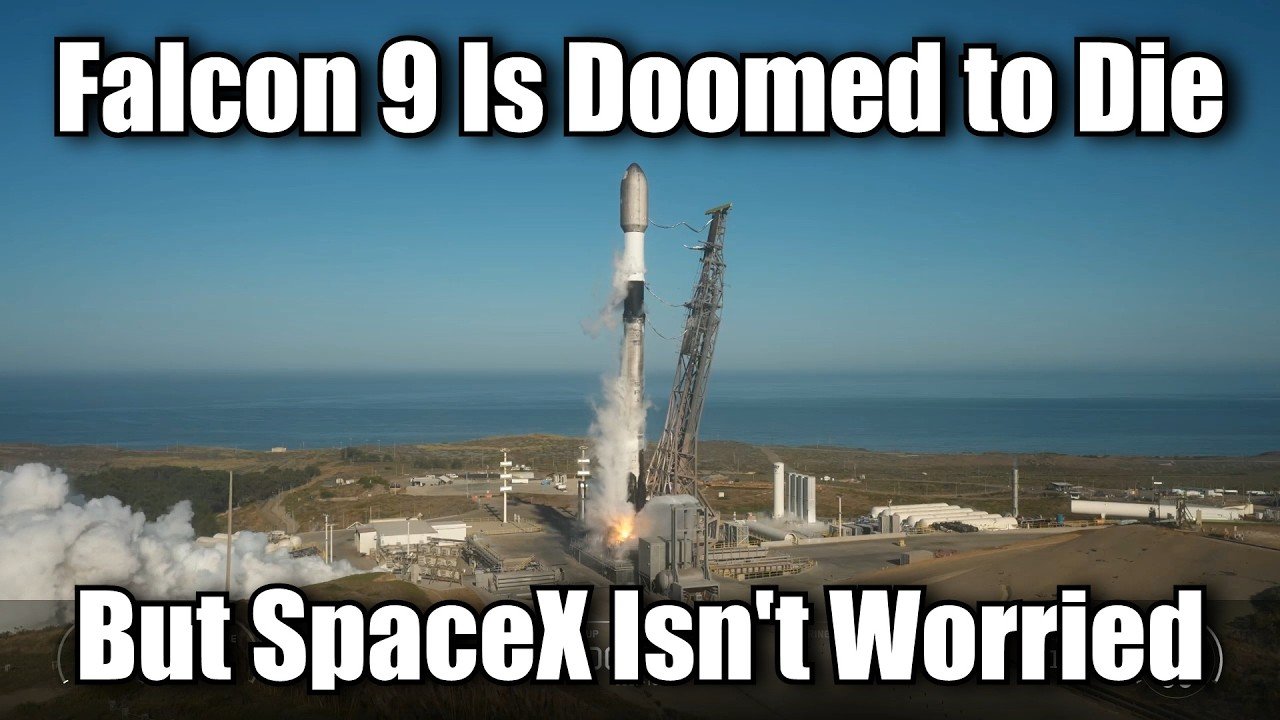
Companies booking launches after 2028 are reportedly being told SpaceX is not interested in flying Falcon 9. Exolaunch and Space Ops have bought dedicated Falcon 9s for their own rideshares. With Starlink moving to Starship, the cost per Falcon 9 launch would rise as fixed costs spread over fewer flights. Separately, NASA is reportedly sending money to Boeing to certify Starliner on a new rocket, either Vulcan or New Glenn.
Mars and the Moon
NASA announced a $700 million firm fixed-price contract for the Mars telecommunications orbiter to Blue Origin, due by December 2028 with the network operational by 2030. About a week later Rocket Lab challenged the award in court.
The Lunar Reconnaissance Orbiter data show a new crater, 222 m wide and 43 m deep, formed between April 11 and May 22, 2024. Such an impact is expected perhaps once per century.
Questions this video answers
What will Starship flight 14 do?
It is planned as a fully orbital flight of about nine hours and six orbits, deploying operational Starlink satellites, with no booster or ship catch attempted. It was pushed to September 28th.
Why did the Starship booster not land correctly on flight 13?
Only eight of 13 engines lit for landing, which SpaceX believes was due to ice in the tanks.
What is the Mars Telecommunications Orbiter contract?
A firm fixed-price $700 million contract awarded to Blue Origin, due for delivery no later than December 2028, with the network operational at Mars by 2030. Rocket Lab challenged the award in court.
What made Isar Aerospace's Spectrum launch notable?
It reached orbit from Andøya, Norway on its second attempt, the first propane-fuelled rocket to reach orbit and the first successful orbital launch from western Europe.
Explore related missions
Connected by the topic: Electron