Webb’s 344 Single Points of Failure: Torn Sunshield to L2 Orbit
The short version
The James Webb Space Telescope lifted off on an Ariane 5 from French Guiana on Christmas Day 2021 and then unfolded itself on its way to a point nearly a million miles from Earth. A review board had counted 344 tasks with no backup, and the sunshield tore in a 2018 ground rehearsal. The deployment got through every one of them, and commissioning was done by July 2022.
Full written account
How does a telescope survive unfolding itself when it can never be repaired? The James Webb Space Telescope, worth nearly $10 billion, began unfolding days after its Christmas Day 2021 launch, racing toward a point nearly a million miles from Earth. A review board had found 344 places where one failure could end the whole mission.
Why Webb had to unfold
Webb was built to find the first galaxies, which formed a few hundred million years after the Big Bang. Their light stretched into the infrared on the way, and Hubble could not catch it well because Hubble itself is warm and glows in the infrared. Webb had to be colder than -223°C, or its own heat would drown out the faint light. It needed a mirror 6 and 1/2 m wide, so the mirror became 18 gold-coated hexagons and the telescope was folded to fit inside the rocket. Its sunshield was five layers of film, each a tenth of a millimeter thick.
Delays and a tear
In 1999, planners pictured a telescope costing about $1 billion and launching in 2007. Costs climbed and the launch date slipped. In July 2011 a House committee moved to cancel the project, calling it billions over budget and plagued by poor management; $3 billion had been spent by then. The American Astronomical Society spoke up for Webb, and that November Congress reversed course and capped the money needed to finish at $8 billion.
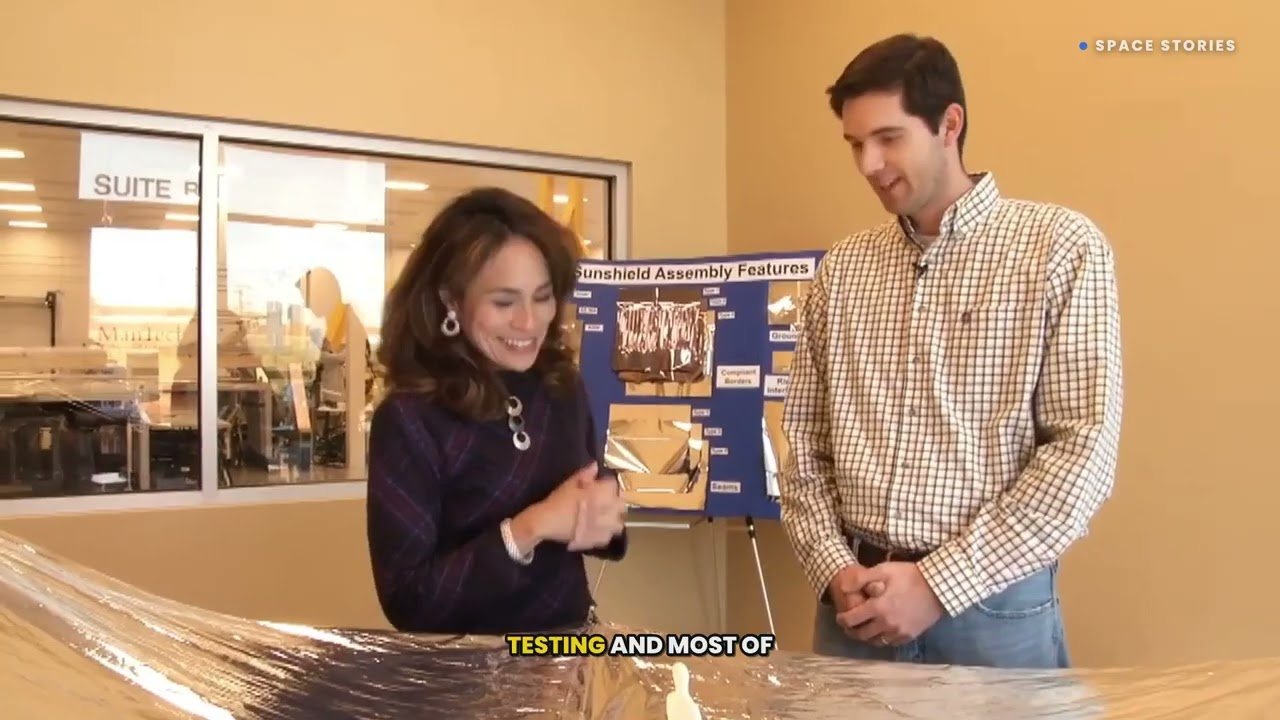
In March 2018, engineers rehearsed the sunshield deployment on the ground and the film tore. The cables had not tightened enough either, so NASA pushed the launch back. An independent review board then counted the 344 tasks with no backup plan. Assembly was finished in 2019, 12 years later than planned. NASA put Gregory Robinson in charge, and he raised the share of measures finished on time from 50% to 95%.
Launch and deployment
An unplanned clamp release, an electrical fault and bad weather pushed the launch back a little more. Then an Ariane 5 lifted off from French Guiana on Christmas Day 2021, on schedule. Twenty-seven minutes later the telescope separated, and a camera on the rocket watched the solar panel unfold.
Webb was launched slightly slower than needed on purpose: too slow could be fixed with a burn, too fast could not. About 12 hours after launch the engines fired for 65 minutes for the first of three course corrections. Most steps were commanded from Baltimore.
On December 28th two pallets holding the folded sunshield were lowered, and the next day a tower pushed the telescope away from the spacecraft body. On December 31st two booms began pulling out the five layers. The left boom stalled because controllers had not received confirmation that a protective cover had fully rolled up; they studied extra data and then went ahead. The shield motors ran hotter than expected and the solar panels made less power than Webb used, so controllers reset the panel settings, turned the spacecraft slightly to cool the motors and delayed tensioning by 1 day. By January 4th all five layers were tensioned, in a kite shape 14 m across.
Questions this video answers
How many single points of failure did Webb have?
An independent review board counted 344 tasks with no backup plan.
What happened to the sunshield in 2018?
During a ground rehearsal of the sunshield deployment in March 2018, the delicate film tore.
Where did Webb launch from and on what rocket?
An Ariane 5 launched it from French Guiana on Christmas Day 2021.
How long did the sunshield take to deploy?
The booms began pulling the layers out on December 31st and all five layers were tensioned by January 4th.
Why was Webb launched slightly slow?
Too slow could be fixed with a burn, but too fast could not.
How well did the mirror segments have to line up?
Within 50 nm, less than one wavelength of the light they would detect.
Explore related missions
Connected by the topic: Ariane 5