James Webb Space Telescope
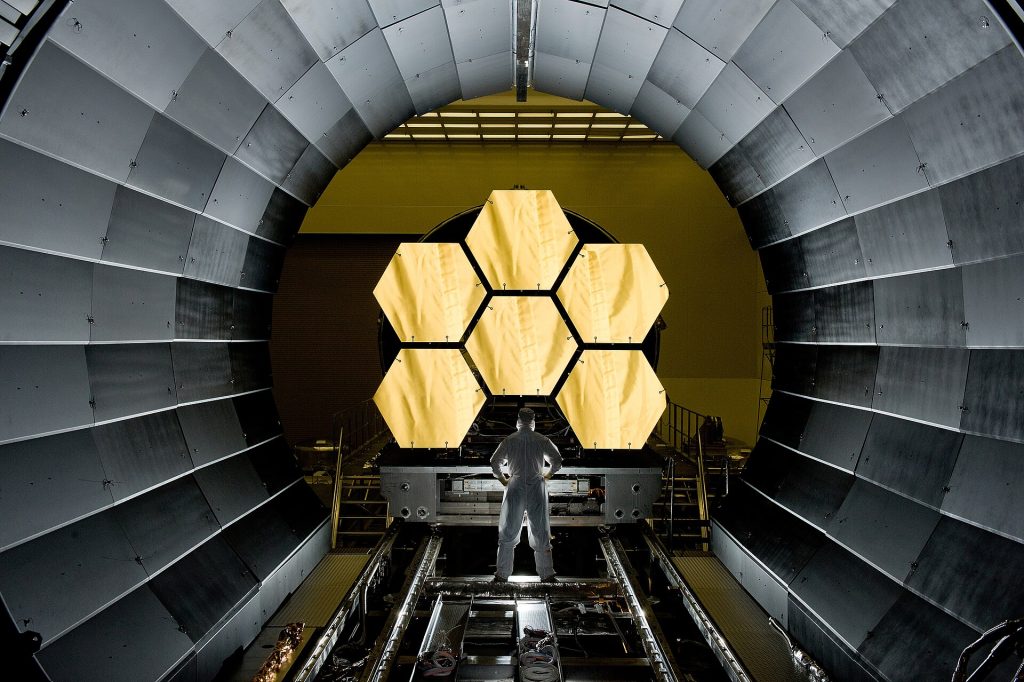
The James Webb Space Telescope launched on an Ariane 5 from French Guiana on 25 December 2021 and travelled to the Sun-Earth L2 point, about a million miles from Earth. Its tennis-court-sized sunshield and 18-segment gold mirror unfolded on the way, and its first science images were released in July 2022.
What happened
All times Coordinated Universal Time (UTC)
-
Watch this moment · 1:22:19
Liftoff of Ariane 5
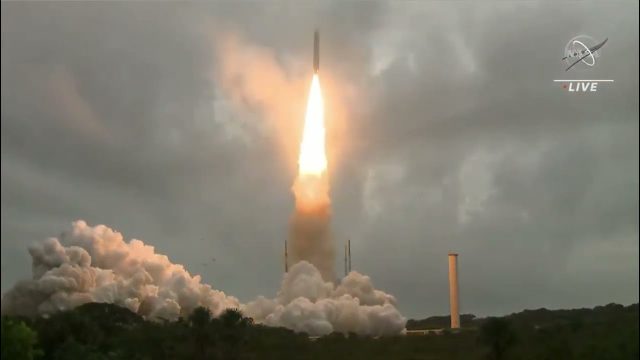
Webb lifted off at 7:20 a.m. Eastern time on an Ariane 5 from Europe's Spaceport. The Vulcain main engine ignited first, and the two solid boosters about seven seconds later.
-
Watch this moment · 1:24:35
About 2 minutesapproximately
Boosters and fairing
The solid boosters separated at about two minutes 15 seconds, at 44 miles altitude, and the fairing that protected Webb was jettisoned about a minute later.
-
Watch this moment · 1:49:39
Separation from the upper stage
After the upper stage burned for about 16 minutes and coasted, springs gently pushed Webb away at an altitude of about 864 statute miles.
-
Watch this moment · 1:51:59
Solar array deploys
The solar array unfurled slightly earlier than planned and the telescope was confirmed power positive. The commentators reported that the performance of the launch was nominal.
-
Watch this moment · 5:35
First daysapproximately
Sunshield pallets and tower
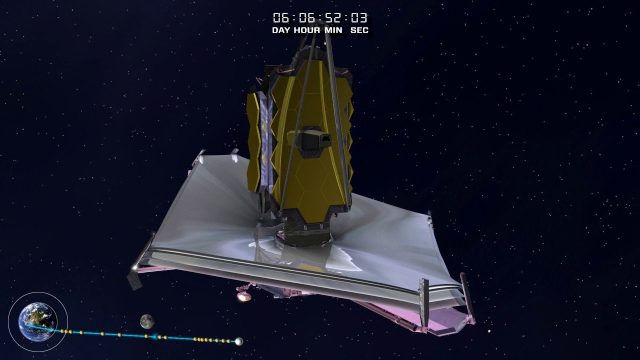
The first transformations were the sunshield pallets, then the tower that separates the telescope and instruments from the spacecraft and sunshield.
-
Watch this moment · 7:38
First weeksapproximately
The sunshield membranes
The membranes were released and tensioned. Each is thinner than a human hair, and together they let the telescope cool to about 385 degrees Fahrenheit below zero.
-
Watch this moment · 8:21
Thenapproximately
Mirrors and radiator
The secondary mirror deployed and latched in place, the aft radiator released, and the wings of the primary mirror deployed. That completed the major deployments.
-
Watch this moment · 9:20
29 days after launchapproximately
Orbit insertion at L2
A final trajectory correction put Webb into a halo orbit around the Sun-Earth L2 point.
-
Watch this moment · 10:30
About 160 days after launchapproximately
Commissioning
Once the mirrors and detectors were cold enough, the team aligned each movable mirror segment. Commissioning was planned to finish about 160 days after launch, when the science mission would be ready to begin.
Key facts
| Vehicle | Ariane 5 |
|---|---|
| Mission name | James Webb Space Telescope |
| Launch site | Europe's Spaceport, Kourou, French Guiana |
| Crew size | 0 |
| Outcome | In progress |
Videos about this mission
The videos, in date order
Drag, zoom or press play to watch them on this page.
January 2017 – December 2024
Drag to explore dates · Select a video to preview.
Dates are when each video was first published on YouTube.
A telescope too far to fix
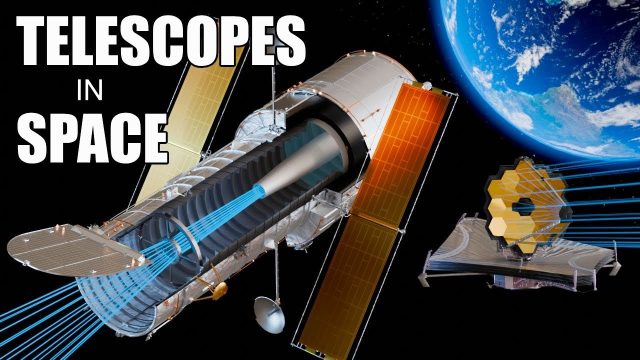
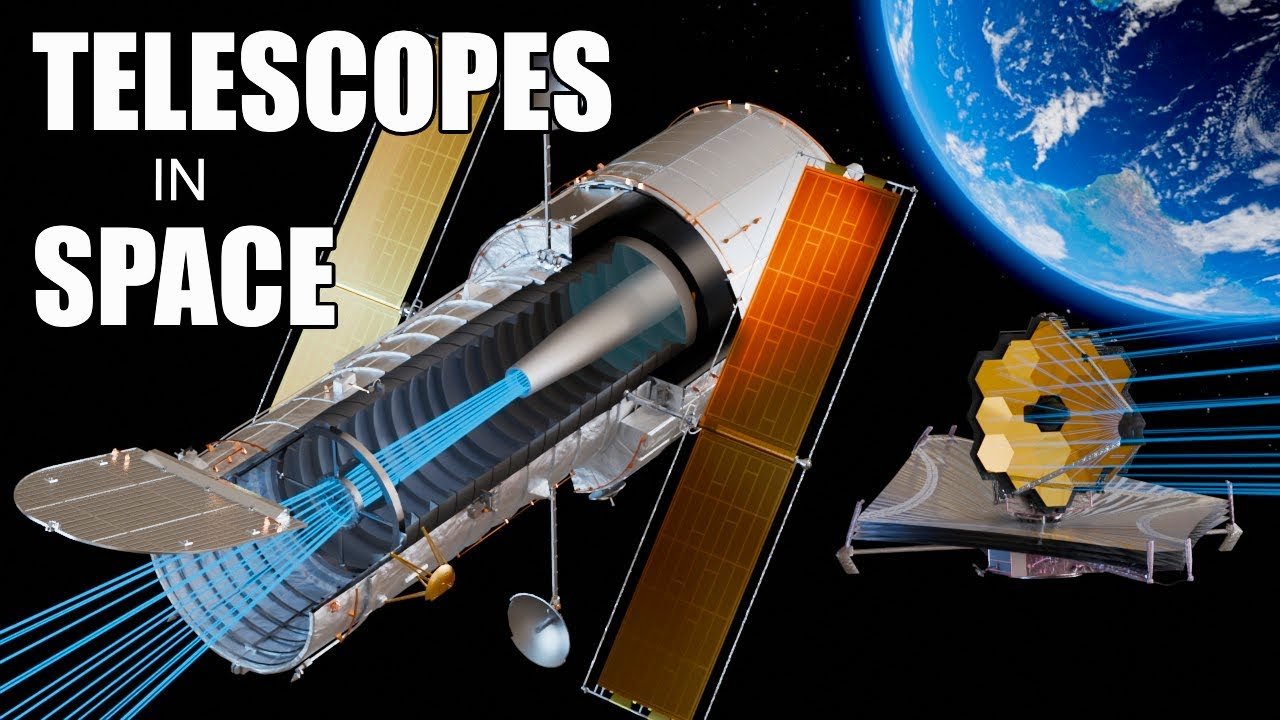
Webb orbits around L2, a point on the far side of the Earth from the Sun, where the Sun, Earth and Moon all lie in the same direction. The sunshield blocks the light and heat from all three. Hubble was built to be serviced in low Earth orbit. Webb cannot be reached by any crew, so the engineering approach was to test everything on the ground and design for no second chances.
The broadcast in video 37 lists some of the numbers: 18 gold-coated beryllium mirror segments, four instruments, a five-layer sunshield and 178 non-explosive release actuators, 107 of them for the sunshield membranes. The telescope was tested in Chamber A at the Johnson Space Center, which was built for Apollo spacecraft, in a 100-day test, then shipped to French Guiana on a 16-day voyage.
Launch on an Ariane 5
Webb was the largest payload ever fitted into an Ariane 5. ESA's Daniel de Chambure says in the broadcast that the gaps in the fairing were as small as ten centimetres, so a special integration procedure was developed to avoid any contact. The fairing venting was improved to avoid a pressure shock that could damage Webb's delicate layers, and the upper stage rolled 30 degrees each way, a "barbecue mode", so no side of the telescope overheated.
The Ariane 5 flew the 112th launch of its programme, as the broadcast noted. After separating the upper stage made a manoeuvre onto an orbit around the Sun to stay clear of the telescope.
What it was built to see
The first full-colour images and spectra from Webb were released in July 2022. Webb's infrared view is the reason it was built: to see the earliest galaxies, which are shifted into the infrared by the expansion of the universe, and to study the atmospheres of planets such as the TRAPPIST-1 system. It follows Hubble, whose own deep-field images showed how far back galaxies can be seen.
Questions and answers
When was the James Webb Space Telescope launched?
At 7:20 a.m. Eastern time (12:20 UTC) on 25 December 2021, on an Ariane 5 from Europe's Spaceport in French Guiana.
Where is Webb?
In a halo orbit around the Sun-Earth L2 point, about a million miles from Earth, on the side away from the Sun.
Why can't astronauts repair Webb?
L2 is much farther away than any crew has flown since Apollo, and Webb was designed with no servicing. Hubble, in low Earth orbit, was visited by shuttle crews.
Why does it look in the infrared?
The light from the earliest galaxies has been stretched by the expansion of the universe into infrared wavelengths. Infrared also passes through dust that blocks visible light.
Sources: The facts and written text on this page come from the 4 videos on this page, by Northrop Grumman, NASA, The Launch Pad, Jared Owen.