Crew-6 Dragon Endeavour Leaves the ISS After 184 Days in Orbit
The short version
SpaceX and NASA broadcast the autonomous undocking of Crew Dragon Endeavour from the ISS on September 3, 2023, carrying the four Crew-6 astronauts home. Separation came at 7:05 a.m. ET after 184 days at the station, followed by departure burns and a roughly 17-hour trip toward a splashdown off Florida.
Full written account
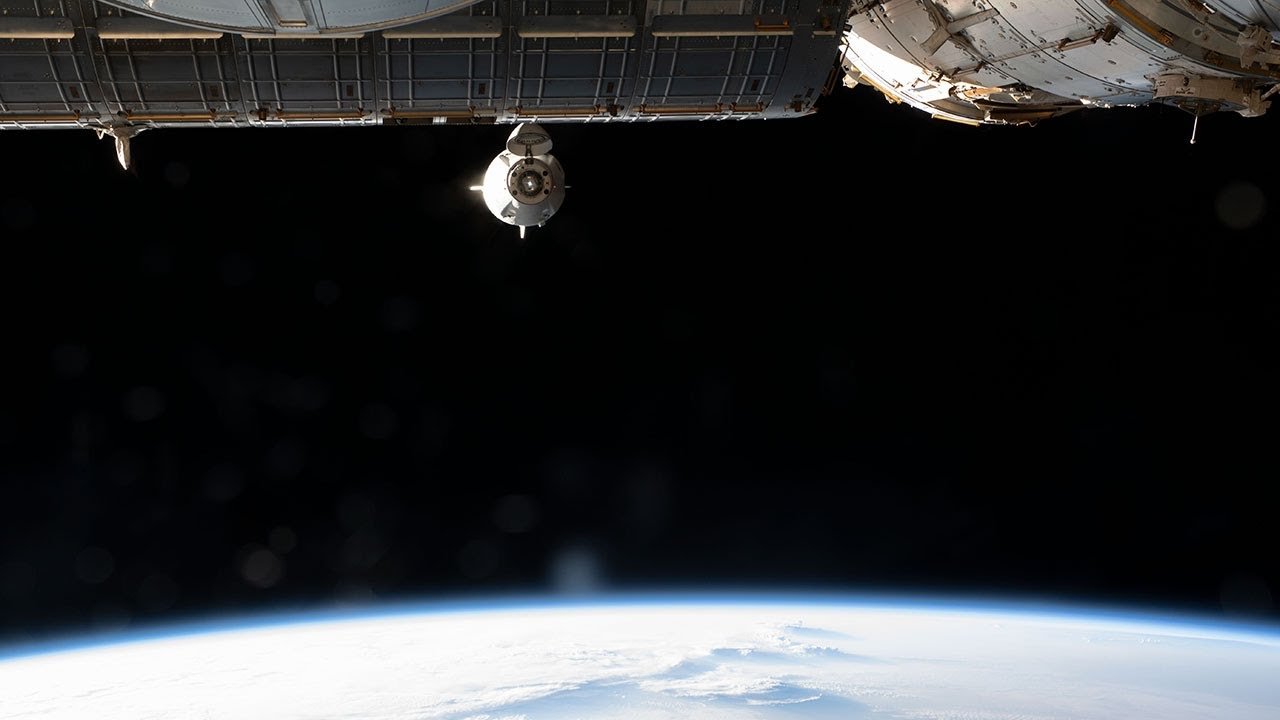
Dragon Endeavour left the International Space Station on Sunday, September 3, 2023, after 184 days docked, and it did so without springs: unlike Soyuz, which relies on springs to push away from its docking port, Dragon backed out using two short firings of its Draco engines. The undocking of Crew-6 carried NASA astronauts Stephen Bowen and Woody Hoburg, UAE astronaut Sultan Alneyadi and Roscosmos cosmonaut Andrey Fedyaev. Physical separation came at 7:05 a.m. ET (6:05 a.m. Central), right on the planned time.
An autonomous departure
Dragon's departure and deorbit are designed to be fully autonomous, requiring no action from the crew. Bowen and Hoburg held the prime role of monitoring the departure from inside the capsule, with mission controls in Houston and Hawthorne backing them up. The crew had closed the Dragon hatch earlier that morning, were suited up and in their seats, and confirmed that their visors were down before undocking. NASA and SpaceX teams both polled go for the undock sequence start at 1100 UTC.
The sequence began with the umbilicals retracting. These connect Dragon to the station and carry power, telemetry and commands between the two vehicles. Dragon then released its 12 hard capture hooks, in two sets of six, in a process that takes roughly four and a half minutes. Once all hooks were open and nominal, two undock burns, each only a few seconds long, broke the attachment: the first broke the friction between Dragon and the docking port, and the second slowly backed the spacecraft away. At separation the station was passing over the Pacific Ocean.
Spheres around the station
Depart burn zero took Dragon outside the keep out sphere, an imaginary sphere about 200 meters around the station. Depart burn one, a burn of about 21 seconds whose Draco thruster firings were visible on the night-time camera view, sent Dragon outside the approach ellipsoid, an imaginary volume measuring 4 km by 2 km by 2 km. Outside that ellipsoid a spacecraft must be on a 24-hour safe free drift trajectory, meaning it would not cross into the ellipsoid for at least 24 hours even if it lost all maneuvering.
Dragon's trajectory took it above the station before depart burn two lowered its altitude to a trajectory about 10 km below the station. Up to five departure burns were planned, followed by a phasing burn to lower the orbit and line the capsule up with its landing location off Jacksonville, Florida. The crew was then cleared to doff their suits, since the trip home was expected to last about 17 hours. The 'big loop' audio configuration, which let Dragon, the station and both ground teams talk on one channel, was deactivated after Dragon left the approach ellipsoid.
The crew
Stephen Bowen, from Cohasset, Massachusetts, was the first US Navy submarine officer selected by NASA as a mission specialist. He flew on space shuttle missions STS-126, STS-132 and STS-133, and with this mission was expected to have an estimated 227 days in space over four flights, including 65 hours 57 minutes in 10 spacewalks.
Woody Hoburg, 37, from Pittsburgh, studied at MIT and earned a doctorate from UC Berkeley; NASA selected him in 2017. Crew-6 was his first flight. He returned with 186 days in space and 11 hours 38 minutes on two spacewalks.
Sultan Alneyadi, chosen by the Mohammed bin Rashid Space Centre of the UAE, also flew for the first time and logged 186 days in orbit and one spacewalk of 7 hours 1 minute. Andrey Fedyaev, selected as a cosmonaut in 2012, also returned with 186 days and was to monitor the spacecraft during re-entry.
Looking back and ahead
Before undocking, flight controllers recalled the crew's work: two Cygnus and two cargo Dragon vehicles berthed, a port relocation, a private astronaut mission, three US spacewalks and five Russian spacewalks. Dragon carried cold research samples and hardware home. The Crew-7 crew had arrived the previous week and took over from Crew-6, and the station was then led by Expedition 69 Commander Sergey Prokopyev.
Splashdown was targeted for 12:17 a.m. ET on Monday, September 4, off the Florida coast, after a corrected time from an earlier 12:26 a.m. figure. A SpaceX recovery vessel was to pick up the crew.
Questions this video answers
When did Crew-6 undock from the ISS?
Dragon undocked from the International Space Station at 7:05 a.m. ET (6:05 a.m. Central) on September 3, 2023, after 184 days docked.
Who was aboard Dragon Endeavour?
NASA astronauts Stephen Bowen and Woody Hoburg, UAE astronaut Sultan Alneyadi and Roscosmos cosmonaut Andrey Fedyaev.
Where and when was splashdown planned?
Splashdown was targeted off the coast of Florida (Jacksonville) at 12:17 a.m. ET on September 4, about 17 hours after undocking.
How does Dragon undock?
It retracts its umbilicals, releases 12 hard capture hooks in two sets of six, then fires its Draco engines in two short undock burns to break suction and back away.
When and where did Crew-6 launch?
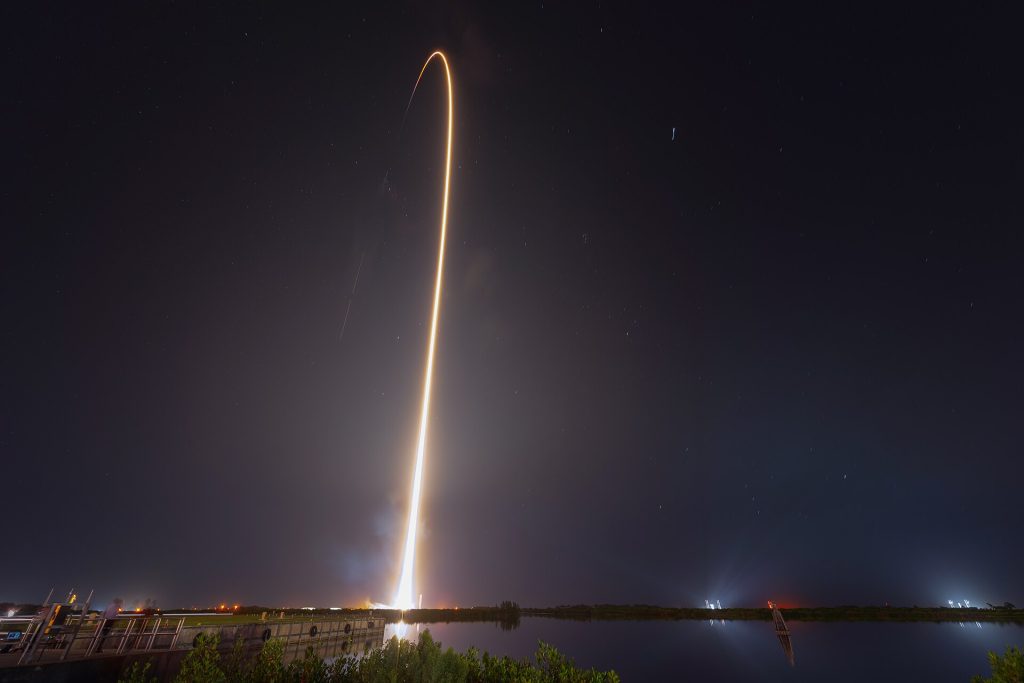
Crew-6 launched on Falcon 9 from Launch Complex 39A at Kennedy Space Center on March 2 at 12:34 a.m. ET.