Falcon Heavy’s First Flight: Tesla Roadster and Booster Landings
The short version
Replay of the first Falcon Heavy launch on Feb. 6, 2018, which carried Elon Musk's Tesla Roadster. It covers the liftoff, max Q, side booster separation, the Roadster with Starman shown in space, and the booster re-entry and landing burns. The two side boosters are called as landed at the landing zones; the center core's drone ship landing is still unconfirmed when the coverage ends.
Full written account
SpaceX's Falcon Heavy flew for the first time on Feb. 6, 2018, carrying Elon Musk's Tesla Roadster to space. The launch was billed as a test flight, and the replay follows it from the countdown through the booster landings.
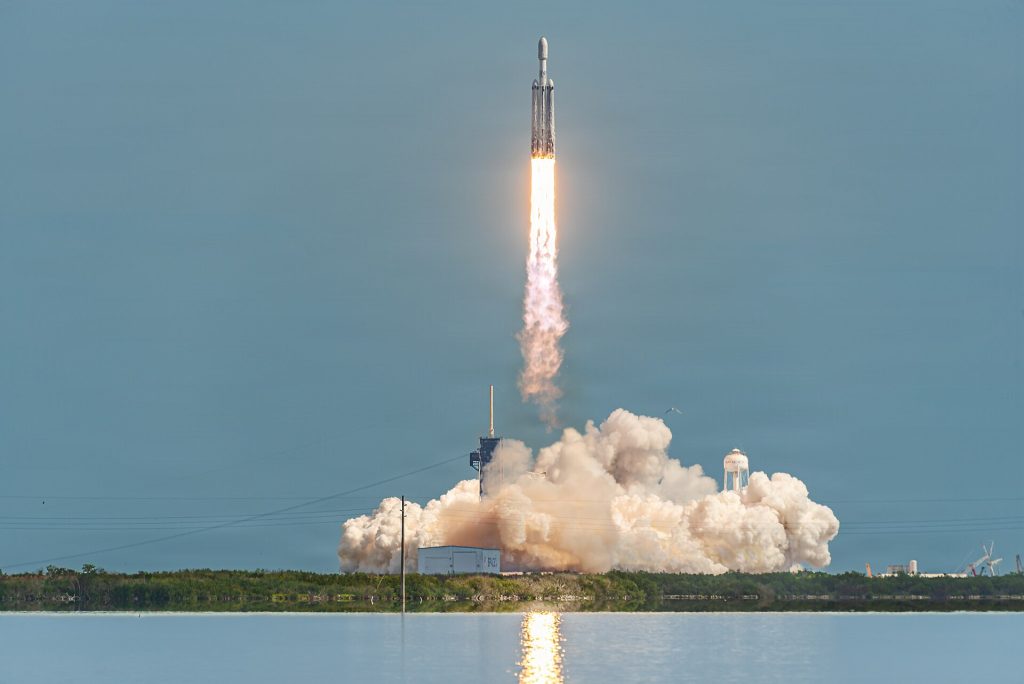
Liftoff and ascent
The countdown began with a 30-second call, a "go for launch" poll and confirmation that Falcon Heavy was configured for flight. After liftoff, the launch commentators described the flight as building on the history of Saturn V and Apollo, and said it was heading to an interplanetary mission.
The vehicle throttled down for Max Q, the period of maximum dynamic pressure and loads on the vehicle, then went supersonic. The side boosters throttled back up to full power and the commentary said the vehicle was past Max Q. Engine performance was reported as nominal.
Booster separation
About two and a half minutes into the flight the side boosters throttled down ahead of engine cut-off and separation. The separation was called successful, and the center core kept burning with its engines on power.
Starman and the return burns
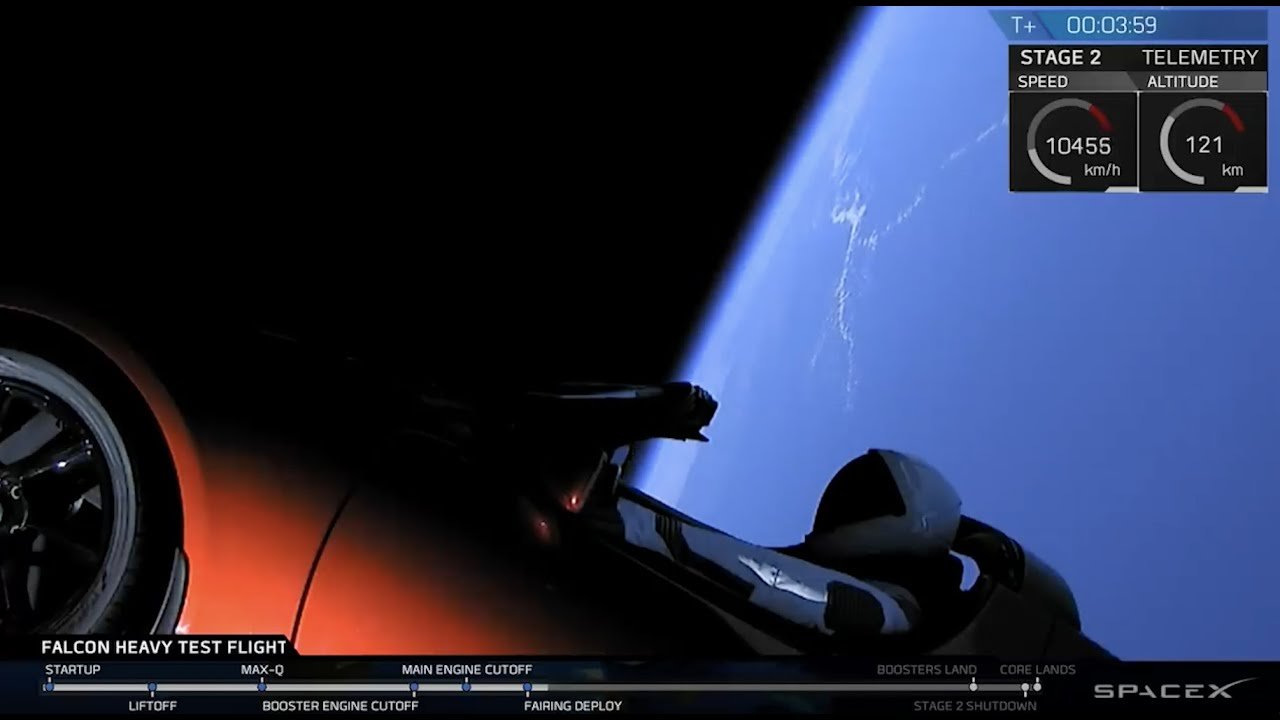
After separation, the broadcast showed Starman in the Tesla Roadster. The hosts called the footage "absolutely wild". The screens then showed the upper stage continuing its burn, the center core heading for the autonomous spaceport drone ship, and the two side boosters heading for Cape Canaveral Air Force Station landing zones 1 and 2.
Each booster performed a re-entry burn to slow from far faster than the speed of sound to just faster than it, reducing aerodynamic forces and heating. Landing burns followed, the landing legs deployed, and both side boosters were called as landed at the landing zones.
Center core and upper stage
The center core then attempted its landing on the drone ship. The commentators noted that heavy vibrations sometimes make the drone ship camera feed lose signal, and the signal was lost during the attempt. People were heard cheering, but the result was not yet confirmed. The second stage reached a nominal parking orbit and was described as continuing its trajectory toward Mars. The mission host closed by calling it an outstanding flight of Falcon Heavy.
Questions this video answers
What did the first Falcon Heavy carry?
Elon Musk's Tesla Roadster, with Starman shown in the car.
When did Falcon Heavy first launch?
On Feb. 6, 2018, according to the video description.
What happened to the side boosters?
After separation they performed re-entry and landing burns, deployed landing legs and touched down at Cape Canaveral Air Force Station landing zones 1 and 2.
Was the center core landing confirmed in the video?
Not in this footage. Signal from the drone ship was lost during the attempt, and the coverage ends before the result is stated.
Explore related missions
Connected by the topic: Falcon Heavy