How Mars Rovers Land and Get Power: Airbags to Flying Platform
The short version
A children's science episode explains why rovers are sent to Mars instead of people. It names six successful rovers, five from the United States and one from China, and describes how engineers solved landing and power problems with airbags, a flying platform, solar panels and a special fuel.
Full written account
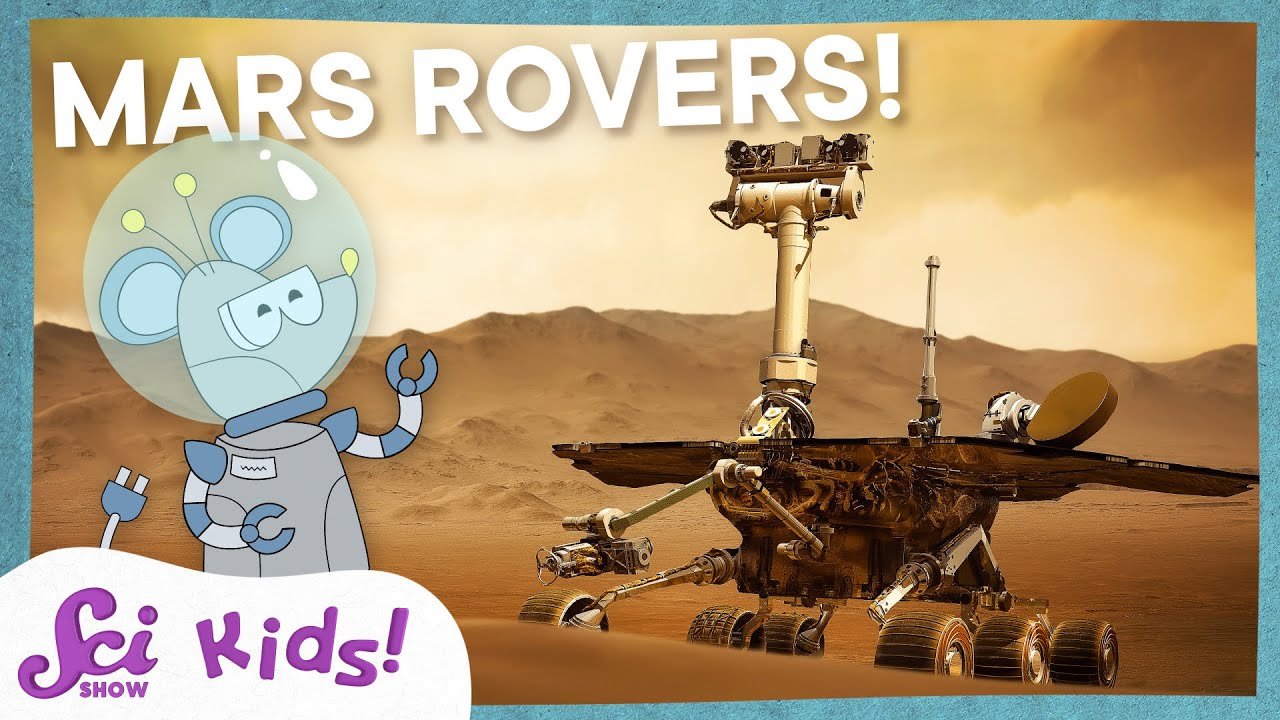
Six rovers have successfully reached Mars: five from the United States, named Sojourner, Spirit, Opportunity, Curiosity and Perseverance, and one from China, named Zhurong. People cannot go to Mars yet, so rovers do the work: they take samples of Mars dirt and rock, record sounds, and take pictures and video that scientists on Earth study.
Why send rovers
Mars today is very cold and dry, and its water exists only as ice. Many scientists believe that a very long time ago Mars was more like Earth, possibly warmer and with liquid water on its surface. It may even have had very small living things, like bacteria. Spirit and Opportunity helped scientists learn what the water on Mars was like long ago, and Perseverance is looking for evidence of tiny living things that might once have lived there.
Landing safely
A rover approaching Mars moves very fast. A parachute opens at the right moment to slow it, but that is not enough, and the rover must land gently or some of its tools would break. Spirit and Opportunity used big fabric airbags that worked like helmets, protecting the rover and softening the landing as it bounced down in a big balloon.
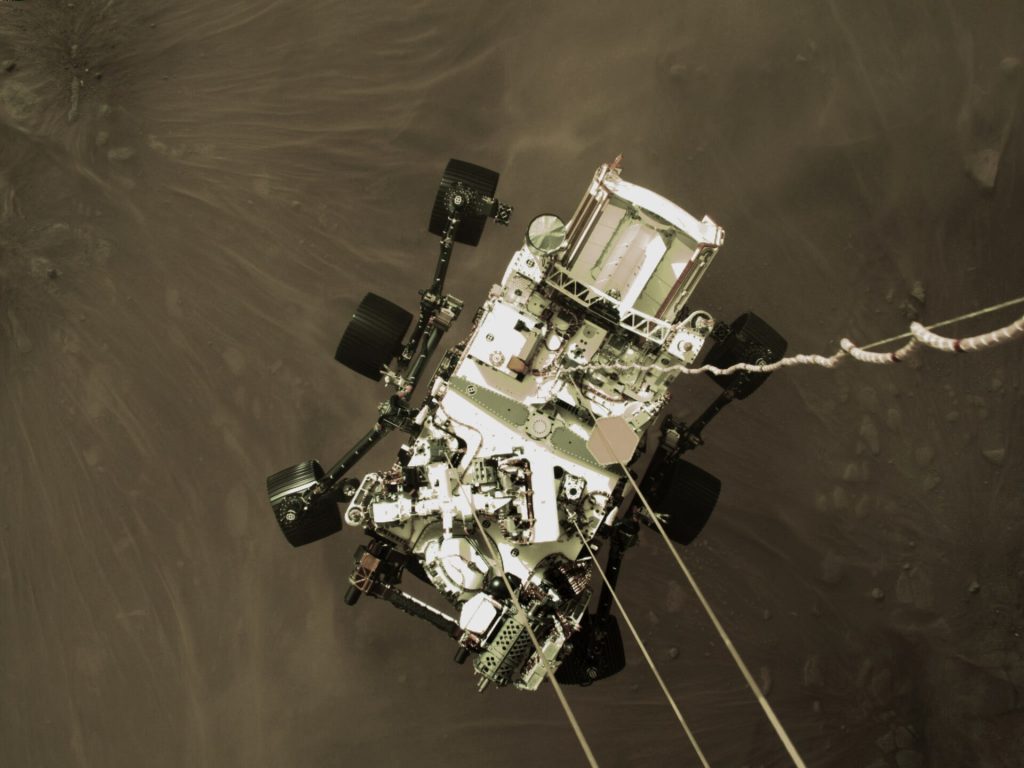
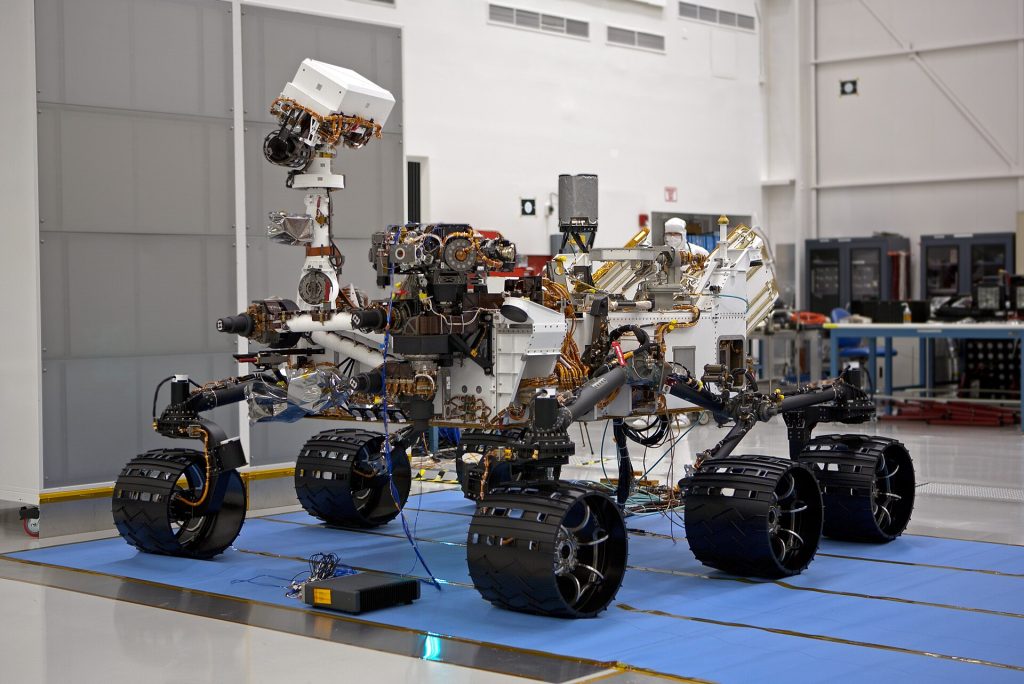
That solution did not work every time. Curiosity was too heavy for an airbag. Engineers instead used a parachute to slow the rover and then a flying platform to lower it gently to the ground. The system worked so well that it was used for Perseverance too.
Getting power
There is no way to plug in on Mars, so rovers need their own power for moving, scientific tools and computers. Spirit, Opportunity and Zhurong use batteries charged by solar power, since the Sun reaches Mars as well. Mars sometimes has huge dust storms, though, and the clouds of dust keep sunlight from reaching the surface. Curiosity and Perseverance therefore get their battery power from a special type of fuel. As the fuel breaks down it powers the batteries even without sunlight.
In each case, engineers found different ways to solve the same problem, whether landing or power.
Questions this video answers
How many successful Mars rovers have there been?
Six: Sojourner, Spirit, Opportunity, Curiosity and Perseverance from the United States, and Zhurong from China.
How did Spirit and Opportunity land?
They used big fabric airbags that softened the landing.
Why did Curiosity land differently?
It was too heavy for an airbag, so after a parachute slowed it, a flying platform gently lowered it to the ground.
How are the rovers powered?
Spirit, Opportunity and Zhurong use batteries charged by solar power. Curiosity and Perseverance get power from a special type of fuel that works even without sunlight.
What is Perseverance looking for?
Evidence of tiny living things that might once have lived on Mars.
Explore related missions
Connected by the topic: Mars exploration