How Salyut, Skylab, Apollo-Soyuz and Mir Led to the ISS
The short version
A documentary tracing the technological leaps that made the International Space Station possible, from Salyut's thruster boosts and Skylab's aircraft communications to the Apollo-Soyuz docking and Mir's spacewalk-built modules. It follows the February 2008 Atlantis delivery of the Columbus laboratory as the frame story. It also covers water recycling, gyroscope steering and debris shielding on the ISS.
Full written account
The International Space Station circles the planet 16 times a day, 350 km above the ground, and the documentary describes it as the largest man-made object in the sky. When finished it will consist of 14 pressurized modules and weigh 400 tons, at a stated cost of £60 billion. The film argues that four landmark spacecraft, each built around one technological breakthrough, lie behind that success.
February 2008: Atlantis delivers Columbus
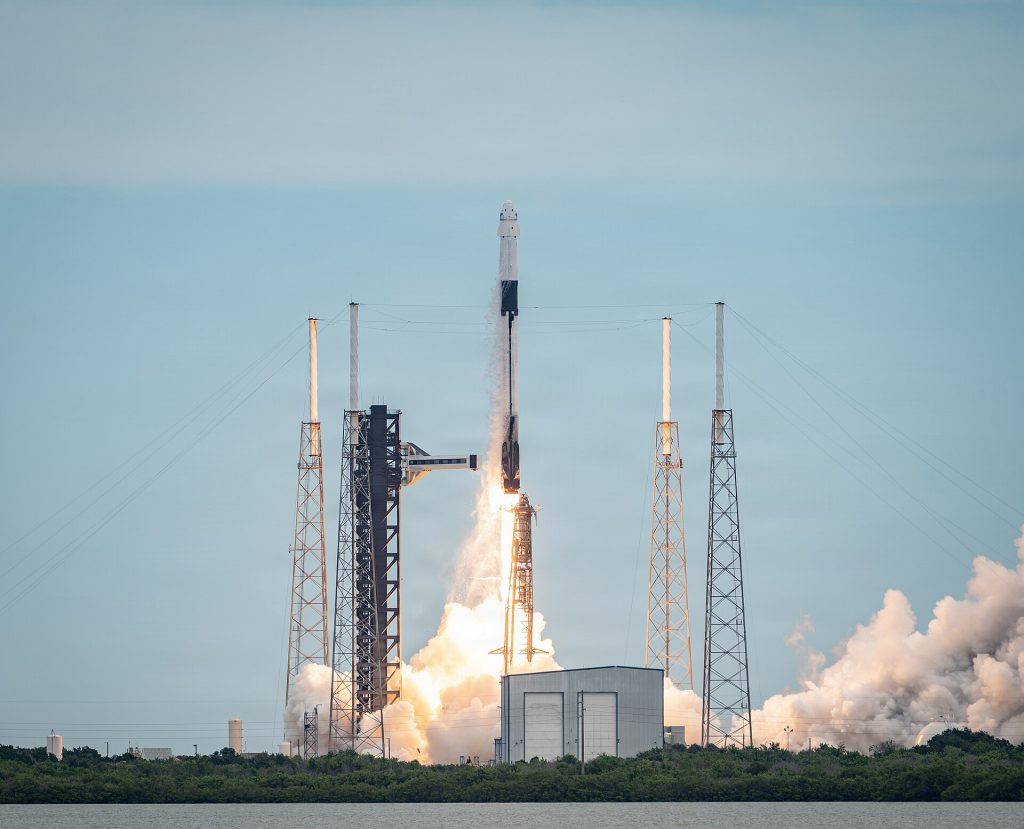
The frame story is the launch of space shuttle Atlantis in February 2008, beginning a 13-day mission to deliver the latest components to the station. The film says astronauts had by then spent 11 years piecing the structure together. Once Atlantis docks, a new module arrives "safe and sound" along with a multinational crew. Astronaut Rex Walheim prepares for a 7-hour spacewalk to fix a pre-fabricated science laboratory to the hull, after more than 200 hours of training in the Johnson Space Center water tank, the neutral buoyancy laboratory. A Canadian-built arm made of seven motorized limbs lifts the 10-ton laboratory out of the cargo bay, and Walheim bolts it in place by hand. Astronaut Mike Frick, who has been aboard for 100 days, later shows the European Space Agency's Columbus module, calling it the agency's pride.
Salyut: staying in orbit
The story goes back to the Cold War. After America put a man on the Moon in June 1969, the Soviets built the world's first space station, Salyut, to study how the human body copes in space. It would hold three cosmonauts for a planned three weeks and had to travel at 28,000 km/h, the speed a Proton rocket gave it. Even thin air molecules create drag, so the station needed boosts. Solid rockets "go off with a bang" and risked sending it into deep space, so engineers turned to the controllable chemical reaction used in a Korean War rocket pack. Hydrogen peroxide decomposes into oxygen and steam, and a precise amount gives a precise puff. The crew circled Earth for 23 days, a record.
The ISS does not use its own thrusters to regain orbital velocity. It uses thrusters on a docked craft such as the shuttle. To keep its solar panels, which provide all its power, facing the Sun, it uses four control moment gyroscopes. Engineers on the ground adjust the tilt of the spinning wheels, which exerts a force that moves the station.
Skylab: staying in touch
NASA's 100-ton Skylab was meant to test what weightlessness does to three astronauts. Muscles, including the heart, waste away without gravity to work against. Radio waves travel only in straight lines, and Skylab took 90 minutes to orbit, so Houston had a window of just 6 minutes per pass. NASA fitted receivers with a 2 m dish in the nose of aircraft, and a fleet of eight flew around the globe to keep unbroken contact. The crew exercised against elastic ropes and used a machine that simulated Earth's gravity. After 84 days, the film says, they showed the body had a fighting chance without gravity. Today astronauts need exactly 2.5 hours of exercise daily, and nine satellites locked in orbit above the equator relay signals to mission control in Houston.
Apollo-Soyuz: two incompatible craft
In 1975 the United States and the Soviet Union announced a joint effort. Soyuz would launch from Baikonur in Kazakhstan, Apollo from Cape Canaveral, and they would dock 220 km above Earth. Soyuz held air at Earth pressure; Apollo's crew breathed pure oxygen at much lower pressure. Opening the hatch could have caused nitrogen in the cosmonauts' blood to form bubbles that might have killed them. Engineers borrowed the divers' remedy and fixed a decompression chamber to the front of Apollo, where the astronauts waited 3 hours. Vance Brand and the Apollo crew set off on 15 July 1975. He recalls a slight lurch as the latches made, and the film says the mission produced a new docking system.
Water, air and a spacewalking station
At Marshall Space Center in Alabama, a module mock-up with civilian volunteers is used to perfect water recycling. Sweat and moisture, called humidity condensate, is collected, and distillation recovers about 85% of the water in urine. Overall the station recovers 94% of waste water. Electricity splits recycled water into hydrogen and oxygen, which pumps send through pipes for the crew to breathe.
The Soviets' Mir began in February 1986. It would weigh around 130 tons, far too heavy for one rocket, so it went up in six sections and was assembled by spacewalking cosmonauts. Temperatures outside range from over 275° in the sun to minus 275 in the shade, according to astronaut Randy Bresnik, and a liquid cooling garment helps regulate this. Early suits relied on an umbilical cord that limited movement and could have been a disaster if it sprang a leak. Russian designers replaced it with a backpack carrying oxygen, batteries and heating and cooling fluids, two of each component in case one failed, and a built-in mirror for reading the chest control panel. Building Mir took 10 years.
Debris
Over 100,000 pieces of discarded rockets and satellites lie in the station's path. NASA tracks the largest by radar and steers the station away. A grain of sand at orbital speed could rupture the hull. At Johnson Space Center, a gun fires an aluminium fragment at 25,000 km/h at a hull sample, producing a burst bubble on the back. Engineers found two thin aluminium sheets separated by a gap protect better than one thick sheet, and they pad the gap with Kevlar. Shielding covers the most vulnerable areas, and shutters protect the windows when not in use.
Questions this video answers
How big will the International Space Station be when finished?
The documentary says it will consist of 14 pressurized modules and weigh 400 tons.
How did Salyut stay in orbit?
Chemical motors similar to those on the Korean War-era rocket pack let cosmonauts give the station controlled bursts of power; the crew circled Earth for 23 days.
How does the ISS point its solar panels at the Sun?
Four control moment gyroscopes make constant small adjustments, so the panels always face the Sun.
How much waste water does the ISS recycle?
The recycling system recovers 94% of the waste water produced by the astronauts.
Why did Apollo carry a decompression chamber on the Apollo-Soyuz flight?
Soyuz held air at Earth pressure while Apollo used low-pressure pure oxygen, so the Americans waited 3 hours in a chamber to equalize before entering Soyuz.