Roman Space Telescope Launches on Falcon Heavy: NASA Briefing
The short version
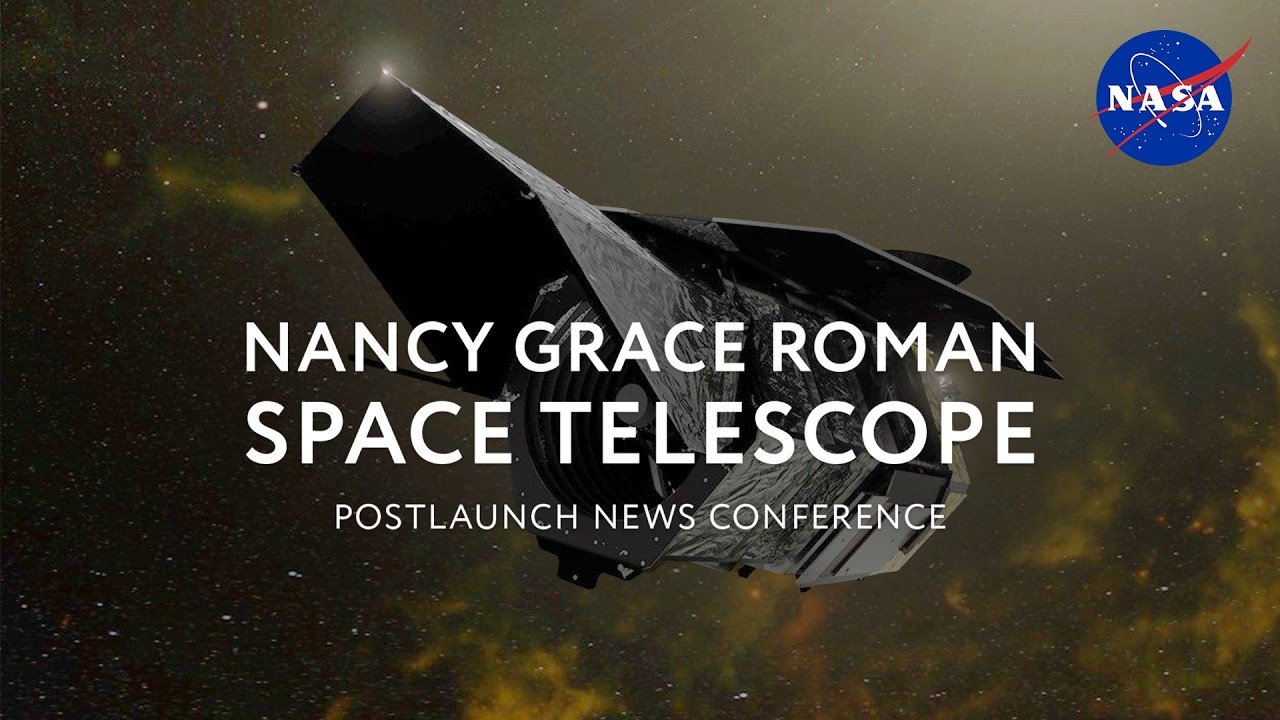
NASA's Nancy Grace Roman Space Telescope launched on a SpaceX Falcon Heavy from pad 39A at Kennedy Space Center at 7:26 a.m. ET on Aug. 30, 2026, bound for Sun-Earth Lagrange Point 2. In the post-launch news conference, NASA officials said the telescope separated, deployed its solar panels and sunshades, and that all systems were nominal. They also outlined the first midcourse correction, a roughly 90-day commissioning period and the science plans, including exoplanet surveys and a coronagraph demonstration.
Full written account
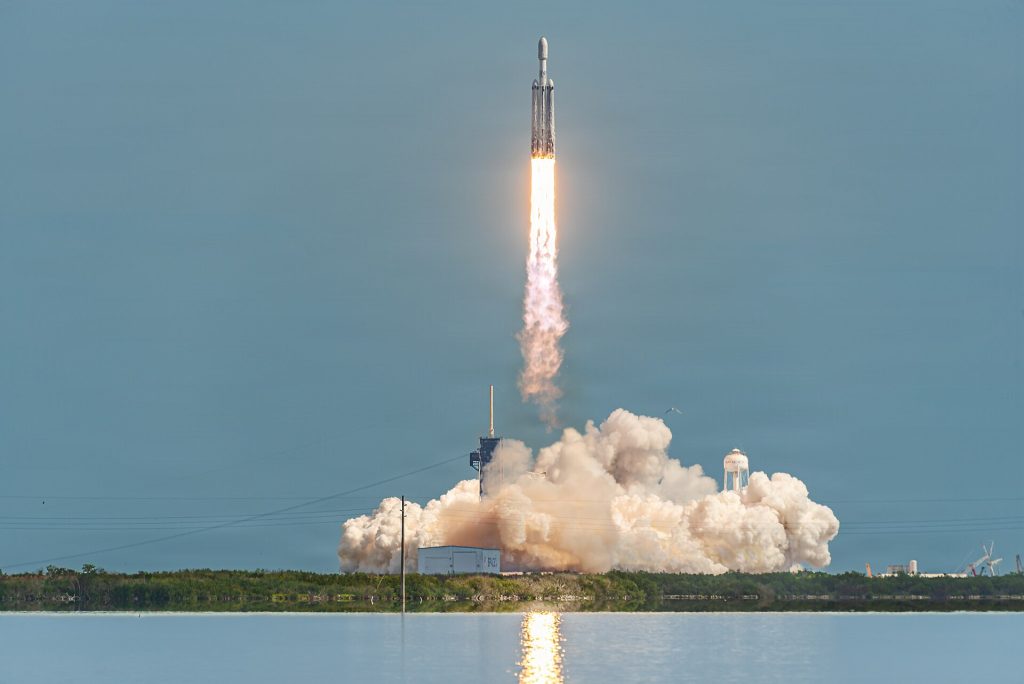
NASA's Nancy Grace Roman Space Telescope launched from Kennedy Space Center in Florida at 7:26 a.m. ET (1126 UTC) on Aug. 30, 2026, aboard a SpaceX Falcon Heavy from pad 39A. Its destination is Sun-Earth Lagrange Point 2, or L2, nearly a million miles from Earth. About two hours after liftoff, NASA officials described the launch, the early deployments and the science ahead in a post-launch news conference.
The launch
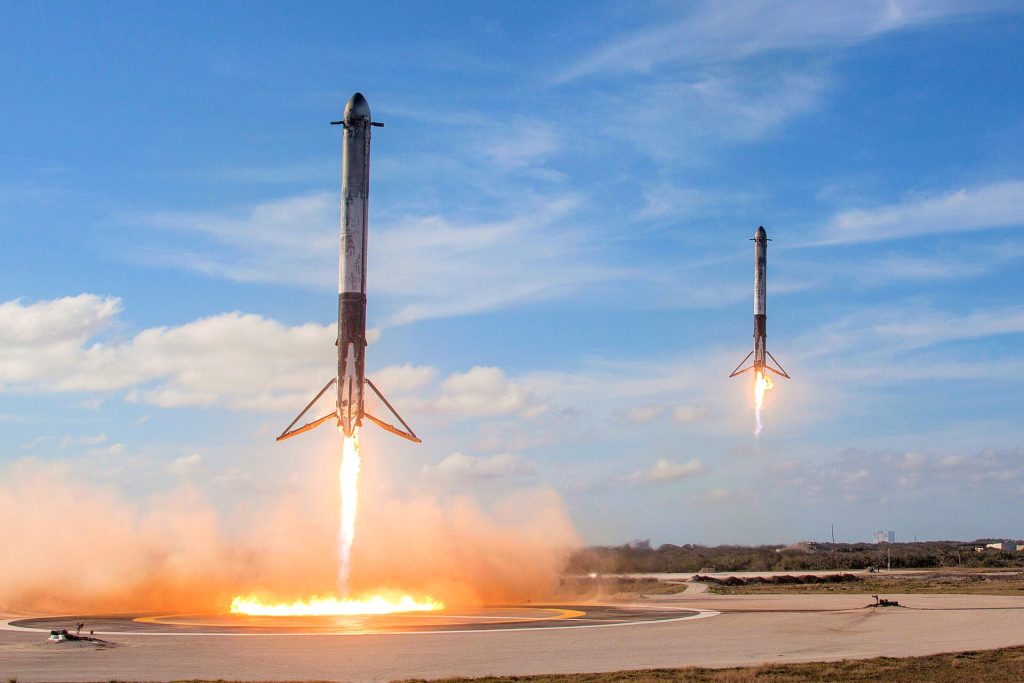
Falcon Heavy's 27 Merlin engines generated more than 5 million pounds of thrust. Launch director Denton Gibson said the telescope was a big spacecraft and needed all of that thrust. He said all three boosters and the second stage performed flawlessly, and that the second stage dropped Roman exactly where it needed to be. He credited the joint NASA and SpaceX team, together with SLD 45, for executing the campaign flawlessly.
Weather was the one concern. Nicky Fox, associate administrator of the Science Mission Directorate, said everything was great except the weather at 3:00 that morning. Project manager Jackie Townsend said the storms came through early, which let the team launch on time.
First hours in space
Townsend said the team synced up S-band telemetry almost as soon as the fairing separated, which was the first opportunity. The lower instrument sunshields and the solar array sunshields deployed right on time, and the spacecraft was power positive early. It then synced with its first ground station and stepped up from low-rate to a higher telemetry rate, still in S-band, until the high gain antenna deploys the next day. NASA Administrator Jared Isaacman said ground controllers at NASA Goddard were receiving telemetry and that all systems appeared nominal.
The next steps:
- The coronagraph instrument powers on in the coming days.
- Controllers start the first of two midcourse corrections. Gibson said the first has to happen because it was built into the trajectory design, and whether the second is needed will not be known until the first is done.
- Roman's high gain antenna deploys.
- Over the next several months the telescope travels to L2.
Townsend said the commissioning baseline is 90 days, with the first images expected before the winter holidays. A possible five-year extension of the primary mission is on the table, but she said her flight dynamics team would not promise anything until after the midcourse correction burn.
What Roman is built to do
Isaacman said Roman has a field of view at least 100 times that of Hubble and over a thousand times the scan rate. He said its surveys could reveal more than 100,000 new exoplanets. Fox said about 6,000 exoplanets are known today, and that Roman should also find billions of galaxies, tens of billions of new stars and thousands of supernovae. It will also study dark matter and dark energy.
The coronagraph is a technology demonstration. Fox described its deformable mirror technology as like a tailor-made prescription lens for almost every star, and called its first images the first milestone toward the Habitable Worlds Observatory.
Senior project scientist Julie McEnery outlined the first year of observations:
- the first couple of months prioritise the coronagraph
- a first season looking at the center of the galaxy for exoplanet observations
- an initial deep field looking away from our own galaxy
- a pilot time-domain survey for supernovae
She said five more community surveys have been selected, including follow-up on the fields observed by Kepler, and that most of Roman's observations are in the southern hemisphere to maximise overlap with the Vera Rubin Observatory. McEnery described Roman, Rubin and Euclid as siblings designed to be synergistic. She said Roman's wide surveys do not make Hubble obsolete, since Hubble adds ultraviolet capability and narrowband filters.
Questions from the press
Asked whether the telescope carries anything personal for Nancy Grace Roman, the team said it carries a plaque with a photograph of her looking up at the sky, along with some thoughts about her. The plaque holds a chip with the names people submitted.
Asked about servicing, Isaacman said the Swift effort did not produce the outcome expected. He said robotic servicing of Roman is a possibility in the future if it were more economical. Roman carries a grapple fixture.
President Trump called into the news conference to congratulate the team. Isaacman said Artemis 3 is targeted for summer 2027, with the rocket going to the pad for its wet dress rehearsal before the end of the year. He said Dragonfly, headed to Saturn's moon Titan in 2028, will be the next Falcon Heavy launch for NASA science.
Isaacman said Roman was on track to be ahead of schedule and on budget. Townsend said the project's lessons-learned material is under review, with rollout hoped for around January.
Questions this video answers
When and where did Roman launch?
At 7:26 a.m. ET (1126 UTC) on Aug. 30, 2026, from pad 39A at Kennedy Space Center in Florida.
What rocket launched Roman?
A SpaceX Falcon Heavy, whose 27 Merlin engines generated more than 5 million pounds of thrust.
Where is Roman going?
To Sun-Earth Lagrange Point 2 (L2), nearly 1 million miles from Earth, over the next several months.
When are the first images expected?
The baseline commissioning period is 90 days, and the first images should come down before the winter holidays.
How does Roman compare with Hubble?
Administrator Isaacman said Roman has a field of view at least 100 times that of Hubble and over a thousand times the scan rate.
What is the next NASA science Falcon Heavy launch?
Dragonfly, headed to Saturn's moon Titan in 2028.
Explore related missions
Connected by the topic: Falcon Heavy