Roman Space Telescope Science Briefing Ahead of Launch
The short version
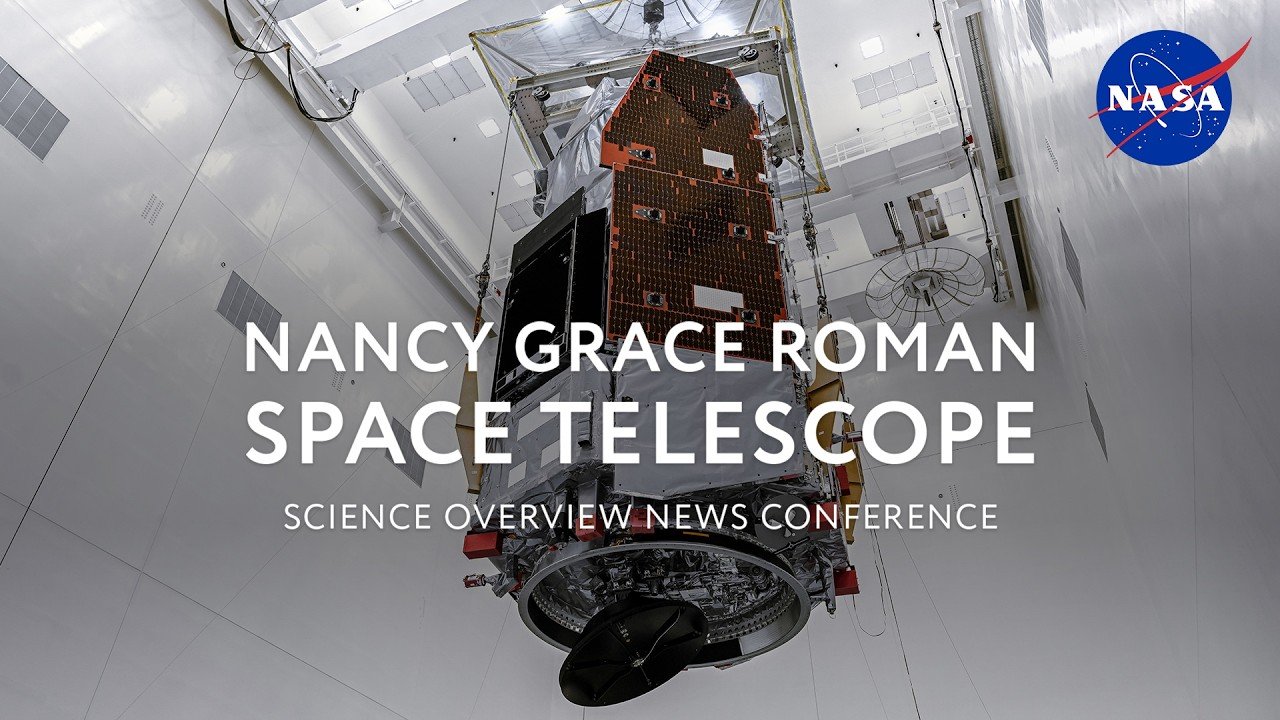
NASA's science news conference, held a day before the scheduled Aug. 30 launch, with five mission experts presenting the science goals of the Nancy Grace Roman Space Telescope. They cover its wide field of view, the Coronagraph Instrument, data handling in the cloud, and exoplanet detection methods, then answer press and social media questions.
Full written account
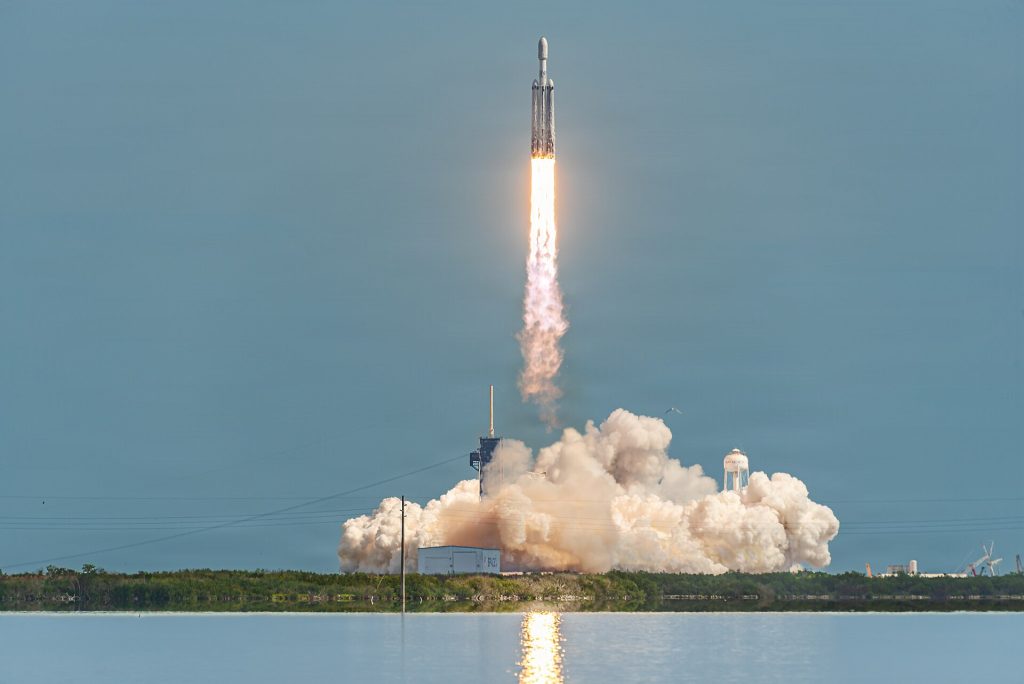
On the eve of launch, NASA's Nancy Grace Roman Space Telescope science team set out what the observatory is built to do. Roman was scheduled to lift off at 7:26 a.m. EDT (1126 UTC) on Sunday, Aug. 30, on a Falcon Heavy from Kennedy Space Center. The panel described a telescope with Hubble's precision, a field of view more than 100 times bigger, and the ability to survey the sky more than a thousand times faster. In the words of senior project scientist Julie McEnery, a survey that would take Roman one month would take a century with Hubble.
A wide-field survey machine
The panel was made up of Shawn Domagal-Goldman, director of NASA's Astrophysics Division; Julie McEnery of NASA Goddard; Vanessa Bailey of NASA's Jet Propulsion Laboratory; Kristen McQuinn of the Space Telescope Science Institute; and Lee Armus of Caltech/IPAC.
McEnery said one month of Roman observations could survey the Milky Way and detect up to 20 billion stars, a catalog larger than any in existence. The main survey will take over a year, and a single image from the largest survey would need over half a million 4K TVs to display. It would cover 45 Manhattan city blocks. That survey will contain over two billion galaxies.
Roman is also expected to:
- identify tens of thousands of supernovae, used as markers to track the expansion of the universe;
- catch flares from stars swept into supermassive black holes and outbursts when two neutron stars merge to form a black hole;
- monitor hundreds of millions of stars every few minutes when pointed toward the center of the galaxy, finding up to 40 times more exoplanets than are known today.
Testing the standard model
Asked what is wrong with the standard model, McEnery pointed to the Hubble tension, in which the expansion rate now is not quite consistent with what models predict from early times. She added that the structure of the universe is not quite what is predicted, and that some observations suggest dark energy may not be constant. That could mean dynamical dark energy, or that understanding of gravity on very large scales needs revisiting. She said Roman will definitively say whether the model works, and if it does not, supply data to distinguish between the options. If the acceleration were slowing, she noted, the universe would not be heading for a "big rip."
Armus said a high-latitude survey should yield spectra for more than 10 million galaxies, giving a 3D map of the universe from when dark energy became important. The Galactic Bulge time domain survey will monitor more than 200 million stars and find thousands of exoplanets.
Two ways to find planets
On the wide field instrument, Roman will use the transit technique, as Kepler and TESS did, and gravitational microlensing. Roman is expected to detect maybe 100,000 new transiting planets, against the 6,000-plus exoplanets known today. Microlensing, which Bailey said is sensitive to Earth-sized planets in the habitable zone, favors planets farther from their stars, while transits favor those close in. Armus expects a couple of thousand microlensing planets, and the technique can also find rogue planets and free-floating black holes.
The coronagraph
Bailey described the coronagraph instrument as a technology demonstration, a stepping stone toward imaging an Earth twin, which would be 10 billion times fainter than its star in visible light. Roman's coronagraph aims to detect planets about 100 million times fainter than their stars. She compared the task to seeing a firefly next to a lighthouse hundreds of miles away.
It is the first active coronagraph NASA has flown. Its two deformable mirrors each have about 2,400 pistons and can be commanded to a precision approaching the size of an atom. Operators point at a bright tune-up star, read the pattern of starlight glare, and command the mirrors to compensate, likely iterating several dozen times. The most challenging hope is a Jupiter twin in reflected visible light; for some targets only a single image may be possible, and perhaps one or two systems could yield a very low resolution spectrum to look for methane. It does not have the sensitivity to detect Earth-like or habitable planets. It is used to characterize planets already suspected by other methods, not to discover new ones, and has about 2,000 hours of observing time over the first 18 months.
Data and schedule
The prime mission is five years. The panel said Roman's test campaigns had already collected more data than Hubble and Webb combined. Data go straight to the cloud, with about 20,000 terabytes accessible through the Roman research nexus, with no proprietary period. Thousands of images arrive daily and are made available on time scales of about a day. A high school class can sign up for a team account.
Commissioning of the observatory and instruments was planned to take three months, starting during the trip to L2, with first light expected before the beginning of the next year. McQuinn said the galactic bulge would be targeted intensely for a couple of months starting in February. Cosmology results will take a few years.
A first call for observing proposals drew more than 350 proposals from more than 2,300 investigators in 15 countries. McEnery said the team had held its last daily 7 a.m. meeting a few days earlier, and that in 1959 Nancy Grace Roman herself had written a short article hypothesizing about directly measuring planets in space.
Questions this video answers
When was Roman scheduled to launch?
At 7:26 a.m. EDT (1126 UTC) on Sunday, Aug. 30, according to the description.
How does Roman compare with Hubble?
Panelists said Roman sees more than 100 times the sky at once and can survey more than a thousand times faster; a survey taking Roman one month would take Hubble a century.
What will the Coronagraph Instrument do?
It blocks starlight to image faint planets, aiming at planets about 100 million times fainter than their stars. It will characterize known systems rather than discover new planets.
How many exoplanets could Roman find?
Up to 40 times more than are known today, including perhaps 100,000 new transiting planets, plus a couple of thousand through microlensing.
When will science begin?
Commissioning is planned to take about three months and begin during the trip to L2; first light is expected before the beginning of next year.
Who can use Roman's data?
Everyone. There is no proprietary period, and data are accessed through a cloud workspace called the Roman research nexus.
Explore related missions
Connected by the topic: Falcon Heavy