Salyut 1: How the First Space Station Was Built From Almaz
The short version
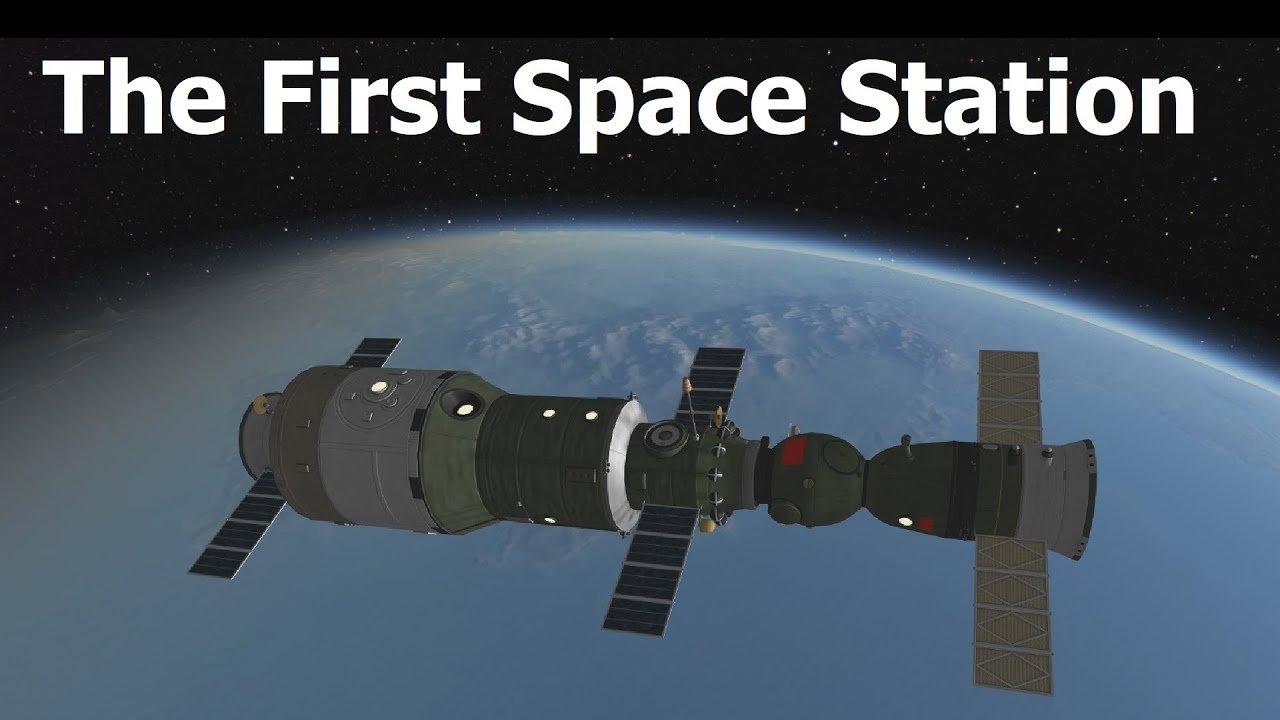
Scott Manley marks 50 years since Salyut 1, the first space station, launched by the Soviet Union in 1971. It was built from the Almaz hull with existing hardware. Soyuz 10 could not complete docking to board, and the Soyuz 11 crew lived aboard for 22 days but died on return. The station was de-orbited into the Pacific on October 11.
Full written account
Salyut 1, the first space station, was launched by the Soviet Union on April 19, 1971, from Baikonur on a Proton rocket. It was assembled in roughly 18 months, and it weighed 19 tonnes. Its first visit ended without the crew boarding, and its second ended with three deaths on the return to Earth.
Built from a military station
The Soviet Union already had a military station program, Almaz, meant to carry telescopes and cameras for reconnaissance. It was a response to the US Air Force's Manned Orbiting Laboratory, which was cancelled by 1970. Almaz was still years behind schedule, so a group of engineers proposed taking the Almaz hull, which had already been tested, and fitting it with existing working hardware. The plan offered a propaganda win, which a secret program could not provide, and helped hide military Almaz launches within the civilian program.
The design
The hull had two cylindrical segments, 4.2 meters and 3 meters wide, joined by a short conical section into one pressure vessel about 10 meters long. A heavily modified Soyuz service module provided power, propulsion and attitude control. A new docking port with a hatch let crews enter without a spacesuit. With only one port, there was no resupply, and all experiments, including the Orion 1 ultraviolet telescope, were pre-installed. The launch placed it in a 220 kilometer orbit at 51.6 degrees inclination.
Soyuz 10
Soyuz 10, crewed by Vladimir Shatalov, Alexey Yeliseyev and Nikolai Rukavishnikov, launched three days later. The new Igla automated docking system had problems and used excessive propellant. Out of ground communication range, Shatalov switched to manual control. After the probe locked in, the Soyuz attitude control fired thrusters aggressively and rotated the spacecraft violently enough to damage the docking adapter. The docking could not complete, so the crew could not open the hatch, and designers had not anticipated a partially completed sequence that could not be reversed.
Releasing the orbital module would have saved the crew but left it attached to the station. Reports describe either shorting pins in a control panel or sending commands to release the clamps. Either way, the Soyuz was freed after several hours and the crew returned safely. The Soviets announced the plan had only been to dock.
Soyuz 11
The fixes were to put the attitude control into free drift at docking, a practice still used at the ISS, and to toughen the docking mechanism. The original Soyuz 11 crew was replaced days before launch after an exam found Valeri Kubasov may have tuberculosis. The backup crew, Georgy Dobrovolsky, Vladislav Volkov and Viktor Patsayev, launched on June 7 and stayed 22 days, becoming the first crew to live and work on a space station.
On return, explosive bolts separating the orbital module apparently released a pressure equalization valve, venting the cabin to space. The crew of three died, as the capsule had no room for pressure suits. They are the only people to have died in space so far. Tom Stafford was a pallbearer.
The end of Salyut 1
The Soyuz had to be redesigned to carry two crew in pressure suits. By September 1 it was clear the station's limited propellant would run out before a crew could return, and it was de-orbited into the Pacific on October 11.
Questions this video answers
When and how was Salyut 1 launched?
A Proton rocket launched it from Baikonur on April 19, 1971.
How was Salyut 1 built so quickly?
Engineers took the hull of the military Almaz station, which was still in development, and fitted it with existing working hardware.
What went wrong with Soyuz 10?
Soyuz 10 docked but the docking system could not complete locking, so the crew could not open the hatch and board. After several hours they freed the Soyuz and returned to Earth safely.
What happened to the Soyuz 11 crew?
Soyuz 11 stayed for 22 days, but the three cosmonauts died on the return when a pressure equalization valve released and the cabin vented to space.
How did Salyut 1 end?
Limited propellant on the station would be exhausted long before any crew could return, so it was intentionally de-orbited into the Pacific on October 11.
Explore related missions
Connected by the topic: Proton