Starship Flight 1: Pad Cleared, Then Tumble Ended the Test
The short version
SpaceX's webcast covers the first integrated flight test of Starship and Super Heavy from Starbase, Texas, after an earlier attempt was stood down for a frozen booster valve. The vehicle cleared the pad and reached an apogee of about 39 km per the description, but multiple engines went out, the stack began to tumble and the flight termination system was commanded. SpaceX said it learned a great deal from the test.
Full written account
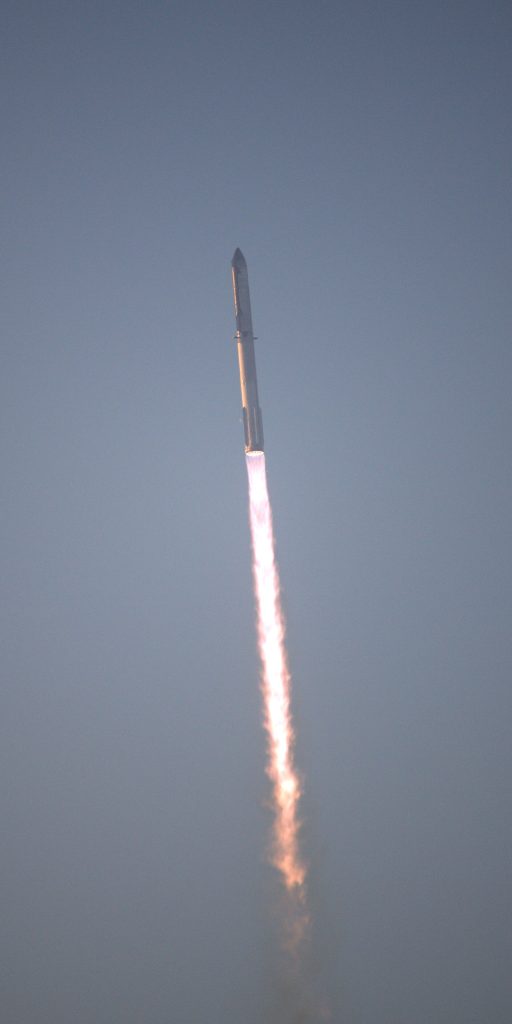
Starship's first integrated flight test cleared the launch tower, then began to tumble during ascent and ended in what SpaceX called a rapid unscheduled disassembly. The vehicle, a fully integrated Starship and Super Heavy booster, lifted off from Starbase, Texas, on 20 April 2023 with no one aboard. The company's stated main goal was to clear the pad; in its words, "every milestone beyond that is a bonus." The flight reached an apogee of about 39 km over the Gulf of Mexico, the highest of any Starship to date, according to the description.
A test defined by one goal
SpaceX described the flight as the first of many as Starship moves from a developmental to an operational program. The primary objective was to gather data on the fully integrated vehicle. Starship had flown before, but this was the first attempt with Super Heavy and the first chance to validate how the two vehicles work together. Any data that improved future builds was to count as a success.
The planned profile was ambitious. About three minutes into ascent, Super Heavy was to separate, flip and perform a boostback burn toward a hard landing in the Gulf of Mexico. Starship's six engines were to ignite and burn for almost six and a half minutes. The ship was then to coast for about an hour at altitudes between 150 and 250 km, before re-entering and making a hard landing in the Pacific Ocean roughly 250 km offshore. Neither vehicle was to be recovered, and Starship flew without landing legs.
The scrub and the countdown
The first attempt, on Monday, was stood down because of a frozen pressurization valve on Super Heavy. Teams found moisture in the valve, which froze while super-chilled liquid oxygen was loaded. The valve matters because pressurant, heated by exhaust from the Raptor engines, is fed back into the tank as propellant is consumed. The hosts compared it to a thin plastic water bottle that crinkles if air is not let back in.
On the second attempt, the go/no-go poll came just after T-minus 2 hours. Booster loading began at T-minus 1 hour 39 minutes, and ship loading at 1 hour 22 minutes. When loading completed, the vehicle held over 10 million pounds of propellant: liquid methane at just over 100 Kelvin and liquid oxygen. Ground-level winds were 18 mph, below limits.
At the T-minus 40 second gate, the flight director called a hold and the clock recycled. Booster tank pressurization had run a little long, and the second stage was working final purging, described as a bleed purge issue on the stage two Raptors. The flags were cleared and the countdown resumed from 40 seconds. Starship can hold there for up to 15 minutes, which Falcon 9 cannot do once propellant loading begins.
The vehicle
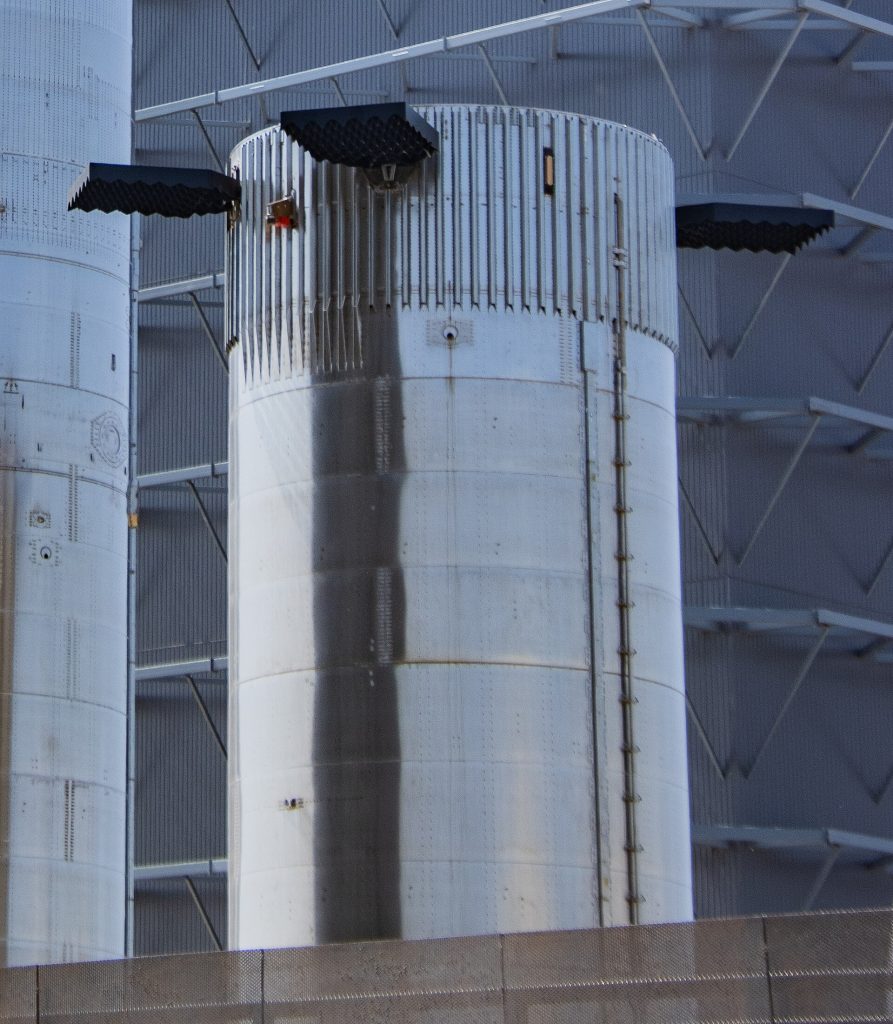
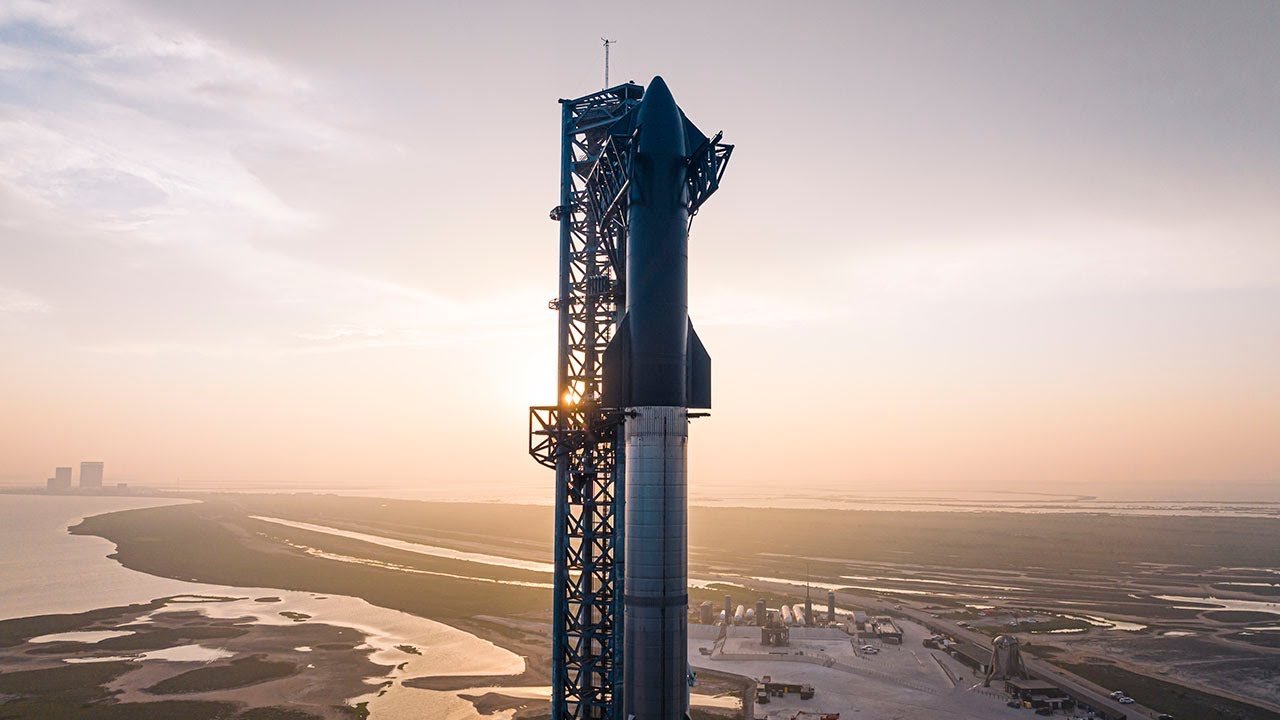
The stack stands about 120 m tall and about 9 m across, made of stainless steel. Super Heavy is about 70 m tall, roughly the height of a Falcon 9, with a diameter about two and a half times larger. It has 33 Raptor engines: an outer ring of 20 fixed engines and 13 gimbaling engines in the center. The ship is about 50 m tall, with six Raptors, three sea-level and three vacuum, and four flaps. Its heat shield uses 18,000 hexagonal ceramic tiles, designed for temperatures as high as 2,600 degrees F.
Raptors are reusable methane-oxygen staged-combustion engines, designed and made in house. Unlike Falcon 9, which ignites with TEA-TAB, Starship uses electrical ignition, lighting the engines in banks from T-minus 6 seconds over about four seconds.
Liftoff and loss of the vehicle
SpaceX gave the liftoff time as 8:28 a.m. Central during the webcast, while the description says 8:33 a.m. CT. The vehicle cleared the tower, passed through Max Q and the first-stage engines were reported nominal. Main engine cutoff came at about 2 minutes 40 seconds, and the flip for stage separation began. The stack kept rotating and separation did not occur. The hosts said it did not appear to be a nominal situation. During the webcast, one host noted that three of the Raptor engines appeared to be out. The description says the vehicle experienced multiple engines out, lost altitude and began to tumble, and that the flight termination system was commanded on both booster and ship.
The flight path was designed to be overwater, and air and sea along it were cleared in advance. The road and beach near the pad were expected to stay closed until the next day. SpaceX said it had no insight into the cause at the time and ended the webcast while teams reviewed data toward the next flight test.
Background to the flight
The broadcast traced the program's earlier steps. Starhopper, just over 18 m tall with one Raptor, made a first hop to about 20 m in July 2019, then a 150 m hop and landing. In December 2020, SN8 rose to 12.5 km and performed the belly flop maneuver but failed to land. SN9 flew about 10 km in February 2021 and ended in a fireball after an engine failure. In May 2021, SN15 reached about 10 km and was the first Starship prototype to land and be recovered in one piece.
Starbase produced four Super Heavy boosters and five Starships last year, along with its 200th Raptor 2 engine, with five boosters and eight Starships planned for 2023. It directly employs more than 1,800 people.
Questions this video answers
When did the first Starship flight test lift off?
The description says liftoff was at 8:33 a.m. CT, though the broadcast hosts say 8:28 a.m. Central. Both are from SpaceX material.
Where did Starship launch from?
Starbase, Texas.
Did Starship reach stage separation?
No. The description says the vehicle experienced multiple engines out, lost altitude and began to tumble, and the flight termination system was commanded on both booster and ship. Stage separation did not occur.
Why was the first launch attempt scrubbed?
The first attempt on Monday was stood down because a pressurization valve on the Super Heavy booster froze. SpaceX said the valve had moisture in it, which froze while super chilled liquid oxygen was loaded.
Was anyone on board?
No. The test was uncrewed; SpaceX stated the primary goal was to clear the pad and gather data on the integrated vehicle.
Explore related missions
Connected by the topic: Starship