Starship Flight 1
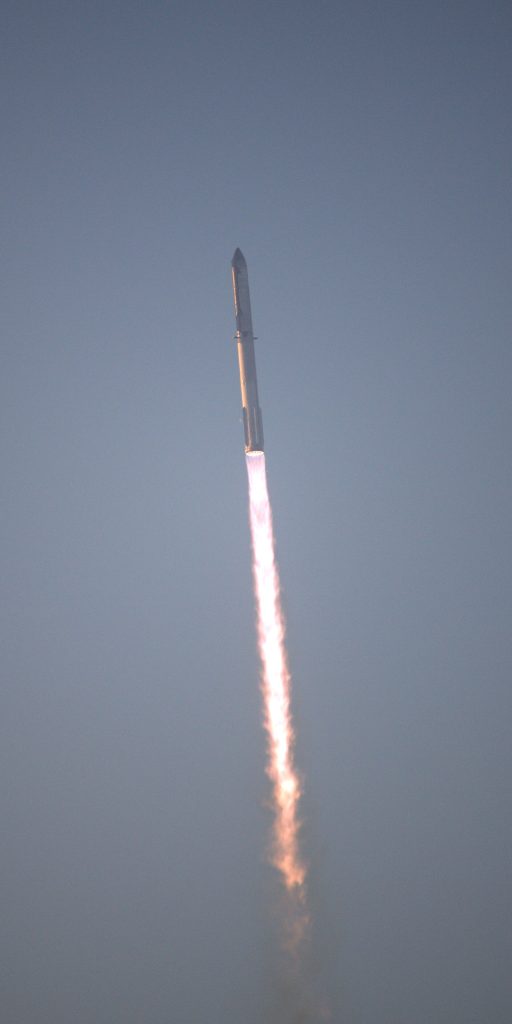
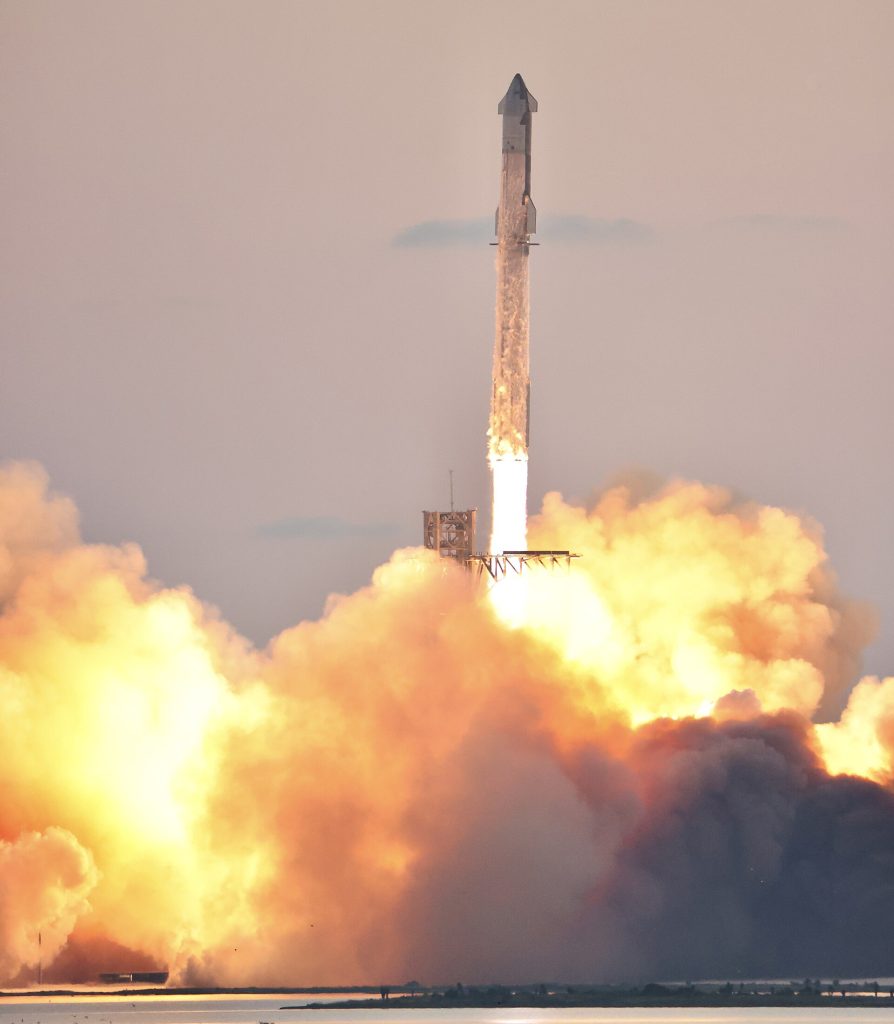
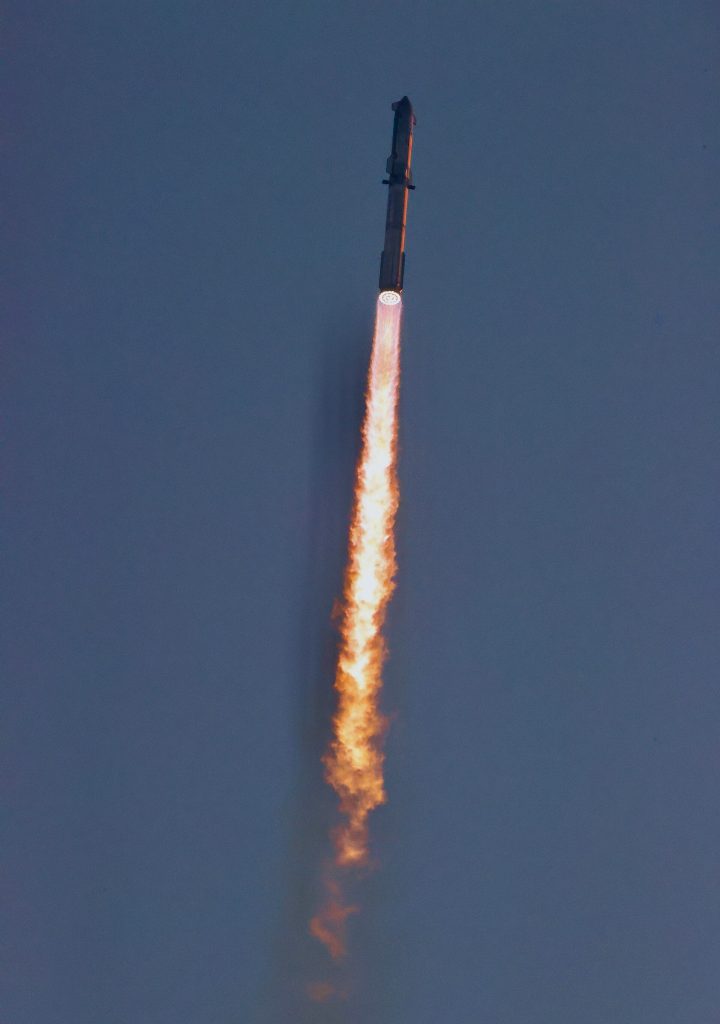
On 20 April 2023 SpaceX flew a fully integrated Starship (Ship 24) on a Super Heavy booster (Booster 7) for the first time, from Starbase in Texas. The stack cleared the pad and reached an apogee of about 39 km, but several engines went out, the vehicle began to tumble and the flight termination system was commanded.
What happened
All times local
-
Watch this moment · 7:05
The first attempt is stood down
A pressurisation valve on the booster froze because moisture in it met super-chilled liquid oxygen during loading.
-
Watch this moment · 0:44
Liftoff
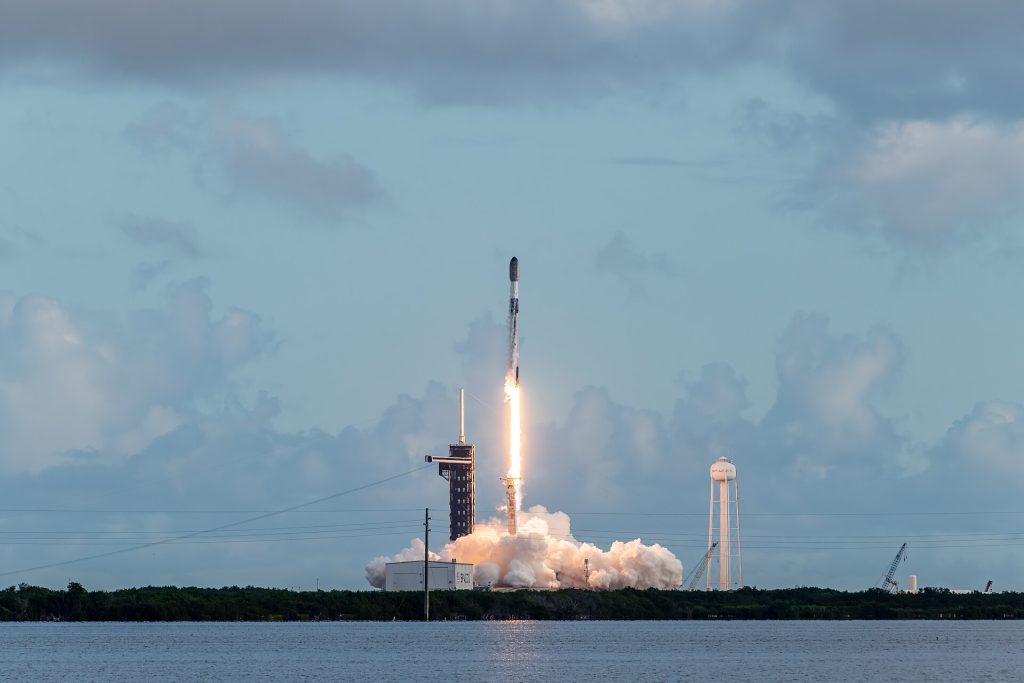
After a hold at T-minus 40 seconds for the booster tank pressurisation and a purge on the ship's engines, the countdown resumed and the stack lifted off.
-
Watch this moment · 45:30
Passing the point of greatest air pressure
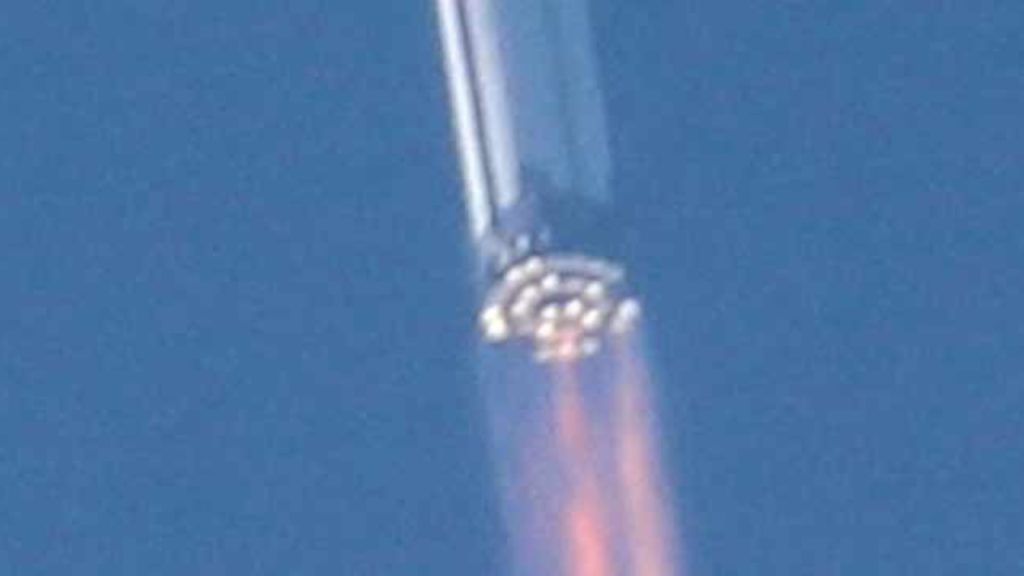
The vehicle passed Max Q, the moment the air pushes hardest on the rocket, Per the description of video 36, multiple engines went out during the ascent.
-
Watch this moment · 48:30
Stage separation does not happen
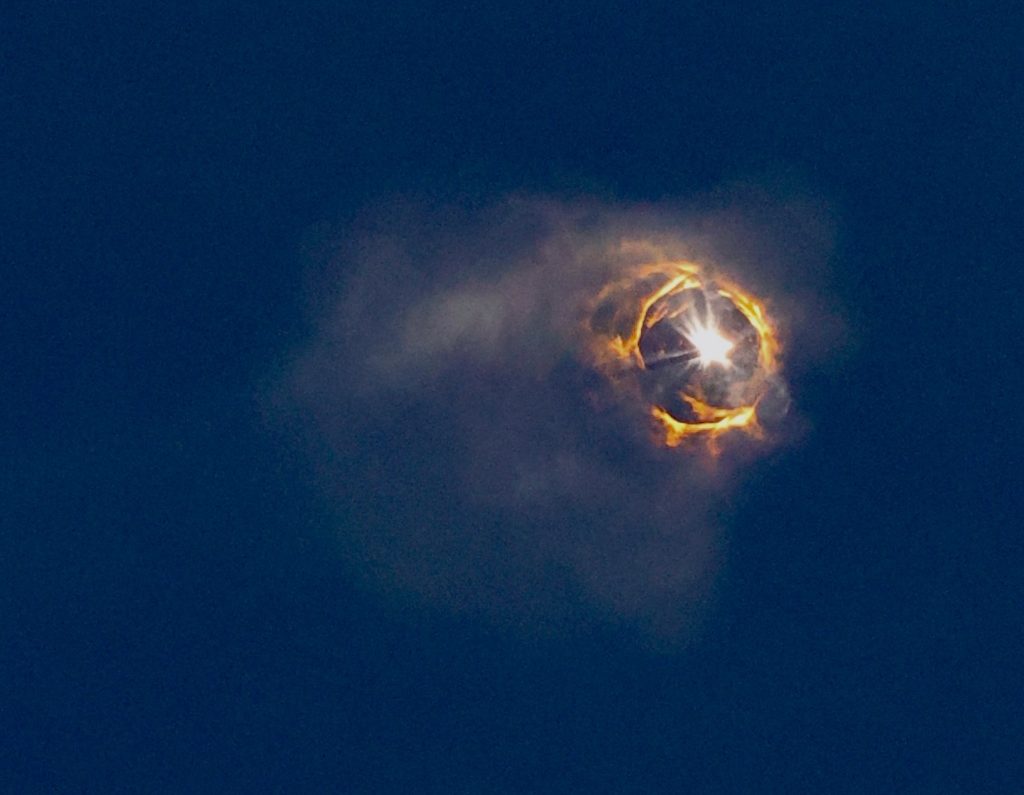
Main engine cutoff was called and the flip for separation began, but the stack kept rotating and the stages did not separate.
-
Watch this moment · 50:00
Flight termination
The flight termination system was commanded on the booster and the ship.
Key facts
| Vehicle | Starship, Super Heavy |
|---|---|
| Mission name | Starship Flight 1 |
| Launch site | Starbase, Texas |
| Crew size | 0 |
| Outcome | Partial success |
Videos about this mission
The videos, in date order
Drag, zoom or press play to watch them on this page.
April – May 2023
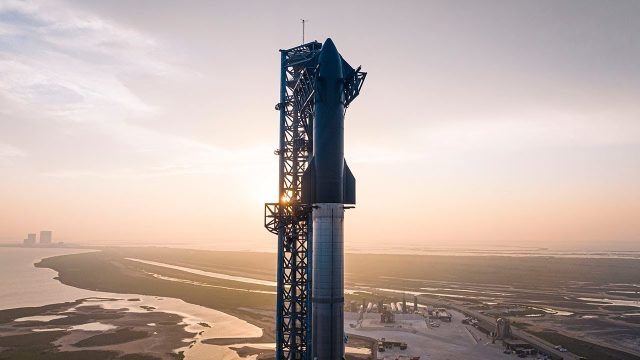
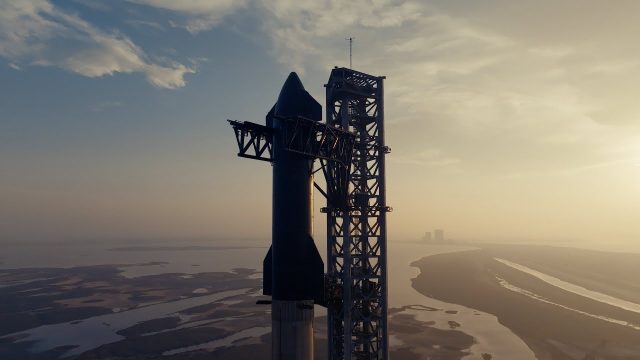
Drag to explore dates · Select a video to preview.
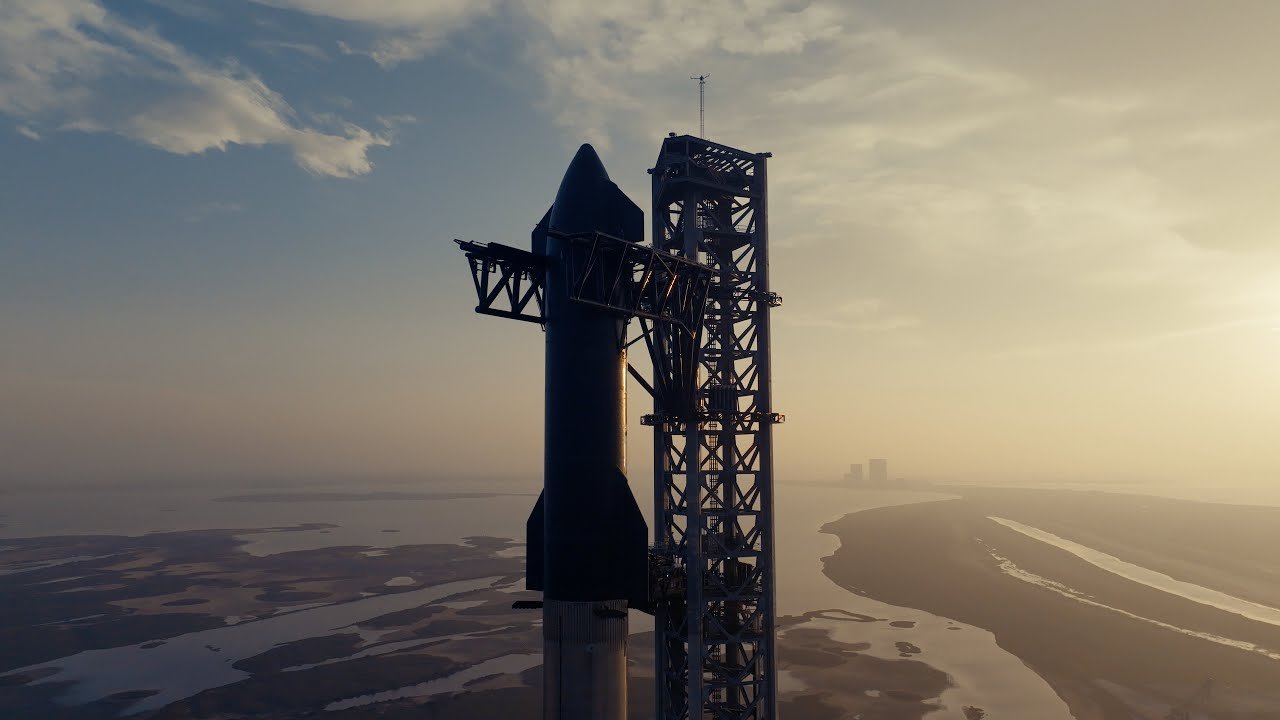
Dates are when each video was first published on YouTube.
The plan
Super Heavy was to separate about three minutes into the ascent, flip and make a boostback burn to a hard landing in the Gulf of Mexico. The ship was to coast for about an hour and make a hard landing in the Pacific about 250 km offshore. Neither vehicle was to be recovered. SpaceX described the stack as about 120 m tall, with about 18,000 hexagonal tiles on the ship.
What the next flight changed
SpaceX said the test taught it a tremendous amount about the vehicle and the ground systems. The video does not list the changes, so see SpaceX's own flight report for them.
Questions and answers
When was the first Starship flight?
On 20 April 2023, from Starbase in Texas.
How high did it get?
An apogee of about 39 km over the Gulf of Mexico, from the description of video 36.
Why was the first attempt stood down?
A valve on the booster froze.
Was the flight a failure?
It cleared the pad, which was SpaceX's goal, but it did not reach stage separation.
Sources: The facts and written text on this page come from the 2 videos on this page, by SpaceX.