Starship’s 33 Raptor Engines: Four Reasons Behind Super Heavy
The short version
An explainer on why Starship's Super Heavy booster has 33 Raptor engines, giving four reasons: redundancy, avoiding the combustion instability that troubled huge engines like the F-1, the throttle range needed for a soft landing and catch, and the ability to manufacture engines at scale. It compares Starship with the Saturn V, Space Shuttle, SLS, the Soviet N-1 and the R-7/Soyuz family.
Full written account
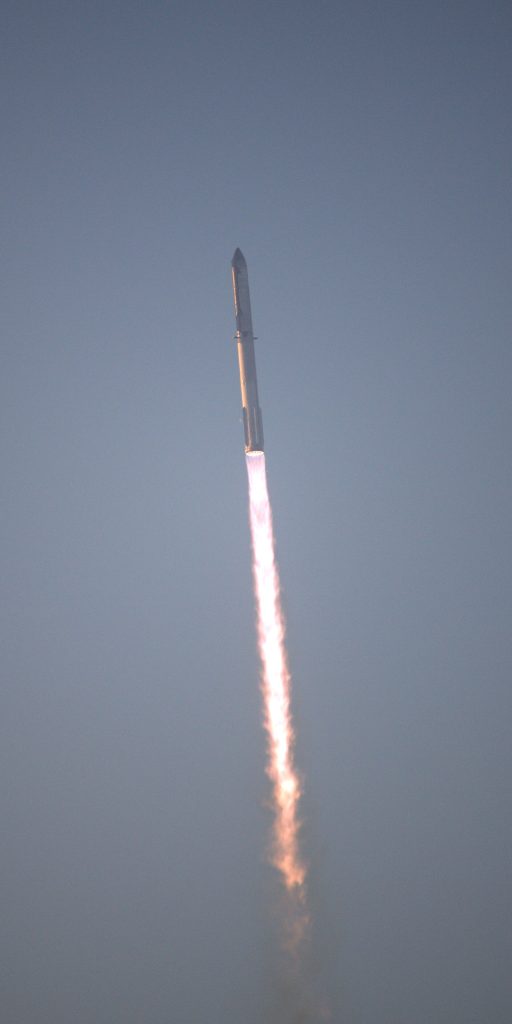
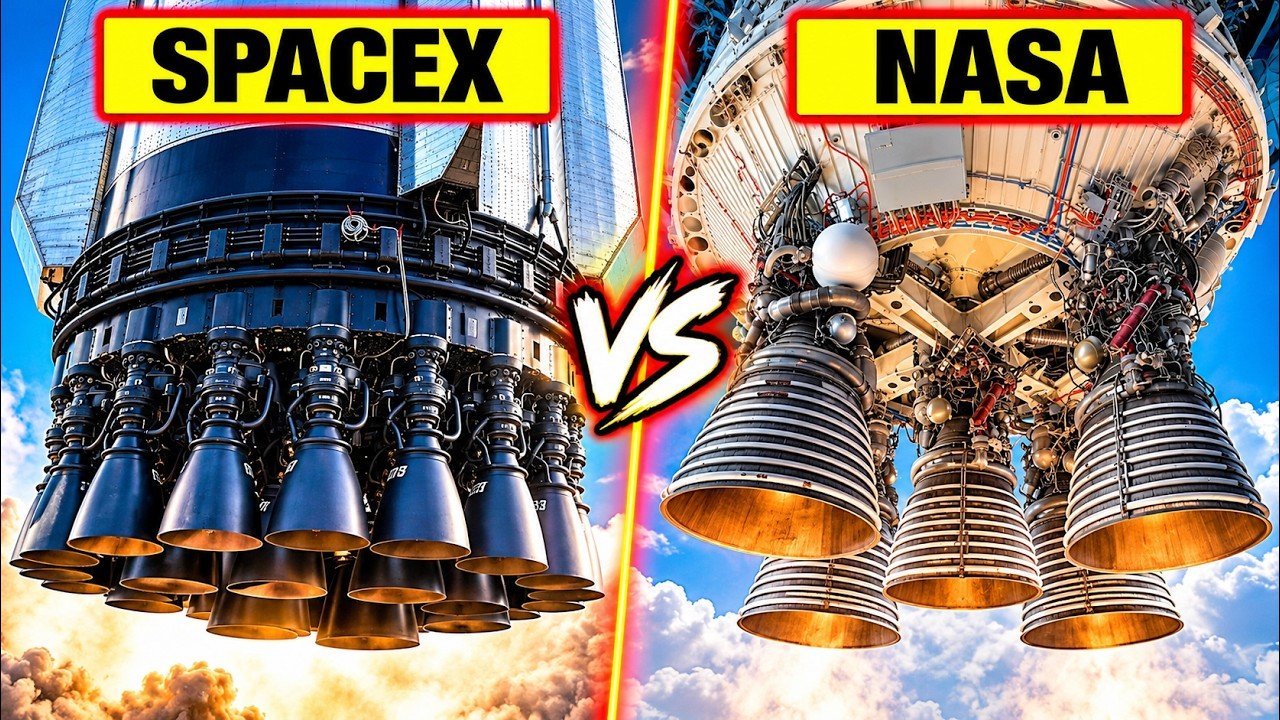
SpaceX's Starship Super Heavy booster lifts off on 33 engines, far more than the five or six large engines under the Saturn V, the Space Shuttle or the Space Launch System. Redundancy is one reason, but the video lists four in all, and the most important has nothing to do with launching or landing.
Many small engines versus a few big ones
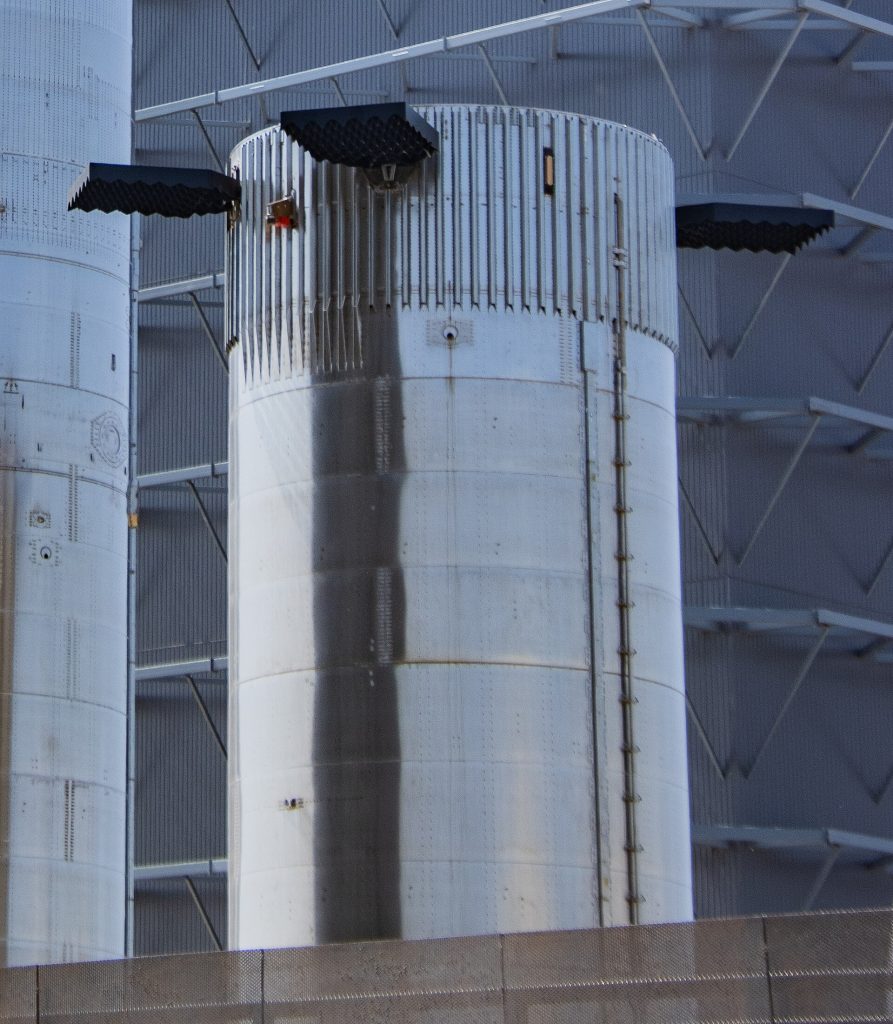
The Saturn V, the Space Shuttle and the SLS each lift off on five or six large engines. Starship's underside shows 33 small nozzles packed tightly together. Both approaches answer the same question: how to get something enormous into space.
Bigger engines, bigger problems
The F-1 that powered the Saturn V's first stage has a nozzle 3.7 m across, the same width as the entire Falcon 9 first stage with its nine engines. A single F-1 produces roughly 1.5 million pounds of force, while all nine Falcon 9 engines together produce about 1.66 million pounds.
Early F-1 prototypes in the early 1960s kept exploding on the test stand because of combustion instability: small variations in fuel burn across the large chamber caused pressure swings and vibrations that shook the engine apart. The fix was a metal plate over the fuel injectors with small blades called baffles, which split the fuel flow into smaller groups. It took designers 2 years to get right. In 2013 Jeff Bezos financed a salvage expedition into the Atlantic to recover Saturn V wreckage, and he said the parts were made with techniques nobody could reproduce today.
The N-1 precedent
About 60 years ago the Soviets built the N-1 with 30 small engines in a ring around an unusually wide booster. On its first test flight several engines failed early in the climb, fire broke out in the tail section, the flight termination system was triggered and the rocket broke apart before reaching space. The second launch failed faster and more dramatically. Starship's second flight carried the rocket through stage separation and into space for the first time before it exploded. The video says the Soviets never properly tested their engines or booster, while after Starship's first flight SpaceX needed only a couple of months, not 2 years, to make changes.
Landing and the throttle problem
The Falcon 9 booster relights one of its nine engines to land, in what is called a hover slam. It cannot hover, so the engine must shut off at the instant the legs touch down. Starship is meant to be caught in midair by mechanical chopstick arms on a tower, which leaves no room for slamming.
A rocket engine cannot idle like a car engine; throttle it too low and it stalls. If an engine's minimum throttle still produces more force than the nearly empty booster weighs, the rocket cannot descend. Each engine therefore has to be small enough that its minimum throttle is at or below the dry mass, while all engines together must lift the fully fueled vehicle. For Super Heavy the video says the ideal number is 33.
Manufacturing at scale
NASA built 15 Saturn V rockets, 75 F-1 engines, each assembled by skilled craftspeople, and stopped because the cost became unsustainable. Elon Musk has suggested building at least 1,000 Starships, which would need tens of thousands of engines.
The Soviet R-7 offers the model. It has five engines, each with four nozzles and four combustion chambers fed by a single fuel pump, which divides the engine physically to address combustion instability. The video calls this approach more reliable and easier to manufacture. In roughly 6 years of testing SpaceX has built more than 40 Starship upper stages and over 20 Super Heavy boosters. The R-7 and Soyuz family added up to just over 2,000 boosters over 70 years, and the 2,000th Soyuz rolled off the assembly line on Christmas Day 2025. SpaceX aims to compress 70 years of rocket manufacturing into perhaps 10 years at most.
Questions this video answers
Why does Super Heavy have 33 engines?
The video gives four reasons: redundancy, avoiding the problems of very large engines, controlled landing and liftoff thrust, and manufacturing at scale.
What was combustion instability in the F-1?
Tiny variations in how fuel burned across the large chamber caused pressure swings and vibrations strong enough to shake the engine apart. A baffled injector plate fixed it, which took designers 2 years.
How is the Soviet N-1 similar to Starship?
The N-1 used 30 small engines in a ring around a wide booster, and its first flight ended with engine failures, a tail fire and the rocket breaking apart.
Why can't a Falcon 9 hover when landing?
The video says its engine cannot throttle low enough, so it must shut off at the instant the legs touch down, which is why the landing is called a hover slam.
Explore related missions
Connected by the topic: Starship