Why Starship’s Heat Shield Uses Hexagonal Tiles and Full Reuse
The short version
An explainer on why Starship's heat shield uses hexagonal tiles and why full reuse depends on how much work the shield needs between flights. It covers the switch from carbon fiber to stainless steel, tile gaps and the ablative backup layer, results from several flights, and a comparison with the Space Shuttle's tile system. It then links the heat shield to Starlink, NASA's Artemis lunar plan, Mars cargo and orbital AI data centers.
Full written account
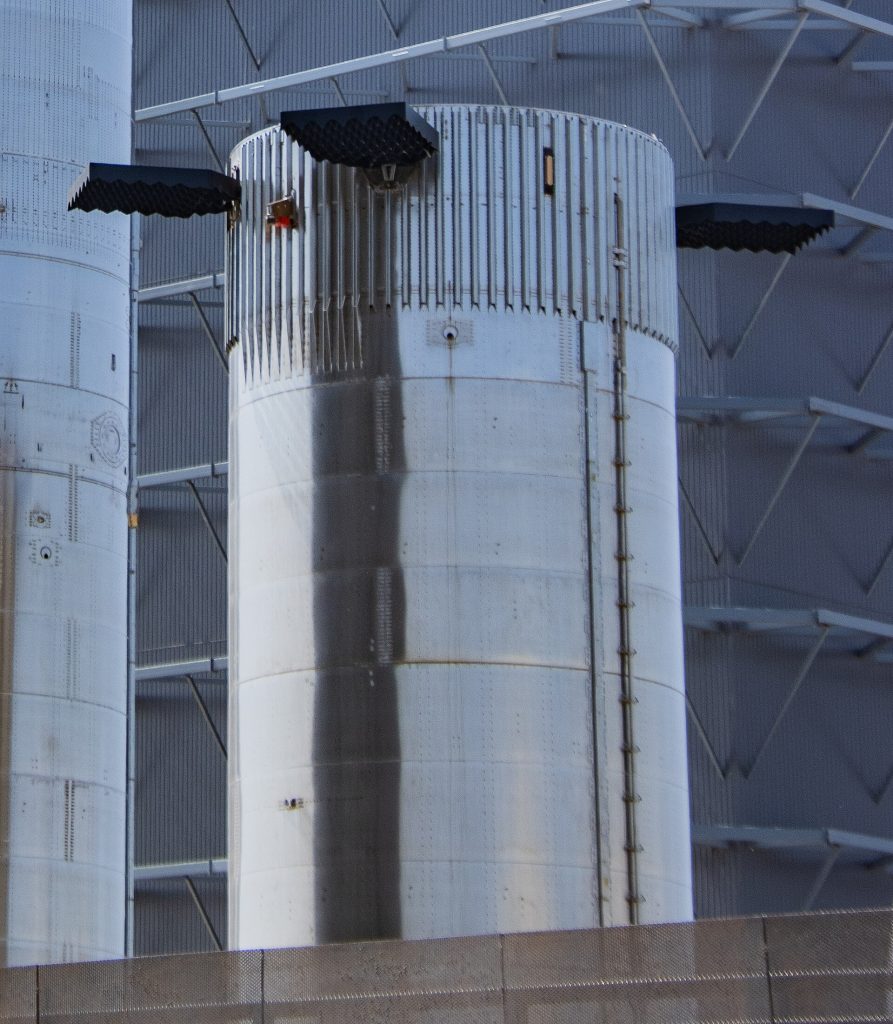
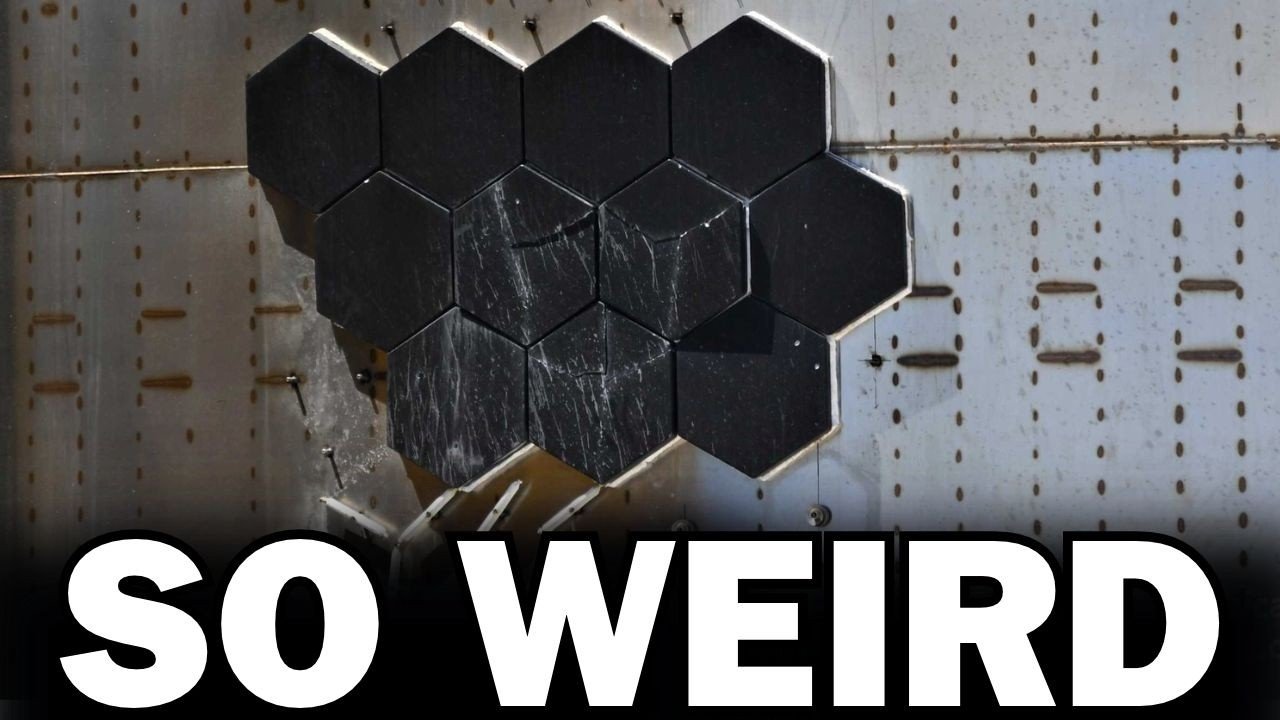
Starship's belly is covered with about 18,000 hexagonal tiles, each roughly the size of a dinner plate, according to SpaceX's description during the third flight's broadcast. The shape was explained in one line by Elon Musk in response to a question about the 2019 torch test video: "No straight path for hot gas to accelerate through the gaps." The heat shield matters because Starship is designed to bring back both booster and ship and fly them again without refurbishment, which Falcon 9, whose upper stage is new for each mission, does not do.
Why the shield decides turnaround
On Starship's fourth flight, the forward flap burned through on camera and parts came apart during reentry, yet the ship still completed a soft landing in the ocean. The question then becomes how much must be replaced or inspected before the next launch. Musk's standard is to land, refill propellant and launch again without refurbishment or a laborious inspection. He compared the tiles to brake pads: consumable, but lasting a very long time.
Reentry and the steel structure
The ship compresses air through a shockwave ahead of it, and the gas becomes extremely hot, including electrically charged particles, which is plasma and can interfere with radio communications. Starship presents its broad belly to the flow during the high-heating part of reentry. NASA describes the Space Shuttle entering at more than 17,000 mph, and designed its thermal protection to keep the aluminum airframe at or below 350°F, about 177°C.
Starship's early design used carbon fiber before SpaceX switched to stainless steel. Musk explained that steel's higher temperature tolerance allows thinner tiles. He had first described a double-walled steel shell with fluid bleeding through tiny holes, but said early calculations made it heavier than the passive glass shield, so SpaceX chose ceramic tiles, described as mostly glass.
Gaps, overlap and the hexagon
Squares in straight rows would leave straight seams; hexagons change the seam direction. NASA left gaps on the Shuttle to keep tiles from touching, since the structure underneath moves. Musk said overlapping tiles are hard to match to airflow that changes between ascent and descent, and that hot gas flowing over height differences causes concentrated heating that erodes them.
What flights showed
On Flight 10, Musk said the tiles almost entirely stayed attached, but heat still got through the gaps. Bill Gerstenmaier, SpaceX's vice president of build and flight reliability, said white residue showed a backup layer derived from Dragon's heat shield material had partly worn away, as ablative material does. For Flight 11 he described a wrapping material called crunch wrap, placed around each tile's edges with the excess cut off at the surface. Three metal tiles on Flight 10 oxidized and did not work well. On Flight 4, SpaceX removed two tiles and used one thinner tile to measure heating.
NASA describes each Shuttle tile as its own configuration, matched to its location and bonded to a felt pad, and the protection needed inspections and repairs after each flight. Starship repeats a standard hexagonal shape, and SpaceX makes its tiles in-house.
Flight 13 gave views of an intact heat shield after splashdown. Heat shield researcher Dan Rasky argued the tile system still required too much work for full and rapid reuse; Musk later said data and visual inspections showed no technical obstacles to rapid reusability.
What reuse is meant to pay for
On Flight 14, Starship deployed 26 operational Starlink version 3 satellites, which SpaceX said added approximately 10 times the downlink capacity of a Falcon 9 Starlink launch. NASA's lunar plan describes tanker Starships delivering propellant to a depot Starship in Earth orbit, and NASA is targeting a crewed return to the lunar surface in 2028. SpaceX also plans AI satellites tied to Starship's capacity and full reuse. Musk's target, with complete reuse and local production of methane and oxygen, is well below $100 per kilogram to orbit. Investor Ron Baron forecasts SpaceX reaching 20 to 50 trillion dollars in value over 10 years.
Questions this video answers
Why does Starship use hexagonal tiles?
In a 2019 reply about the torch test, Elon Musk said the shape leaves no straight path for hot gas to accelerate through the gaps.
Why are the tiles not overlapped like shingles?
Musk explained that airflow direction changes between ascent and descent, making a suitable overlap hard to choose, and that hot gas flowing over height differences creates concentrated heating that erodes tiles.
Why did SpaceX switch from carbon fiber to stainless steel?
The heat shield was part of the decision: steel tolerates higher temperatures, which Musk said allows thinner tiles than an aluminum or carbon fiber airframe would need.
What did the white residue on Flight 10 mean?
Bill Gerstenmaier explained that heat reached a backup ablative layer derived from Dragon's heat shield material, and some of it wore away.
What happened to the metal tiles tested on Flight 10?
Three metal tiles oxidized, producing orange discoloration, and Gerstenmaier said they didn't work well in that test.
What did Flight 14 deploy?
Starship deployed 26 operational Starlink version 3 satellites, which SpaceX said added approximately 10 times the downlink capacity of a Falcon 9 Starlink launch.
Explore related missions
Connected by the topic: Starship