Apollo 13 Hour by Hour: Tank Explosion and the Lifeboat Return

The short version
An hour-by-hour account of Apollo 13, from launch on a Saturn V to the oxygen tank 2 explosion at about hour 56. The crew of Jim Lovell, Jack Swigert and Fred Haise used the Lunar Module as a lifeboat, looped around the Moon, improvised CO2 canisters and splashed down in the Pacific.
Full written account
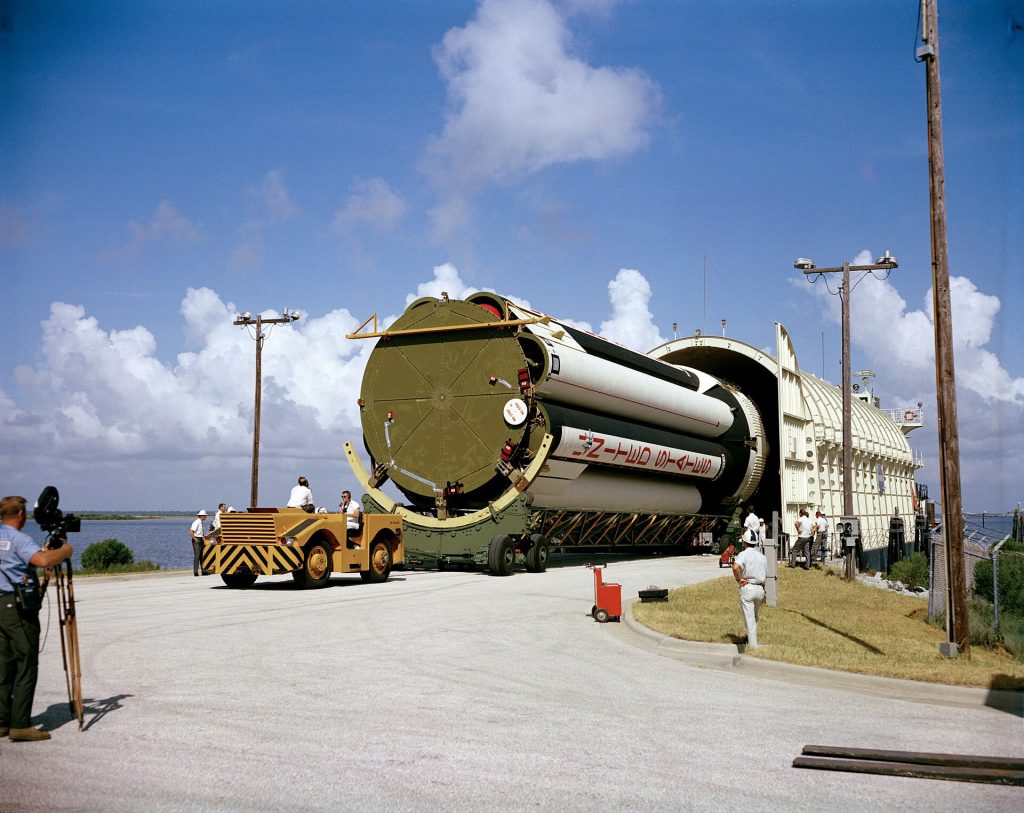
Apollo 13 lifted off on a Saturn V from the Kennedy Space Center bound for the Fra Mauro crater area of the Moon, with Jim Lovell commanding and Jack Swigert and Fred Haise aboard. Swigert was a late replacement for an astronaut who came down with rubella. About 56 hours in, an oxygen tank exploded, and the mission to the Moon became a struggle to get home.
A flawed start
At about five and a half minutes, the centre engine of the S-II stage shut down two minutes early. The remaining four engines had to burn 34 seconds longer, and the S-IVB third stage nine seconds longer, to reach orbit. The next hours went smoothly. A live TV broadcast began around hour 55, though many stations did not show it, and Lovell signed off with a good night from the crew.
The explosion
At hour 56 the crew heard a bang like a large piece of metal being hit. Swigert said, "Okay, Houston, we've had a problem here." Oxygen tank 2 showed little to nothing, and tank 1 looked about to run out. Mission control first suggested the gauges might be faulty, but Lovell reported seeing gas venting into space.
The video explains the cause as a short circuit in tank 2 when Swigert started the "stir" of the tank contents; it blew a 13-foot panel off the service module. The command and service modules had been designed for 28 volts, and 65 volts was later chosen. The thermostat maker had not received word of the change. Tank 2 had also been dropped during the design stage. Afterwards it would not empty in tests, and the technicians' workaround heated the tank enough to damage insulated wires.
The lifeboat decision
CapCom Jack Lousma told the crew the other tank was leaking badly and that they were thinking about the LM lifeboat; Swigert replied they had been thinking the same. The mission was aborted. With 15 minutes to leave the command module, Haise and Lovell went through the tunnel to the Lunar Module while Swigert stayed to make sure everything was off. The Lunar Module was meant to last 45 hours, and they needed at least 90.
The route home
They believed the Service Propulsion System was broken, so they decided to go around the Moon rather than thrust straight back. Lovell had copied down guidance information from the command module before leaving it. NASA chose a four-minute burn that would shave 12 hours off the flight and aim for the Pacific.
Cold, thirst and carbon dioxide
The crew chose to use one fifth of normal intake, with only 0.2 litres of water a day. Together they lost 31.5 pounds, and Haise developed a urinary tract infection. The cabin fell to 38 degrees Fahrenheit (3.3 C). At hour 93, carbon dioxide threatened to build up because the Lunar Module's round canisters did not fit the command module's square ones. With ground control they built new ones from plastic bags, cardboard, parts of a lunar suit and tape, and CO2 levels dropped.
Re-entry
No procedures existed for powering the command module back up, so ground staff worked through the night on simulators. The service module was jettisoned at hour 138, and the crew saw the damage for the first time. The Lunar Module was released at hour 141. The men landed in the Pacific; the video says it was the second most accurate splashdown of the Apollo program. President Nixon phoned Lovell and said they had done something that had never been done before.
Questions this video answers
What caused the Apollo 13 explosion?
Oxygen tank 2 exploded about 56 hours into the flight after Jack Swigert started the "stir" of its contents, blowing a 13-foot panel off the service module.
Why did the tank spark?
The video says a short circuit in tank 2 sparked, likely from damaged insulated wiring after the tank had been dropped and later heated during emptying tests. The thermostats had also not been updated for the voltage change.
How did the crew get home?
They used the Lunar Module as a lifeboat and swung around the Moon instead of thrusting straight back, since they believed the Service Propulsion System was broken.
How was the carbon dioxide problem fixed?
They built adapters from plastic bags, cardboard, parts of a lunar suit and tape so the round Lunar Module canisters could be used with the command module's square ones. CO2 levels dropped.
How did Apollo 13 end?
The men landed in the Pacific without problems; the video says it was the second most accurate splashdown of the Apollo program.