Apollo 13: Oxygen Tank Explosion and the Lunar Module Lifeboat
The short version
Apollo 13 launched April 11, 1970, and was meant to land at Fra Mauro. An oxygen tank exploded 55 hours 55 minutes into the flight, and the crew used the lunar module as a lifeboat. The video covers the late crew change, the improvised fixes and the safe return.
Full written account
Apollo 13 launched on April 11, 1970, with Jim Lovell, Jack Swigert and Fred Haise aboard. At 55 hours 55 minutes 4 seconds into the flight, at 11:05 p.m. on April 13th as the video gives it, the pressure in oxygen tank 2 rose and a bang followed. The three men then spent days in a lunar module built to keep two people alive for no more than 45 hours. All three came home safe.
A crew changed two days before launch
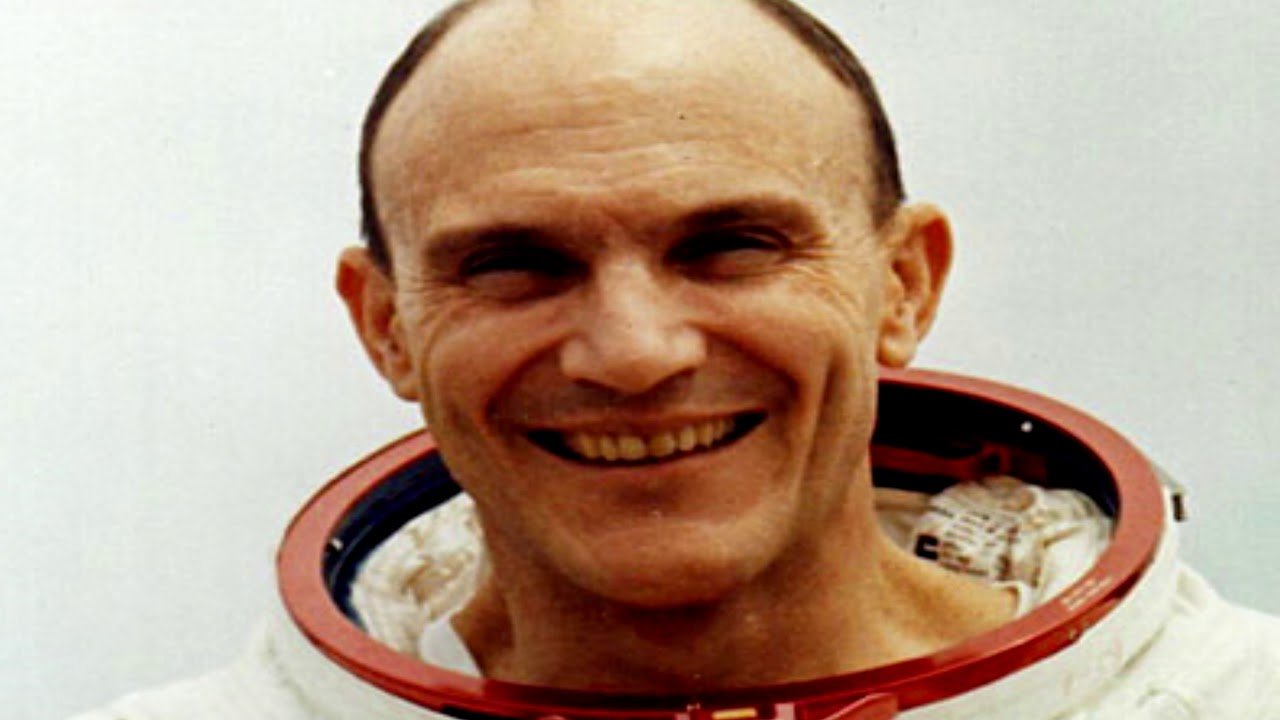
Apollo 13 was to be the first mission to land outside the flat lunar maria, at the Fra Mauro Highlands. Lovell, the first human to fly to the Moon twice, was to lead rookies Haise and Ken Mattingly. The plan called for 34 hours on the surface and two four-and-a-half-hour moonwalks. The experiments included a lunar heat flow experiment, a charged particle lunar environment experiment and a surface drill that Haise was to operate.
Eight days before launch, backup lunar module pilot Charles Duke reported that he had rubella. Lovell and Haise had had the measles earlier in life and were immune. Blood samples showed that Mattingly lacked the antibodies. If he flew, symptoms would likely begin by the time Apollo 13 entered lunar orbit. Flight surgeon Dr. Charles Berry recommended against Mattingly flying.
Lovell was reluctant to break up a crew that had trained for nearly two years, and Duke's illness ruled out swapping in the whole backup crew. Delaying the mission a month would have reduced confidence in the flight hardware and added $800,000 in cost. Late on April 8th, NASA decided to swap the command module pilots, putting backup pilot Jack Swigert in for Mattingly. Mattingly was moved to the crew of Apollo 16. Two days of simulator work followed, twelve straight hours of it in intensive tests, before NASA declared the crew go.
A launch with an engine out
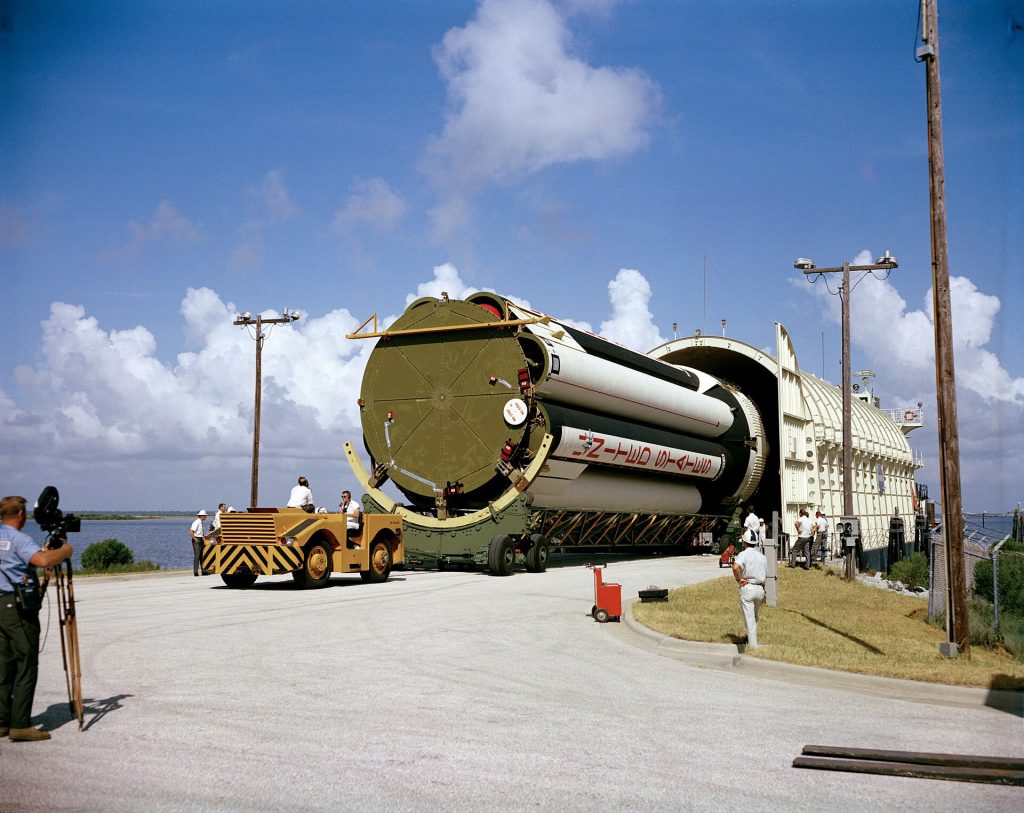
Liftoff was aimed for 2:13 p.m. Eastern Standard Time. About four minutes into the flight the second stage began to experience pogo. By five minutes the vibrations peaked at plus or minus 33.7 g. The onboard computer shut down the centre engine, engine five, two minutes ahead of schedule. Another lost engine would have left the vehicle without the thrust-to-weight ratio to reach orbit.
The four remaining engines burned nearly 33 seconds longer. The third stage, the S-IVB, also had to burn longer, because second-stage performance was down by some 152 miles per hour. This stayed within fuel margin limits and the lunar mission remained a go. Houston told the crew the engine-out had cost them about a ten-second longer burn on the S-IVB.
The explosion and the move to the lunar module
Mission Control asked the crew to stir up the cryo tanks. Oxygen at this point was a frothy, stratified mix, and the tank fans make the contents uniform and give a quantity readout. The pressure in tank 2 rose from 865 psi to over a thousand. Telemetry was lost, and when it returned accelerometers showed a 1.2 g spike. Swigert called: "we've had a problem here."
Controllers first looked for an instrumentation fault. About five minutes later Lovell reported that the quantity in oxygen tank 2 read zero. Fuel cell 3 failed about 90 seconds after that. Ten minutes later fuel cell 1 failed too, leaving 33 percent of the design electrical output. The crew performed an emergency power-down of the command module, called Odyssey. Swigert shut down the remaining fuel cell after recharging the command module batteries, and the crew moved into the lunar module, Aquarius, as a lifeboat.
Without a working service module engine the crew could not make a direct abort and had to take the longer trip around the Moon. About six and a half hours after the incident, Lovell and Haise improvised a way to control the combined stack from the lunar module. They made a 16 feet-per-second burn with the descent engine to return to a free return trajectory. The burn took nearly 34 seconds and changed the velocity by only 25 miles per hour.
Surviving on a lifeboat
The lunar module had enough oxygen. What it lacked was electricity and water. It was battery-powered and made no water, so the crew shut down all non-essential systems, including the guidance computer. The cabin cooled to 33 degrees, and moisture from their breathing condensed on the walls and windows. Haise calculated they would run out of water 15 hours before reaching Earth.
At 77 hours 8 minutes the spacecraft passed behind the Moon at 158 miles. This put the crew farther from Earth than any humans in history, a record that still stands. Mission Control's calculations of consumables showed the crew would not survive the long return. Lovell and Haise therefore made a second deep-space burn with the descent engine. It accelerated the stack by 580 miles per hour and shaved nearly ten hours off the trip. It also moved the landing to the Pacific Ocean, where recovery forces were waiting. The tired crew made several mistakes, and these plus a weight miscalculation required two small correction burns, one with the main engine and one with the RCS system.
At 82 hours the astronauts felt a thump and saw venting near the lunar module descent stage batteries. Current spikes showed a momentary short circuit. The video gives the probable cause as electrolyte leaking from one or more cells and bridging a terminal to the battery case. Each astronaut lost nearly 20 pounds over the mission, and Haise developed a serious cold.
Carbon dioxide then climbed toward 16 percent of the cabin atmosphere, where air sensors triggered emergency alarms. The lunar module's filters could not keep up with three people. The command module had plenty of lithium hydroxide canisters, but they were square and the lunar module's receptacles were round. On the ground a team including Ed Smylie, Tony England and Joe Kerwin built an adapter from materials aboard. It used the hard plastic cover of the flight plan, spacesuit hoses, socks, plastic bags and a bungee cord, all held with duct tape. A checklist was read up to the crew. Within about an hour of two of the devices going online, the carbon dioxide partial pressure fell from about 15 millimeters to two tenths. Four command module canisters were used.
Re-entry preparations
With Ken Mattingly working in the simulators, in a cold, dark environment matched to the astronauts' conditions, controllers developed the power-up and entry procedures. Mattingly never developed measles symptoms. The command module had been unpowered for days. Its RCS propellant valves were probably sluggish, and the heat shield might have been brittle or even damaged by the explosion. The entry batteries were charged with leftover power from the lunar module batteries, using cables reversed from their normal use. Gene Kranz and the white team handled the re-entry.
Odyssey was powered up at 138 hours. The service module was jettisoned while still docked to Aquarius, which had never been done before, and the crew got a look at the damage. One whole panel was gone. Seventy minutes before entry Aquarius was jettisoned for the last time. Communications blacked out during re-entry, and then Apollo 13 came through on its main parachutes, with applause in Mission Control and a splashdown.
Why the tank failed
The account of the cause traces back to two years before the flight. Oxygen tank 2, shipped from Beechcraft to North American Rockwell, contained two inadequate protective thermostatic switches and a loose fill and drain valve fitting. The tank was removed from Apollo 10 after ground testing showed its contents could not be removed. Special de-tanking procedures at KSC ran the heaters for extended periods and cycled the pressure. These procedures had not been used before and the tank had not been qualified by the contractor for those conditions.
Questions this video answers
What happened to Apollo 13?
Oxygen tank 2 in the service module exploded 55 hours 55 minutes into the flight, at 11:05 p.m. on April 13, 1970 by the video's clock.
Why was Ken Mattingly replaced?
Ken Mattingly had not had measles and lacked the antibodies. Flight surgeon Dr. Charles Berry recommended against him flying, so backup pilot Jack Swigert replaced him two days before launch.
How did the crew survive?
They used the lunar module Aquarius as a lifeboat, which was designed to support two people for 45 hours but kept three alive for about four days.
How was the carbon dioxide problem solved?
Crews built an adapter from a flight plan cover, hoses, socks, plastic bags, a bungee cord and duct tape so square command module lithium hydroxide canisters fit the round lunar module receptacle.
What record did the crew set?
At 77 hours 8 minutes the spacecraft passed the far side of the Moon at 158 miles, and the crew traveled farther from Earth than any humans in history.