Apollo 13: Oxygen Tank Rupture and the Lunar Module Lifeboat

The short version
Part one of a documentary on Apollo 13, launched in April 1970 with Jim Lovell, Jack Swigert and Fred Haise. It covers the pre-flight crew change, the Saturn V pogo vibration, the oxygen tank rupture about 56 hours in, and the use of the lunar module as a lifeboat. It ends with the spacecraft back on the free return trajectory.
Full written account
Apollo 13 was launched in April 1970 with three astronauts, aiming for a lunar highland landing at Fra Mauro. About 56 hours into the flight, an oxygen tank ruptured, and the mission became a fight to get the crew home, with Earth roughly 200,000 miles away.
The crew and the mission
Jim Lovell, a Navy captain, was mission commander on his fourth spaceflight. Fred Haise was lunar module pilot. Ken Mattingly was originally command module pilot, but seven days before launch he was exposed to measles and was the only prime crew member without immunity. The flight surgeon judged it too big a risk, and backup Jack Swigert took his place.
The main objective was scientific exploration of the Moon. Earlier Apollo landings had been on flat mare areas; Apollo 13 was to land in the hilly Fra Mauro uplands, which held material thrown out by an impact. The crew were also to deploy an experiment package that included a heat flow experiment, which needed a drill for 3 m holes.
Public interest was fading. Broadcasters received complaints that favorite programs would be bumped to cover the flight.
Launch and the pogo problem
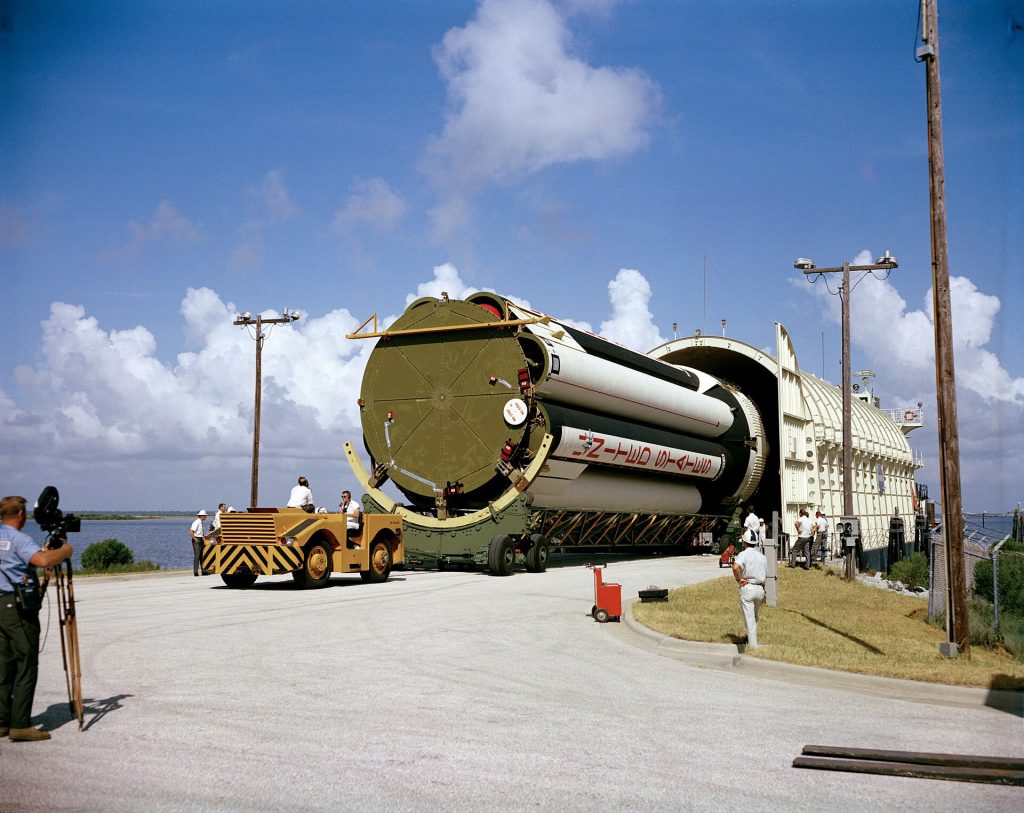
The Saturn V lifted off, building up to 7.6 million pounds of thrust. About five and a half minutes in, the center inboard engine of the second stage shut down early. The cause was pogo, a vibration along the rocket's axis. The center engine was vibrating vertically 16 times a second and flexing the Saturn V's framework, and a sensor shut it down. Had the vibration grown through another cycle, the vehicle would have gone beyond its structural limits. The flight later prompted engineers to revisit pogo, and suppression measures were put in place.
The rupture
After a television broadcast, mission control asked Swigert to stir the cryotanks. When the fan in tank number two switched on, damaged wiring created a spark. Fire spread in the oxygen, the pressure ruptured the tank, and a 13 ft panel of the service module was blown out. The crew heard one bang.
Lovell reported: "Houston, we've had a problem." Fuel cells one and three went offline. Oxygen tank 2 read zero, and Lovell saw gas venting into space. Tank 1 was leaking too. The remaining fuel cell could not run without oxygen and had to be shut down within two hours.
The lifeboat
The lunar module had its own independent life support, power and guidance, so it could serve as a lifeboat. The command module was powered down to save its re-entry batteries, which could not be recharged, except for the guidance computer. A lunar module normally took 3 to 5 hours to power up, and the crew had to do it in 90 minutes. Debris around the spacecraft prevented star sightings, so Swigert read out angles from the command module to align the lunar module platform.
Apollo 13 had departed from the free return trajectory, so NASA used the lunar module's descent engine for a 16 ft per second burn to get back onto it. The burn was successful.
Consumables
The lunar module had a 45-hour lifespan intended for two men and now had to support three for over 90 hours. The crew cut water intake to a fifth of normal and suffered serious dehydration. The module drew about 20% of its usual power. Mission control estimated the water would run out 5 hours before re-entry unless usage was restricted.
The documentary notes that the timing mattered: had the tank failed before the lunar module was connected, there would have been no lifeboat. One speaker said NASA engineers' private estimates of the chances were below 50/50.
The film ends with the crew about 77 hours 9 minutes into the flight, passing behind the Moon.
Questions this video answers
What caused the Apollo 13 oxygen tank failure?
About 56 hours into the mission, a fan switched on in oxygen tank 2 and damaged wiring created a spark. Fire spread inside the tank, the pressure buildup ruptured it, and a 13 ft panel of the service module was blown out.
Who was on the Apollo 13 crew?
Jim Lovell as mission commander, Jack Swigert as command module pilot and Fred Haise as lunar module pilot. Swigert replaced Ken Mattingly, who had been exposed to measles.
How did the lunar module help the crew?
The lunar module Aquarius acted as a lifeboat, with its own independent life support, power and guidance systems. Its descent engine was also fired to put the spacecraft back on the free return trajectory.
How did the crew conserve consumables?
The crew reduced their water intake to a fifth of normal consumption and suffered serious dehydration. The lunar module was powered down to about 20% of its normal power draw.
What happened during the Apollo 13 launch?
The center inboard engine of the second stage shut down early after sensors detected pogo vibration, with the engine vibrating vertically 16 times a second.