Apollo 13: The Oxygen Tank Explosion and the Lifeboat Return
The short version
Apollo 13 launched on April 11, 1970, planning the first landing in the Fra Mauro highlands, but an oxygen tank explosion turned it into a survival mission. The documentary follows Mission Control and the crew as they use the lunar module as a lifeboat, improvise a carbon dioxide scrubber fix, and power the command module back up for re-entry. It ends with the splashdown and the postmortem findings on the tank.
Full written account
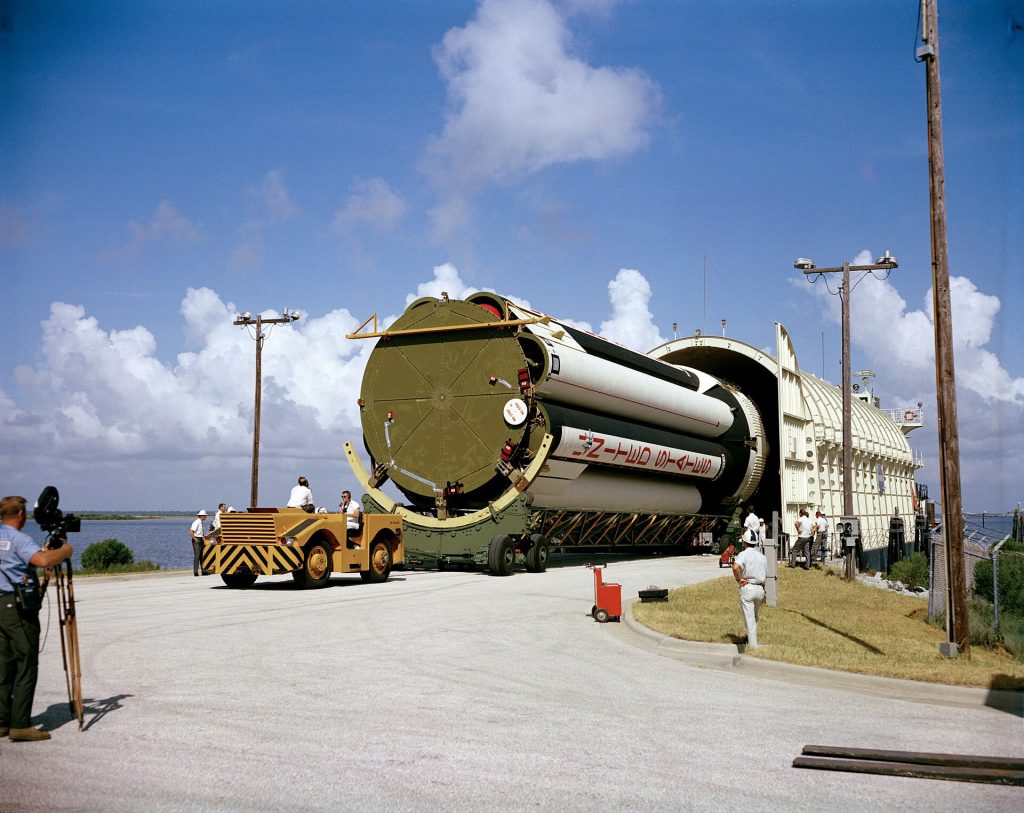
Apollo 13 lifted off on April 11, 1970, atop a Saturn V with a crew of three: Commander James Lovell, Lunar Module Pilot Fred Haise and Command Module Pilot Jack Swigert. It was meant to be the first landing in rugged terrain, the Fra Mauro highlands, where scientists hoped to find original primordial rock. Instead the mission became a fight to bring the crew home.
A late crew change
One week before launch the crew was exposed to German measles, and doctors found that Ken Mattingly, the designated command module pilot, had never had the disease and was not immune. He was dropped, and backup pilot Jack Swigert took his place. Early in the flight, an engine failure in the second stage raised concerns about fuel supply. Apollo 13 entered Earth orbit 12 minutes 39 seconds after launch and was injected toward the Moon 2 hours 41 minutes 47 seconds in.
The explosion
Oxygen and hydrogen were stored super cooled and were stirred with an electric fan, a procedure called a cryostir. At 2 days 7 hours 54 minutes, Swigert flipped the fan switch. Sixteen seconds later a bang and shudder rocked the ship. Warning lights lit, jets fired, and main bus B, one of two main power distribution panels, lost power. Lovell then saw gas venting from window 5. The mission turned from a landing to survival.
The lifeboat
Flight director Gene Kranz decided to use the lunar module as a lifeboat. The service module was useless, and the command module, the only part with a heat shield, had about 2 hours of battery power. The lunar module was designed for two people, not three, and had no heat shield. At 2 days 9 hours 37 minutes the crew moved in. Mission control chose a free return trajectory around the Moon, and the crew fired the lunar module descent engine at 2 days 13 hours 29 minutes. Debris around the spacecraft made star sightings impossible, so the crew aligned using the Earth, Moon and Sun.
Cold, power and carbon dioxide
The lunar module cooled to 38°F, and water condensed everywhere. Engineers calculated a minimum draw of 20 amps against the 15 needed to reach Earth, and the team worked to cut the difference. Haise fell ill with a bladder infection. Carbon dioxide rose because the lunar module's cylindrical lithium hydroxide canisters were running low while square command module canisters went unused. Engineers devised an adapter from a flight plan cover, a plastic bag, a sock, duct tape and a hose, and the carbon dioxide level began to fall.
Re-entry
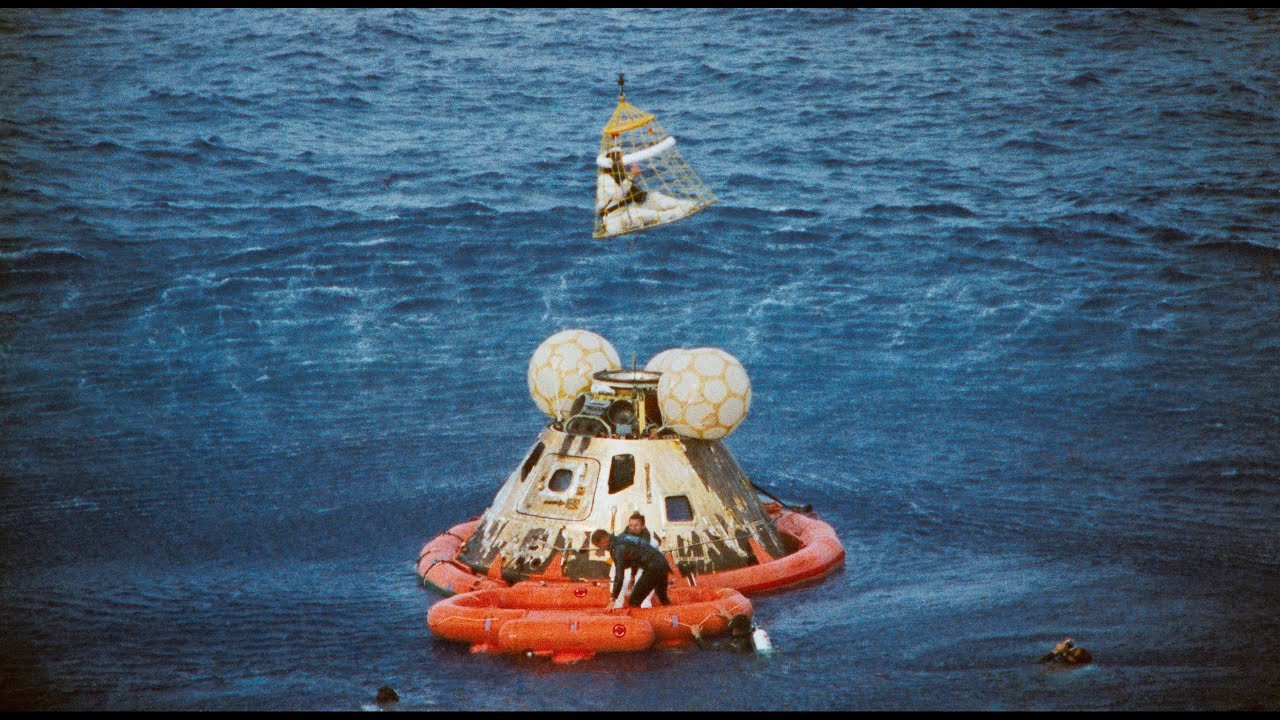
Mattingly helped develop the power-up procedure, which ran to 400 entries over 39 pages and was copied by hand. The crew completed it in 21 minutes, and Swigert jettisoned the service module, 39,529 miles from Earth, revealing heavy damage. Another emergency maneuver was needed to return to the re-entry corridor. Communications were silent for 5 minutes during re-entry before Swigert answered at 1 minute 27 seconds of calling. The command module splashed down at 5 days 22 hours 54 minutes, within four miles of the recovery carrier, and the crew boarded USS Iwo Jima. President Nixon awarded them the Presidential Medal of Freedom.
Cause
A postmortem found that excess voltage fed to the oxygen tank a month before launch had damaged a thermostat, overheating the tank and degrading the insulation on wiring. When the fan was turned on, a short circuit produced a spark that caused the tank to catch fire and explode.
Questions this video answers
When did Apollo 13 launch?
April 11, 1970, at 2:13 as given in the video's countdown.
Who was on the Apollo 13 crew?
Commander James Lovell, Lunar Module Pilot Fred Haise and Command Module Pilot Jack Swigert. Ken Mattingly was dropped a week earlier after exposure to German measles.
What caused the Apollo 13 explosion?
An oxygen tank exploded 16 seconds after Swigert switched on the fan for a cryostir. Engineers later found that excess voltage a month before launch had damaged a thermostat and degraded wiring insulation; a short circuit sparked a fire in the tank.
How did the crew survive?
They used the lunar module as a lifeboat, took a free return trajectory around the Moon, and built a carbon dioxide filter adapter from a flight plan cover, a plastic bag, a sock, duct tape and a hose.
When did Apollo 13 splash down?
5 days, 22 hours and 54 minutes into the mission, within four miles of the recovery carrier; the crew boarded USS Iwo Jima.