Cygnus XL Departs the ISS: Release, Burn and Re-entry Plan
The short version
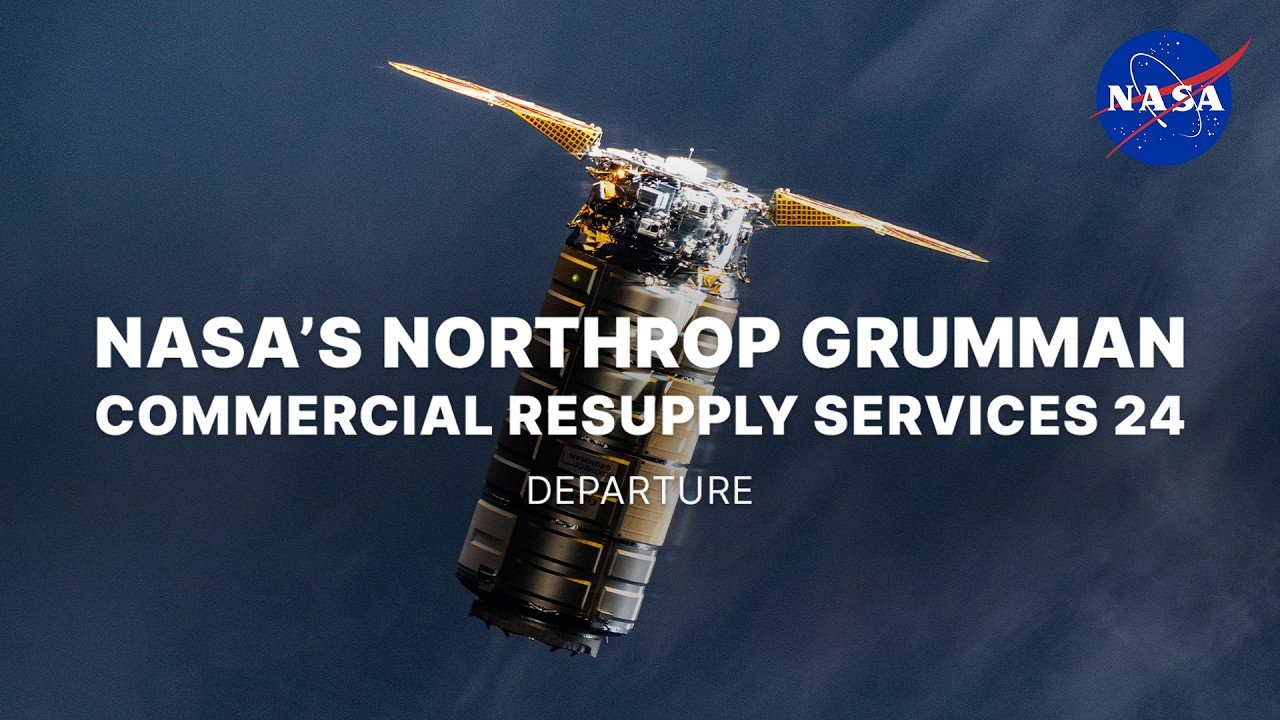
NASA's live coverage shows the Cygnus XL spacecraft released from Canadarm2 at 11:44 a.m. Central after being unbolted from the Unity module. It then performed a roughly 3-minute departure burn and exited the 200 meter keepout sphere and the approach ellipsoid. It is set to de-orbit on October 12 for a destructive re-entry.
Full written account
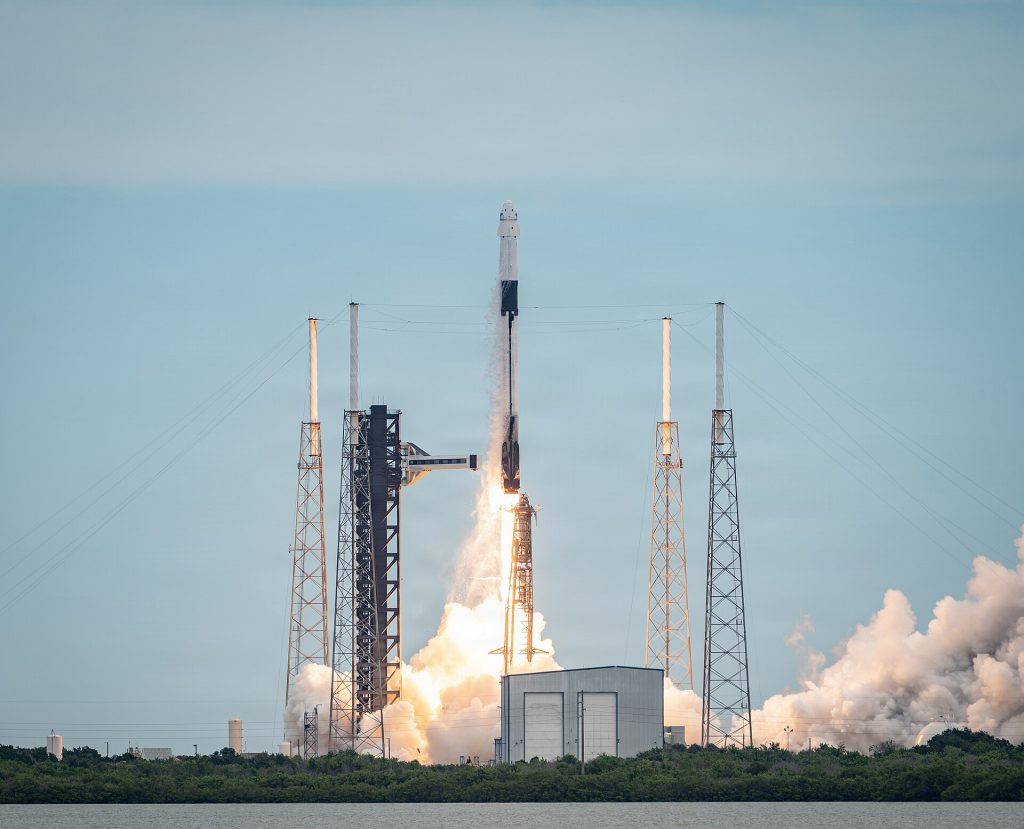
NASA's Cygnus XL spacecraft, named the S.S. Steven R. Nagel, was released from the International Space Station's Canadarm2 robotic arm at 11:44 a.m. Central time, while the station was flying 260 statute miles over the Pacific Ocean. The spacecraft had been at the station since April, after launching on April 11 on a Falcon 9 from Space Launch Complex 40 at Cape Canaveral Space Force Station with approximately 11,000 pounds of crew supplies, experiments and hardware. It left carrying over 8,000 pounds of unneeded cargo and supplies.
Arrival in April
Cygnus XL reached its capture point two days after launch, on April 13. NASA astronauts Jack Hathaway and Chris Williams were at the controls of Canadarm2 for the capture. A few hours later the spacecraft was installed on the Earth-facing side of the Unity module.
Name and cargo
Each Cygnus spacecraft is named after a significant individual in human spaceflight. This one honors NASA astronaut Steven Nagel, selected as an astronaut in 1979 and a veteran of four spaceflights: STS-51G and STS-61A in 1985, STS-37 in 1991 and STS-55 in 1993. He logged more than 723 hours in space and died in 2014.
The science it delivered included:
- A new module for the Cold Atom Lab, to expand its research capabilities and improve understanding of general relativity, planetary composition and dark matter.
- An investigation into blood stem cell production in microgravity, aimed at producing a larger number of therapeutic cells.
- Nanorax ITSI, which measures how radio signals sent from Earth change as they pass through the upper atmosphere, which could improve models of the impact of solar activity and space weather.
- A study of how spaceflight affects the relationship between organisms and their gut microbiome, observing changes in round worms down to the cellular level.
Departure day
The flight control team in Mission Control Houston was led by flight director Garrett Hine, with a capsule communicator, Ever Zelia, calling up to the crew. NASA astronaut Luke Delaney, who had arrived at the station on October 1 for his first spaceflight, monitored the release from the station's cupola.
Around 7:50 a.m. Central, flight controllers used Canadarm2 to unbolt Cygnus from the Unity module and maneuver it into its release position. The release was triggered by teams on the ground rather than the crew. The scheduled time was 11:43 a.m. Central.
- Delaney reported the configuration checks complete and the crew ready for release and departure.
- Houston polled the room and went for release. During the checks, a controller noticed a TDRS-related visiting vehicle loss on a monitor and asked if it was expected; it was, with no concerns.
- Station thrusters were inhibited and the ground was go for release on time.
- Release was commanded, the latches moved, and the snares on the arm's end effector opened. Delaney then monitored for drift-out.
- Cygnus backed away; clearance was approximately 1.5 meters, then approximately 4.5 meters.
Departure burn and exit
Cygnus then performed a departure burn of about three minutes, moving it toward the keepout sphere, a 200-meter radius around the station. Delaney confirmed steps five and six complete, and Houston saw the burn complete. The spacecraft exited the keepout sphere. Next came the approach ellipsoid, an invisible gate measuring 1 km by 1 km by 2 km around the station. These boundaries serve as checkpoints when vehicles approach and depart, helping controllers monitor visiting spacecraft.
On behalf of Expedition 75, Delaney thanked the teams for vehicle assembly, launch, docking and undocking, and called the research and hardware building blocks for future exploration. The approach ellipsoid exit was confirmed from space-to-ground, which ended joint operations. Control passed to the flight control team in Dulles, Virginia.
Re-entry plans
Cygnus was to remain in orbit until Monday, October 12, when it would be commanded to de-orbit for a destructive but safe re-entry, burning up over the Pacific Ocean. Embedded in it were capsules of the Kentucky Re-entry Probe Experiment 3 (KREPE-3), developed by University of Kentucky students and researchers with NASA. The football-sized capsules test heat shield prototypes. They deploy during re-entry, are to endure temperatures above 4,000 degrees Fahrenheit, transmit temperature and flight dynamics data, and splash down in the ocean. A University of Kentucky team planned to observe from a nearby plane.
On board the station were Delaney, NASA astronaut Jessica Watkins, Canadian Space Agency astronaut Josh Cutrit and Roscosmos cosmonaut Sergey Tednikov, who arrived the previous week with Crew-13. The Soyuz MS-29 crew, who arrived in July, include station commander Fyodor Dupravikina and NASA astronaut Anil Menon.
The next cargo mission, NASA's SpaceX-35, was slated to launch on Tuesday, October 13 from Space Launch Complex 40 with more than 6,300 pounds of supplies, including the final set of ISS Roll-Out Solar Arrays.
Questions this video answers
When was Cygnus XL released from the space station?
At 11:44 a.m. Central time, with the command targeted for 11:43 a.m. Central.
How was Cygnus XL detached?
Flight controllers in Houston used the Canadarm2 to unbolt it from the Earth-facing side of the Unity module, starting around 7:50 a.m. Central.
Who is this Cygnus XL named after?
It was named in honor of NASA astronaut Steven Nagel, a veteran of four space flights.
What happens to Cygnus XL next?
It will be commanded to de-orbit on Monday, October 12, for a destructive but safe re-entry over the Pacific Ocean.
How much disposal cargo did it carry out?
It left carrying over 8,000 pounds of unneeded cargo and supplies.