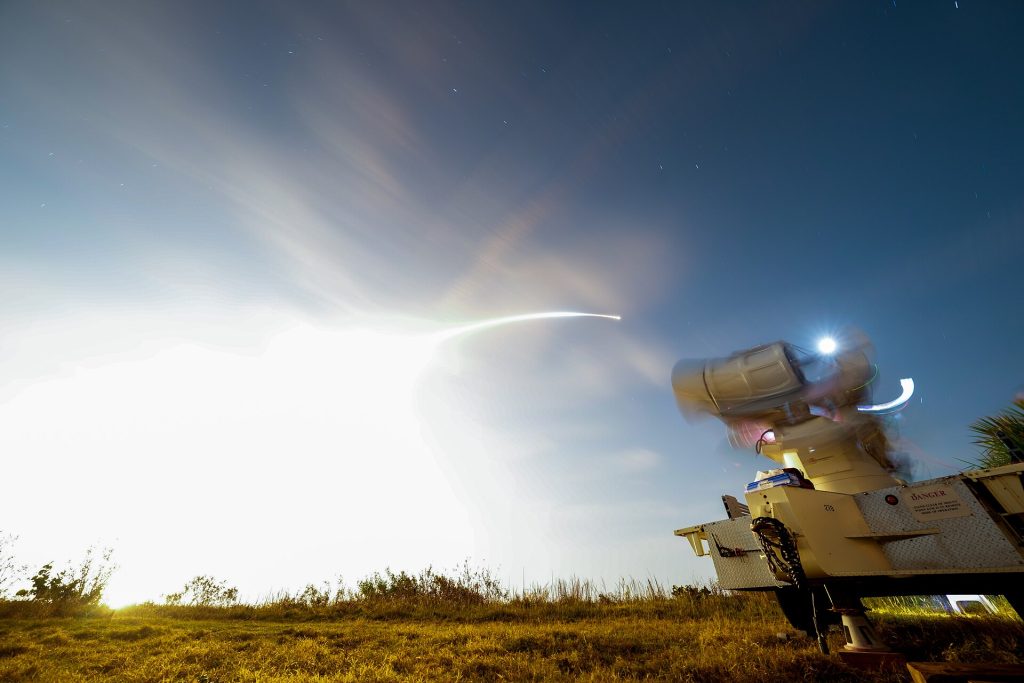
Artemis II Countdown: Crew Boards Orion on SLS at Pad 39B

The short version
Everyday Astronaut's long live broadcast from the Kennedy Space Center press site covers the countdown to Artemis II, the first crewed flight beyond low Earth orbit since 1972. It follows the crew's drive-by, climb to the pad and entry into Orion, with comm checks and viewer Q&A on SLS, Orion and the mission profile. The transcript provided ends before liftoff, with a launch window opening at 6:24 p.m. Eastern.
Full written account
Artemis II, the first crewed flight to leave low Earth orbit since 1972, was set to launch from Kennedy Space Center's Launch Complex 39B on a Space Launch System rocket, carrying four people in an Orion spacecraft on a lunar flyby. The livestream from the Kennedy press site, about 3 miles (5 km) from the pad, covered the day's countdown, the crew's walk to the rocket and their entry into Orion, with host Tim Dodd of Everyday Astronaut explaining the hardware along the way. The covered portion ended with the crew in Orion and suit leak checks complete, about three hours before the potential launch.
Background: why a flyby, and what comes next
The crew is Commander Reid Wiseman, pilot Victor Glover, mission specialist Christina Cook and Canadian astronaut Jeremy Hansen. Dodd noted that Hansen's presence means a nation other than the United States is joining the group of those who have left low Earth orbit.
Orion had flown twice before without people: first in December 2014, and again on Artemis 1 with SLS in 2022. Artemis II does not land on the Moon. Dodd explained that NASA only began trying to procure commercial landers in 2019, and that the human landing systems from Blue Origin and SpaceX, which he described as skyscraper-sized, were not ready. The priority was to confirm Orion works with humans aboard.
According to Dodd, Artemis 3 will dock in low Earth orbit with one or both lunar landers as a shakedown, and Artemis 4 will now be the first landing. He said that under new NASA administrator Jared Isaacman, Artemis 3 was moved up to 2027, while the landing keeps its stated target of 2028. The Starship lander is about 50 m tall, roughly a 15-story building.
Dodd compared the mission to Apollo 8: Apollo 7 had tested the command module in low Earth orbit, and Apollo 8 made the first lunar flyby. Artemis II combines both steps. The first orbit stays essentially low Earth orbit, reaching almost medium Earth orbit. The second goes out to 70,000 km at its peak and returns, and the third sends the crew toward the Moon. The upper stage and the service module each get their own shakedown before the commitment to leave. The crew spends an extra day on checkouts, then about three days to reach the Moon, in a mission of roughly nine to ten days. It follows a free return trajectory, with no lunar orbit insertion.
The rocket
Dodd described SLS as the most powerful rocket NASA has built. Its core uses four RS-25 engines that come from the Space Shuttle, and it flanks the core with two solid rocket boosters that flew on shuttle missions, now with five segments instead of four. The upper stage is the ICPS with a single RL10 C2 engine.
He compared it with Saturn V, which he said could send 45 tons to the Moon against 27 tons for SLS. He attributed SLS's design to budget and Congressional mandates after the Constellation program was cancelled. Nothing on SLS is reused, while parts of Orion can be. The RS-25 lights only on the ground and cannot relight, because on the shuttle the external tank was depleted by the time it was done.
The vapour seen venting from the vehicle is boil-off. Liquid hydrogen and liquid oxygen sit at cryogenic temperatures, and the warm Florida day (about 80°F) heats the tanks, so the propellant expands into gas and is vented while the tanks are slowly topped off. Just before engine ignition, igniters burn off excess hydrogen. Dodd noted this hydrogen venting on the Delta IV Heavy's RS-68A was one reason no humans flew on it.
The variations in orange on the core, he said, come from UV bleaching of the foam and differing foam thickness, and from ice once the vehicle is loaded with propellant.
Launch day timeline
- About 6.5 hours before liftoff: Dodd opens the stream on air, noting the countdown is going smoothly.
- The crew leaves the Neil Armstrong building after weeks in near-two-week quarantine, avoiding contact with family to prevent illness.
- The crew van passes the Vehicle Assembly Building, the crawler and a chasing helicopter on the way to the pad.
- The crew takes the elevator up roughly 350 ft (about 100 m) and crosses the crew access arm, signing their names in the white room.
- Reid Wiseman is first into Orion, followed by Hansen, Glover and Cook.
- Comm checks run with launch control: the commander, pilot and both mission specialists report loud and clear, and Houston confirms all four crew on the Orion-to-Earth loop.
- The crew performs suit leak checks, and the crew visors open once the leak check is complete. Hatch closeout follows.
The launch window was two hours, opening at 6:24 p.m. Eastern (22:24 UTC). Dodd said the weather was a concern, with overcast skies and clouds thickening from the southeast, though the chance of a scrub was low. He also noticed a sailboat apparently in the range while the fully fuelled rocket stood on the pad.
Details on the mission and hardware
The fastest point of the mission, Dodd explained, comes at the trans-lunar injection burn, when the spacecraft speeds up from roughly 7.2 km/s to 11 km/s, about 17,500 mph to 22,000 mph. The burn targets where the Moon will be in three days rather than where it is.
The crew will not spacewalk and will stay inside Orion throughout. Orion carries a toilet, which Dodd said will be the first to leave low Earth orbit. The crew was cleared to bring phones, so vertical-format footage from around the far side of the Moon is expected. Communications rely on the Deep Space Network and ground tracking stations, not Starlink.
At T-minus 10 seconds the mobile launcher deck is doused with water for sound suppression, which Dodd put at a million gallons per minute.
Questions this video answers
What makes Artemis II historic?
It is the first time humans have left low Earth orbit since 1972, and it will be the furthest humans have flown from Earth.
Will Artemis II land on the Moon?
No. It is a flyby on a free-return style profile; a landing is planned for a later mission once the commercial landers are ready.
Who is the crew?
Commander Reid Wiseman, pilot Victor Glover, mission specialist Christina Cook and Canadian astronaut Jeremy Hansen.
What was the launch window?
A two-hour window opening at 6:24 p.m. Eastern (22:24 UTC).
How long is the mission?
The broadcast describes it as roughly a nine to ten day mission, with about three days to reach the Moon.
Which rocket and spacecraft are used?
The Space Launch System rocket and the Orion spacecraft.
Explore related missions
Connected by the topic: Artemis