Apollo 13: How an Oxygen Tank Failure Nearly Stranded Three Men
The short version
Apollo 13 was meant to be the third Moon landing, targeting the Fra Mauro region, but an oxygen tank burst about 55 hours into the flight, around 200,000 miles from Earth. The crew used the lunar module Aquarius as a lifeboat, swung around the Moon and returned. They splashed down near Samoa on April 17, 1970, and all three men were alive. A review board traced the cause to a damaged oxygen tank and its heater switch.
Full written account
Apollo 13's crew had to survive about four days in a lunar module built to keep two men alive for about two days. Aquarius became their lifeboat after an oxygen tank in the service module burst on April 13, 1970, around 200,000 miles from Earth and 55 hours into the flight. All three men came home alive.
The bang
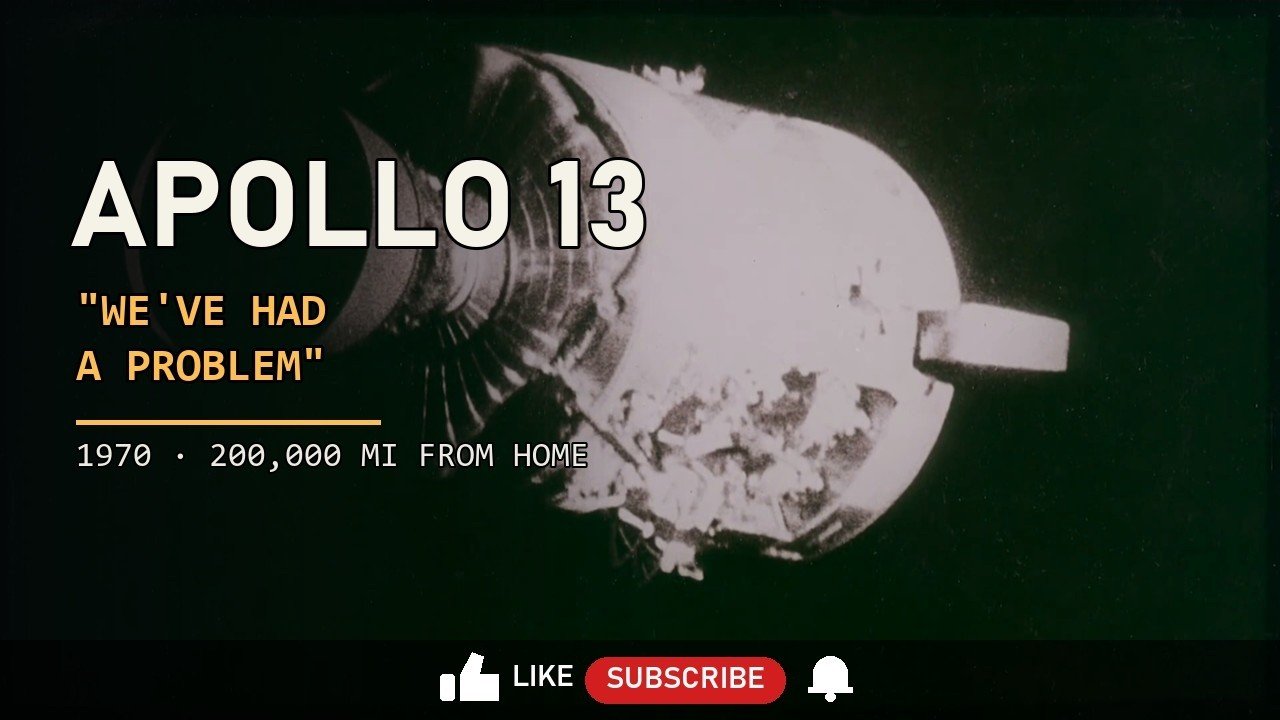
Just after 9:00 at night Houston time, the crew had finished a television broadcast showing life in weightlessness. The big American networks did not carry it live. Mission control then asked for one more chore: stir the oxygen tanks. Jack Swigert flipped the switches, and about a minute and a half later the ship shuddered with a loud bang. Swigert radioed, "Okay, Houston, we've had a problem here." Commander Jim Lovell then reported a main B bus undervolt.
Two of the three fuel cells were dying. Oxygen tank number two read empty and tank number one was falling. Lovell saw a cloud of gas glittering in the sunlight streaming away from the ship. The moon landing was gone.
The crew and the launch
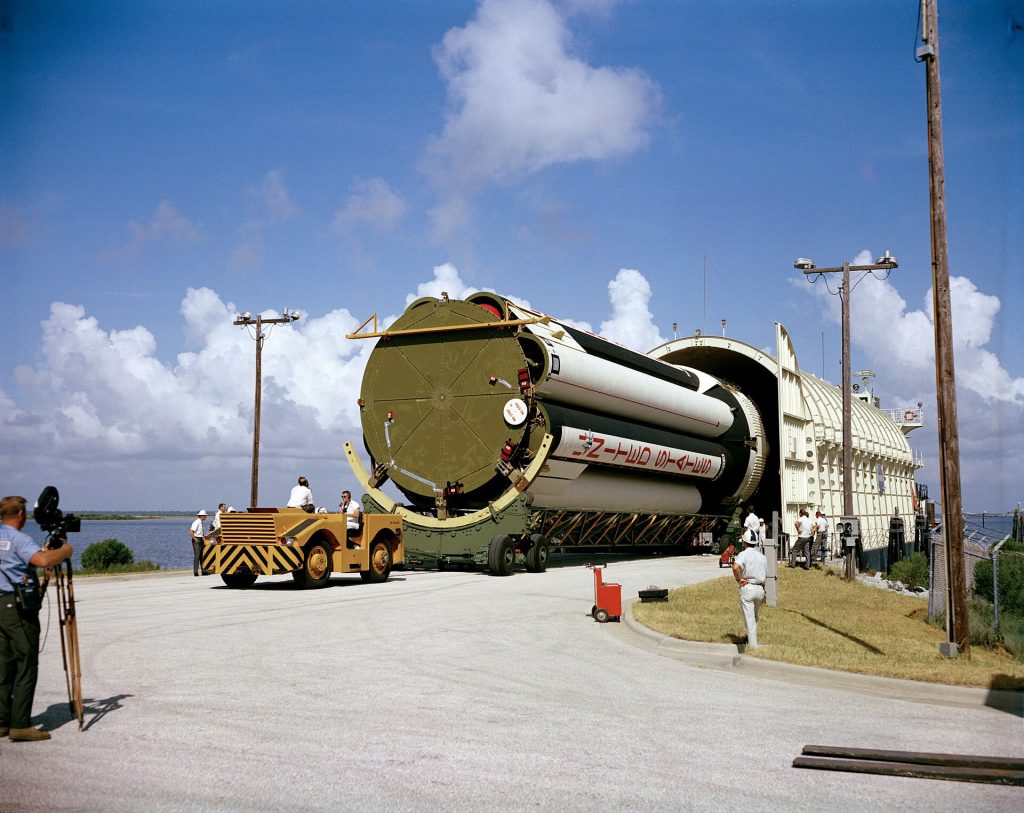
Apollo 13 was meant to be the third landing on the Moon, in a hilly region called Fra Mauro. Lovell was on his fourth spaceflight and had circled the Moon on Apollo 8. Fred Haise was to fly the lunar module Aquarius, and Swigert the command module Odyssey. Swigert joined only days before launch, replacing Ken Mattingly, who had been exposed to German measles. Mattingly never caught it. On April 11 the Saturn V lifted off from Florida, and one second-stage engine shut down more than two minutes early. The others burned longer.
The lifeboat
Flight director Gene Kranz and his team first suspected bad instruments, but the numbers kept falling. Odyssey's small batteries were meant only for the final fall back to Earth, so they were saved. Lovell and Haise brought Aquarius to life while Swigert shut Odyssey down switch by switch. Navigation data was copied by hand from one computer to the other. Less than three hours after the bang, Odyssey went dark.
Around the Moon
The ship could not turn around: it was moving too fast, and its big engine sits next to the damaged section. Aquarius's landing engine fired for about 30 seconds to put them back on a path home. On April 15 they passed behind the Moon, with no radio for about 25 minutes. They were almost 250,000 miles from Earth, farther than any humans had been. About two hours later the landing engine fired again for more than four minutes to shorten the trip.
Air, cold and course
Carbon dioxide climbed because Aquarius's lithium hydroxide canisters were round and Odyssey's spares were square. Ground engineers built an adapter from plastic bags, flight-plan cardboard covers, space suit hoses and tape, and read instructions to the crew. They built it in about an hour and called it the mailbox. The carbon dioxide level fell.
With nearly everything off, Odyssey's temperature dropped to a few degrees above freezing and water beaded on the walls. Water was rationed and the men became badly dehydrated; Haise developed an infection and fever. With the main computer off, Lovell kept the edge of the Earth in his window while the engine fired for 14 seconds. The correction worked.
Coming home
On April 17 they released the damaged service module and saw that one whole side was missing. Ken Mattingly helped work out how to power up Odyssey with the little energy left, and it came back to life. After Aquarius was released, Odyssey hit the atmosphere at nearly 25,000 mph. The blackout should have lasted about four minutes, and four minutes passed with nothing before a voice reported three parachutes open over the South Pacific. They splashed down near Samoa and were lifted by helicopter to the USS Iwo Jima.
Why it happened
A review board traced the cause to 1968, when oxygen tank number two was dropped a few centimeters during handling. In a later test it would not empty properly, so its heaters were left on for hours. A safety switch designed for a lower voltage than the ground equipment used welded shut. Temperatures inside may have reached hundreds of degrees, damaging wire insulation. When Swigert stirred the oxygen, the wires sparked and the tank burst.
The crew said "We've had a problem," not "We have a problem." "Failure is not an option" was written for the 1995 film, and Kranz did not say it during the mission. NASA later called Apollo 13 a successful failure. Lovell never flew in space again.
Questions this video answers
What caused the Apollo 13 explosion?
A review board traced it to oxygen tank number two, which was dropped a few centimeters in 1968. Its heaters were later left on for hours, a safety switch designed for a lower voltage welded shut, and wire insulation was damaged. When Swigert stirred the oxygen, the wires sparked and a fire burst the tank.
How did the crew remove carbon dioxide?
Engineers on the ground designed an adapter from plastic bags, cardboard flight-plan covers, space suit hoses and tape so Odyssey's square canisters would fit Aquarius. The crew built it in about an hour and called it the mailbox.
Did anyone say 'Failure is not an option'?
The video says the line was written for the 1995 film and Gene Kranz did not say it during the mission.
How far from Earth did the crew get?
Almost 250,000 miles, farther than any humans had ever been.
Why was Jack Swigert on the crew?
He joined days before launch after Ken Mattingly was taken off because of exposure to German measles.