Apollo 13: How NASA Used the Lunar Module as a Lifeboat
The short version
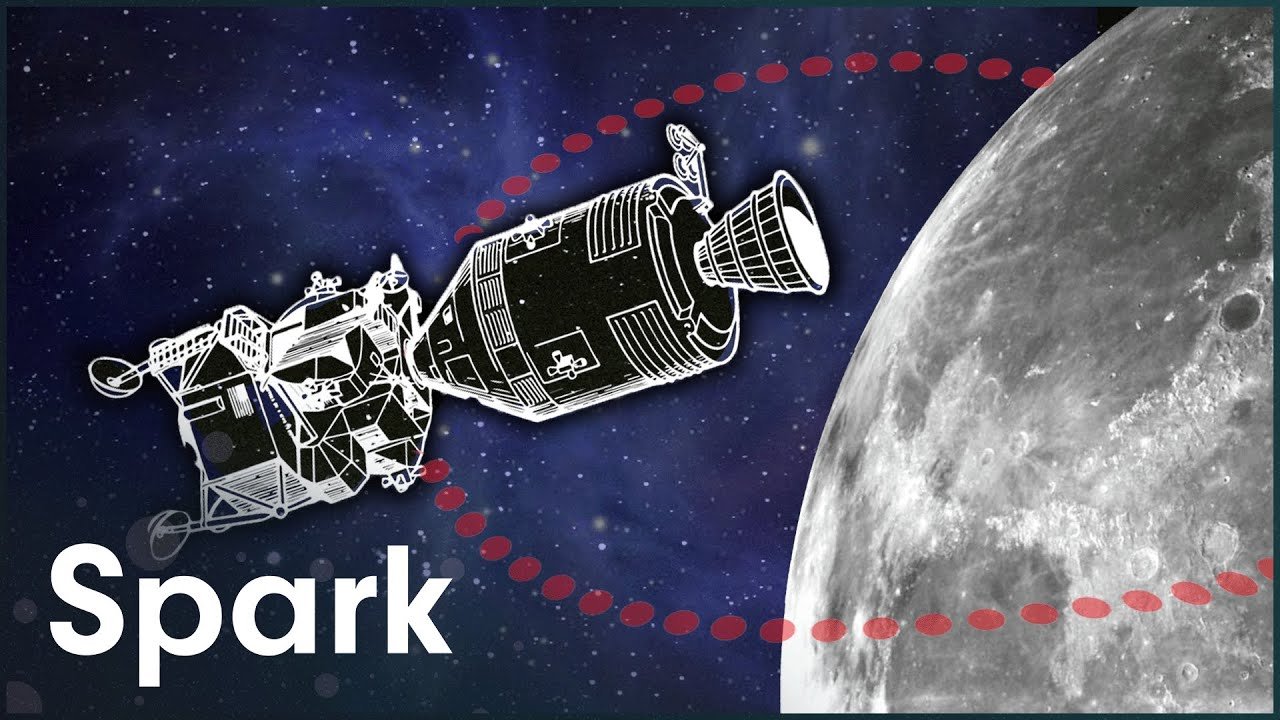
Apollo 13 was launched in April 1970 toward the Moon with Jim Lovell, Jack Swigert and Fred Haise. About 56 hours into the flight, an oxygen tank ruptured and the lunar module became the crew's lifeboat. The documentary follows the power-down, free return burn, carbon dioxide fix, course correction and the crew's return and splashdown.
Full written account
Fifty-six hours into the Apollo 13 mission, with the spacecraft about 200,000 miles from Earth and flying toward the Moon, a ruptured oxygen tank left NASA's crew of three, Jim Lovell, Jack Swigert and Fred Haise, in a spacecraft that was losing its oxygen and electrical power. Their goal changed from a lunar landing to survival. The crew returned safely to Earth, but without landing on the Moon.
A crew changed a week before launch
Jim Lovell, a Navy captain, commanded Apollo 13, his fourth space flight. He had flown Gemini 7 with Frank Borman and Gemini 12 with Buzz Aldrin, and had been aboard Apollo 8. Fred Haise was Lunar Module pilot, and the original Command Module pilot was Ken Mattingly. Seven days before launch, Mattingly was exposed to measles and was the only prime crew member without immunity. The flight surgeon decided the risk was too great, and Jack Swigert, the backup Command Module pilot, took his place. It was Swigert's first spaceflight, as it was for Haise.
The mission was aimed at the Fra Mauro uplands, a region of impact debris, rather than the flat plains (mare) visited by the earlier landings. The crew planned to deploy an experiment package and a heat flow experiment that needed a Black & Decker drill to make 3-metre holes. Public interest was low, and broadcasters reportedly received complaints about schedules being bumped for coverage.
A warning on the way up
About five and a half minutes after launch, the crew felt unfamiliar vibrations in the second stage, and the central inboard engine shut down about two minutes early. Houston told them the other four engines were go. The vibration was pogo, a lengthwise oscillation known from liquid-fuelled rockets. On Apollo 13 the central engine was vibrating vertically 16 times a second and flexing the Saturn V's structure. Sensors shut the engine down; another cycle of growth would have taken the vehicle beyond its structural limits. Afterwards, flight engineers revisited pogo and suppression measures were put in place.
The bang
After a television broadcast, Mission Control asked Swigert to stir the cryogenic tanks. When the fan in oxygen tank two was switched on, damaged wiring created a spark. A fire spread in the oxygen and the pressure rise ruptured the tank. The pressure blew a panel off the service module and shoved up the shelf holding the three fuel cells, and closed valves.
Lovell reported, "Houston, we've had a problem here." Swigert tried several times to seal the tunnel hatch, since the crew feared the hull might lose pressure; they then stowed it. Tank two read zero and tank one was leaking. Lovell saw gas venting into space. The fuel cells needed oxygen to make power, and two were lost quickly. Controllers calculated that tank one would reach 100 psi in an hour and 54 minutes, and the Command Module had about 15 minutes of power left.
The lunar module as lifeboat
The Lunar Module, called Aquarius, had its own life support, power and guidance. NASA had looked at using it as a lifeboat since Apollo 9. The crew had to power it up in 90 minutes, a process that normally took 3 to 5 hours. They needed to transfer the platform alignment from the Command Module, but debris floating around the spacecraft, "like fireflies in a night sky", stopped Lovell from taking star sightings. Swigert read out angles from the Command Module, and Haise entered them in the Lunar Module computer. Controllers shut down the Command Module to preserve its three re-entry batteries, which could not be recharged by fuel cells.
A proposal to use the nuclear power source of the ALSEP experiments for extra power was considered and rejected as too dangerous, since the crew would have had to go outside with a 1,500-degree fuel capsule.
Burns and the choice of route
Apollo 13 had left the free return trajectory before the accident. The service module engine was uncertain, so a 16-second burn of the Lunar Module's descent engine put the ship back on it. The Lunar Module was built for two men for 45 hours; now it had to keep three alive for over 90.
NASA then weighed two burns to speed the return. One would save 36 hours but required jettisoning the service module, risking a cold-soaked heat shield and using all the fuel. NASA chose the second, a burn of 4 minutes 24 seconds that returned the crew about 12 hours sooner and kept fuel for later corrections. This also moved splashdown to the Pacific, where recovery forces were waiting. The burn took place at 79 hours 32 minutes into the flight, almost exactly 24 hours after the rupture. The Lunar Module was then cut to about 11 amps, less power than a household vacuum cleaner.
Water, cold and carbon dioxide
The crew cut their water intake to a fifth of normal and suffered dehydration; they drew moisture from wet-pack food. Haise had a urinary problem. The Command Module cooled to about 38 degrees, ice formed on windows, and the crew wore lunar boots and extra underwear. Controllers used passive thermal control, slowly rotating the spacecraft about three times an hour.
Carbon dioxide was the next threat. The Lunar Module's lithium hydroxide canisters were designed for two men for two days. The Command Module's canisters were square and the Lunar Module's round. Ground engineers built an adapter from spacesuit hoses, a plastic bag, a flight-plan card and cardboard, sealed with duct tape, and read the procedure up to the crew. Within an hour of switching it on, carbon dioxide levels were well down. The crew used four Command Module canisters.
Aiming for re-entry
The spacecraft drifted off course. The entry corridor was between 5.5 and 7.5 degrees; too shallow and the capsule would skim off the atmosphere, too steep and the heat shield would fail. With the main guidance computer shut down, the crew used a backup technique that Lovell had tried on Apollo 8, aligning the Earth's terminator in the COAS sight. Swigert timed the burn, Haise handled pitch, and Lovell handled roll and pushed the buttons. The burn went well.
The Lunar Module's batteries trickle-charged the Command Module's re-entry batteries from about 20 to 40 amp hours. The service module was jettisoned and the crew photographed the damage, with a whole panel blown out near the high-gain antenna. The Command Module had never been powered down and restarted in space, so controllers wrote a new power-up procedure. Condensation was a concern, but insulation improvements made after the Apollo 1 fire reduced the risk of short circuits.
The crew then jettisoned the Lunar Module, with Houston's "Farewell Aquarius, we thank you", at 141 hours 31 minutes. After blackout, controllers called Odyssey several times before the crew answered. Houston saw the main parachutes on its displays and the crew splashed down.
A NASA review board later determined that an unlikely chain of events started a fire in oxygen tank two, which ruptured it. Lovell said he was disappointed not to have landed on the Moon.
Questions this video answers
What caused the Apollo 13 oxygen tank to rupture?
A spark from damaged wiring as the fan in oxygen tank number two was switched on, which started a fire in the tank and ruptured it. A review board later determined that an unlikely chain of events led to the fire.
Who was on the Apollo 13 crew?
Jim Lovell, Jack Swigert and Fred Haise. Swigert replaced Ken Mattingly, who was exposed to measles seven days before launch.
How did the lunar module save the crew?
It was an independent spacecraft with its own life support, power and guidance, so it served as a lifeboat. Its descent engine also fired the burns that put Apollo 13 on a free return trajectory.
How was the carbon dioxide problem solved?
Engineers built an adapter from spacesuit hoses, a plastic bag, cardboard flight plan cards and duct tape so square Command Module lithium hydroxide canisters could scrub carbon dioxide in the lunar module.
Which burn option did NASA choose to speed the return?
Mission Control chose a 4-minute burn that returned the crew about 12 hours sooner and kept fuel in reserve for later course corrections.