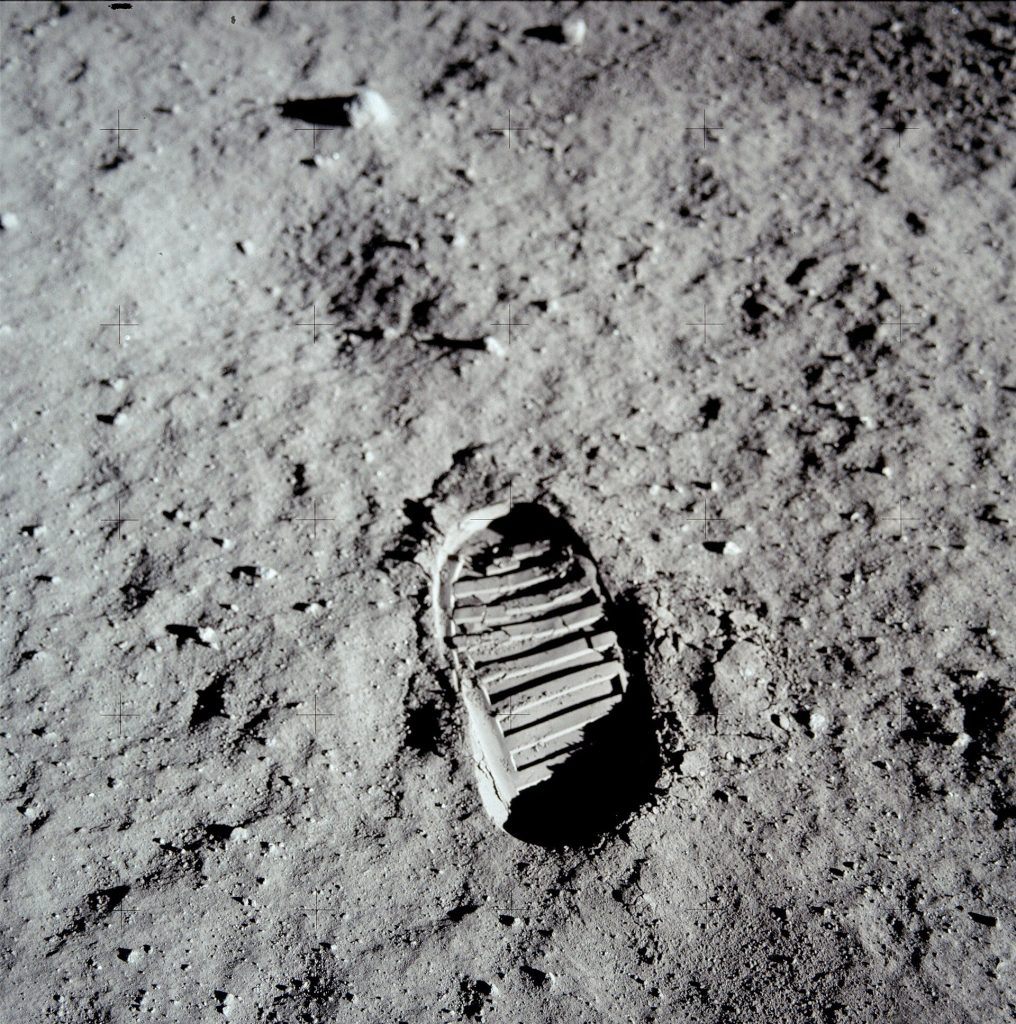
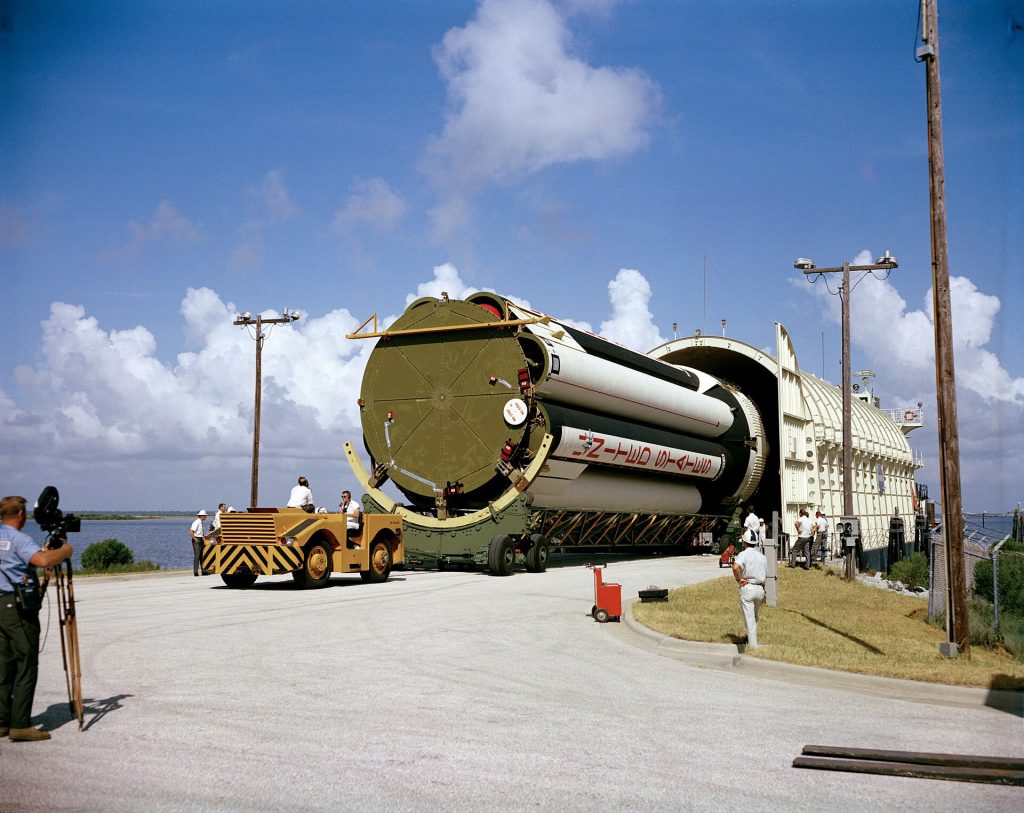
Apollo 13: The Oxygen Tank Explosion and the Crew’s Return
The short version
This 1994 documentary follows Apollo 13 from its April 11, 1970 launch through the oxygen tank explosion on the way to the Moon. It covers the crew's use of the lunar module as a lifeboat, the burns that set the course home, the improvised CO2 fix and the reentry. The crew returned safely on April 17, 1970.
Full written account
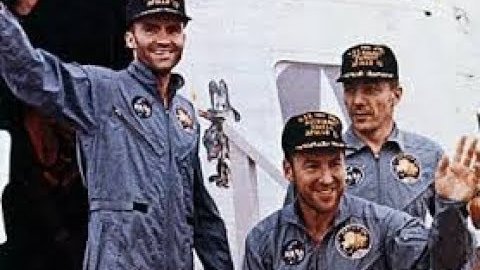
Why did a routine request to turn on the fans in an oxygen tank end a lunar landing, and how did three astronauts get home from 200,000 miles out? Apollo 13 lifted off on April 11, 1970, from Kennedy Space Center, Florida, with commander Jim Lovell, lunar module pilot Fred Haise and command module pilot Jack Swigert. The landing was aborted after an oxygen tank exploded two days later, and the crew returned safely on April 17, six days after launch. No one died.
A flawed tank and a last-minute crew change
Lovell was 42, a father of four and one of the most experienced astronauts in the world. Haise was 36, a rookie leaving a pregnant wife and three children at home. Swigert, 38, was also a first-timer and the only bachelor astronaut. He was a last-minute replacement for an astronaut exposed to measles.
Liftoff came at 1313 Houston time. Some in the crowd saw the 13s as an ominous portent, but NASA refused to pay it any mind. The crew did not know that less than 10 feet below their couches, deep in the service module, wires in an oxygen tank were cracked. The tank was full of liquid oxygen, so a single spark could cause an explosion.
The first day went perfectly. Haise passed the time playing practical jokes, and his favorite was pushing the repressurization valve, which made a loud bang. The crew docked the command module to the lunar module, Aquarius, and pulled it from the spent third stage. At 31 hours they made a course change that left the free return trajectory flown by all previous missions, to reach a new part of the Moon. Getting home would now take a second rocket burn.
The bang at 55 hours 50 minutes
At 55 hours 50 minutes, with the crew 200,000 miles from Earth and four-fifths of the way to the Moon, Mission Control radioed a routine request to turn on the fans in the oxygen tanks. The cracked wires in tank 2 were now exposed. When the fan came on, a spark between them ignited a fire and the tank exploded. Only the vacuum of space kept it from destroying the ship.
Lovell heard a muffled bang, the spacecraft rocked, and the autopilot jets fired to stabilize it. His first thought was Haise's valve prank, but he could tell Haise had not done it. Then a red light came on, showing the loss of part of the electrical system, main bus B. The call came down as an undervolt on main bus B.
Four failures at once
Flight director Gene Kranz called it a "funny". The controller watching the electrical and environmental displays, Sy Liebergot, saw that he had lost voltage on main bus B and fuel cells one and two. He had also lost oxygen tank 2 and was losing tank 1. He called it a quadruple failure that could not happen in this spacecraft as designed. Believing he was looking at an instrument problem, he and the room first assumed the sensors had failed. If that were so, a lunar landing might still be possible.
Lovell then looked out and saw a thin haze of gas escaping at high speed from the service module. He knew the mission was lost. About 20 minutes into the crisis, Liebergot accepted what his instruments had said all along. Tank 2 was dead, two of the three fuel cells were dead, and tank 1, which was feeding the last fuel cell, was dying. He estimated less than two hours of oxygen. The crew had decided not to panic. Lovell's reasoning was that they could bounce off the walls for 10 minutes and be back where they started.
An hour and a half in, a fresh team under Clint Burton took over. His update was that the crew had about 40 minutes until the cutoff pressure, and the command module would soon be unable to support life.
The lunar module as a lifeboat
The lunar module had its own oxygen, electricity and propulsion. Lovell and Haise moved through the tunnel into it while Swigert shut down the command module to preserve its small entry batteries. The command module was the only part of the ship that could survive reentry.
The transfer nearly cost them their guidance data. The thrusters were shut down before the lunar module's reaction control system was pressurized, so no one had control. The ship drifted for two and a half minutes. Control was regained and the guidance system was fine.
The lunar module was designed for two men, and its crew compartment skin was about 12 thousandths of an inch of aluminum. In Bethpage, Long Island, the people who built it did an inventory of its consumables. They concluded it could keep three astronauts alive for two days, but more than that would present problems.
Choosing the long way home
Three hours into the crisis, the question was the course home. Turning around immediately would get the crew home in two days but would use almost all the available fuel. Kranz and Lonnie rejected that and chose to go around the Moon. The lunar module had never been designed to fly with the command and service module attached. When Lovell pitched down, the ship went into wild gyrations because the center of gravity had moved. He said he had to learn to fly all over again.
The first burn, the first of its kind attempted in space, aimed for a mid-course correction back to free return. Lovell asked for an extra hour to enter the data. The computer asked whether he really wanted to make the burn. At 2:45 Tuesday morning, almost six hours after the accident, he pressed proceed. The engine fired and shut down automatically.
The second, bigger burn was planned after 13 looped around the Moon, and it would cut 24 hours off the trip home. Controller Merlin Merritt argued that the guidance system, the biggest power consumer on the lunar module, had to be turned off, because his data showed the power would not last. Kranz and Lonnie insisted it stay on so the crew could position the ship for the burn. They decided to leave it on until after the big burn and then order the crew to turn off nearly everything and coast home in darkness and cold.
Behind the Moon, Haise and Swigert took photographs. Lovell looked for a small mountain he had seen from Apollo 8 and had named after his wife, Marilyn. About half an hour later he fired the lunar module's engine for the big burn.
Cold, carbon dioxide and a failing crew
After the burn the crew powered down. The cabin cooled to close to freezing, and some areas of the command module were below freezing. Water tanks there froze. The lunar module could not heat water, so the dried food mixed poorly with cold water. The crew did not wear their spacesuits, because the rubberized interiors would have trapped perspiration and left them worse off. Lovell and Haise put on their lunar boots. When Mission Control asked them to stop dumping urine overboard because it affected tracking, they took it to mean forever and hunted for containers to store it. During that search Lovell found a package of family pictures that had been meant for the lunar surface.
Carbon dioxide then became the next threat. The lunar module was running out of round filters, while the command module had plenty of square ones. A team on the ground built an adapter from items on board: cardboard covers from the flight manuals, plastic bags from the spacesuits and duct tape. It took the crew about two hours to find and assemble the pieces. Once connected, the carbon dioxide pressure dropped.
The crew drank less and less water. All were dehydrated, and Haise developed a bladder infection. By Thursday he could barely stop shivering, and Lovell wrapped himself around him to keep him warm.
A narrow corridor and a frozen command module
The reentry corridor was only two degrees wide, between 5.5 and 7.5 degrees. Coming in too shallow would make the capsule skip out like a stone on water. Coming in too steep would make it a fiery meteor. Hours before reentry, controllers saw the trajectory growing shallower and could not explain why. They ordered another course correction. With the guidance computer off, Lovell told Swigert to time the burn with his wristwatch. Haise handled the backup attitude controller to keep Earth in the window. Lovell used two switches that connected the battery directly to the engine, a method he said was used only once in the Apollo program. The burn lasted 14 seconds.
Questions this video answers
When and where did Apollo 13 launch?
April 11, 1970, from Kennedy Space Center, Florida.
Who was on the Apollo 13 crew?
Jim Lovell, Fred Haise and Jack Swigert. Swigert was a last-minute replacement for an astronaut exposed to measles.
What caused the explosion?
Cracked wires in oxygen tank 2 were exposed after 55 hours 50 minutes of flight. When the tank fan was turned on, a spark ignited a fire and the tank exploded.
How did the crew survive?
They used the lunar module as a lifeboat, powered down the spacecraft, and built an adapter from flight-manual covers, plastic bags and duct tape so the command module's square CO2 canisters fit the lunar module's round receptacle.
How did the mission end?
The crew returned safely on April 17, 1970, six days after launch, but the lunar landing was aborted.