NASA Moon Base Rovers: VIPER, Pegasus and the Crewed Lunar Vehicle
The short version
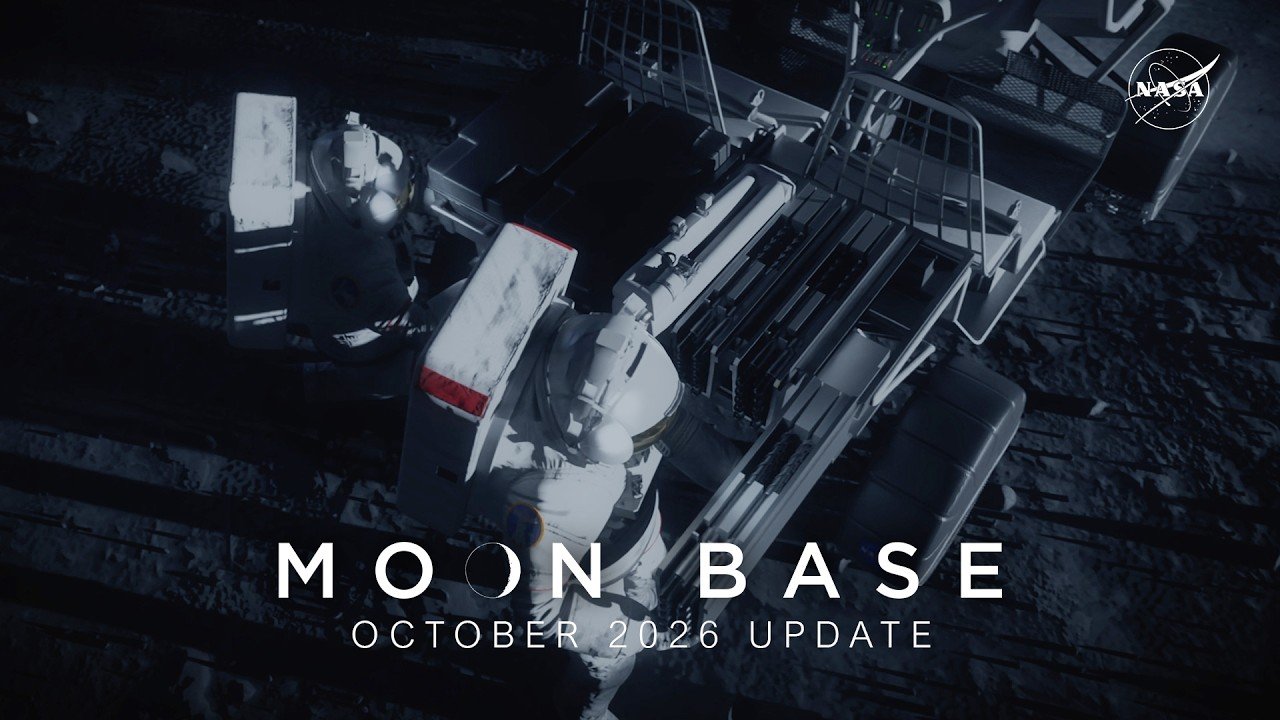
NASA's October 2026 Moon Base update covers the robotic and crewed rovers planned for the lunar South Pole. VIPER is ready to fly on Blue Origin's second Blue Moon Mark One lander, scheduled for late 2027, while Astrolab and Lunar Outpost are building the first lunar terrain vehicles. Both companies will also launch smaller robotic rovers on future Moon Base missions.
Full written account
NASA's October 2026 Moon Base update lays out the rovers meant to cover the lunar South Pole region, which spreads over hundreds of square miles. In the first phase of Moon Base development, robotic rovers will traverse the rugged landscape, while lunar terrain vehicles carry Artemis astronauts across the region.
VIPER: the scout
VIPER is a robotic rover designed to search for ice and other resources. It is built, tested and ready to fly on Blue Origin's second Blue Moon Mark One lander, scheduled to launch in late 2027. It is currently in a clean room at the Johnson Space Center.
VIPER will travel the surface for about 100 days, on a traverse across regions where water ice is expected. Its instruments are always on, and the team stops at specific areas for more concentrated investigation. It will also work in a permanently shadowed region, which has not seen sun for billions of years and is almost absolute zero. The distance covered in the first 100 days could be over 30 km.
The mission control room includes flight controllers, command controllers, systems operators and planners who can change the traverse as it goes. The drive team has a rover driver and co-driver, a navigator (there is no GPS on the Moon) and scientists. Deep Space Network compatibility testing is coming up in December, after which the rover is shipped to the lander facility.
Lunar terrain vehicles
NASA selected two companies, Astrolab and Lunar Outpost, to build and deliver the first phase of lunar terrain vehicles (LTVs), which are both crewed and autonomous. They are described as a mix between the Apollo Lunar Roving Vehicle and a Mars-style rover.
Astrolab's CLV-1, the Crewed Lunar Vehicle one, is designed to transport Artemis astronauts. Unlike the Apollo rover, it can be remotely operated from Earth, because it will arrive before the astronauts and must drive to where they will land. A human-in-the-loop mockup has been delivered to NASA so astronauts in the real spacesuit can check how the suit fits with the seats and hand controllers.
Lunar Outpost's Pegasus is its high achievability lunar terrain vehicle. Three mockups have been built, two within three weeks. The third was recently used at the Johnson Space Center for human factors testing, where astronauts in pressurized suits assessed seat comfort, arm positions at the controller and visibility.
Smaller rovers first
Both companies will launch smaller robotic rovers on future Moon Base missions. Astrolab's FLIP, the Flex Lunar Innovation Platform, is going to the Moon in the coming months. It carries instruments for commercial companies and NASA to study the South Pole environment, and tests tires, batteries, radios and cameras that will transfer to the crewed vehicle. Lunar Outpost's first rover mission flew in 2025 and proved out key subsystems such as command and control software. Its next is launching in early 2027.
Questions this video answers
What is VIPER?
VIPER is a robotic rover designed to search for ice and other resources at the lunar South Pole. It is built, tested and ready to fly.
How will VIPER get to the Moon?
Blue Origin's second Blue Moon Mark One lander, scheduled to launch in late 2027.
How long will VIPER operate on the surface?
About 100 days. It could cover over 30 km in that time.
Which companies are building the lunar terrain vehicles?
NASA selected Astrolab and Lunar Outpost to build and deliver the first phase of LTVs.
What is FLIP?
FLIP, the Flex Lunar Innovation Platform, is Astrolab's first rover going to the Moon. It carries instruments for commercial companies and NASA and tests tires, batteries, radios and cameras for the crewed vehicle.
Explore related missions
Connected by the topic: Artemis