Skylab: Repairing America’s First Space Station and Its 1979 Fall
The short version
The History Guy recounts Skylab, America's first manned space station, built from the second stage of a Saturn V and launched on May 14, 1973. A heat shield and a solar panel were torn off at launch, and the first crew, launched May 25, 1973 under Charles Conrad, repaired it with two unplanned spacewalks. The station was occupied for 171 days across three missions and fell to Earth on July 11, 1979, with some debris landing in Australia.
Full written account
Skylab, America's first manned space station, launched on May 14, 1973 and fell to Earth on July 11, 1979. In between, it was occupied for a total of 171 days by three manned missions, each exceeding the previous human record of four days in space.
Background
The idea of manned space stations began with military plans: observation, spying and perhaps shooting down enemy satellites. The United States proposed the Manned Orbital Laboratory program in 1963, and the Soviets answered with their own program, putting manned military stations into space. Enthusiasm waned as unmanned observation satellites proved much more cost-effective, and both sides applied the idea to civilian research stations.
In the United States this became part of the Apollo Applications Program, designed to leverage Apollo technology and to keep jobs for the people trained for Apollo. Wernher von Braun proposed using the cylindrical second stage of a Saturn V as living space. McDonnell-Douglas received the contract for the modifications in 1969, and in 1970 NASA held a public contest to name the station, which became Skylab.
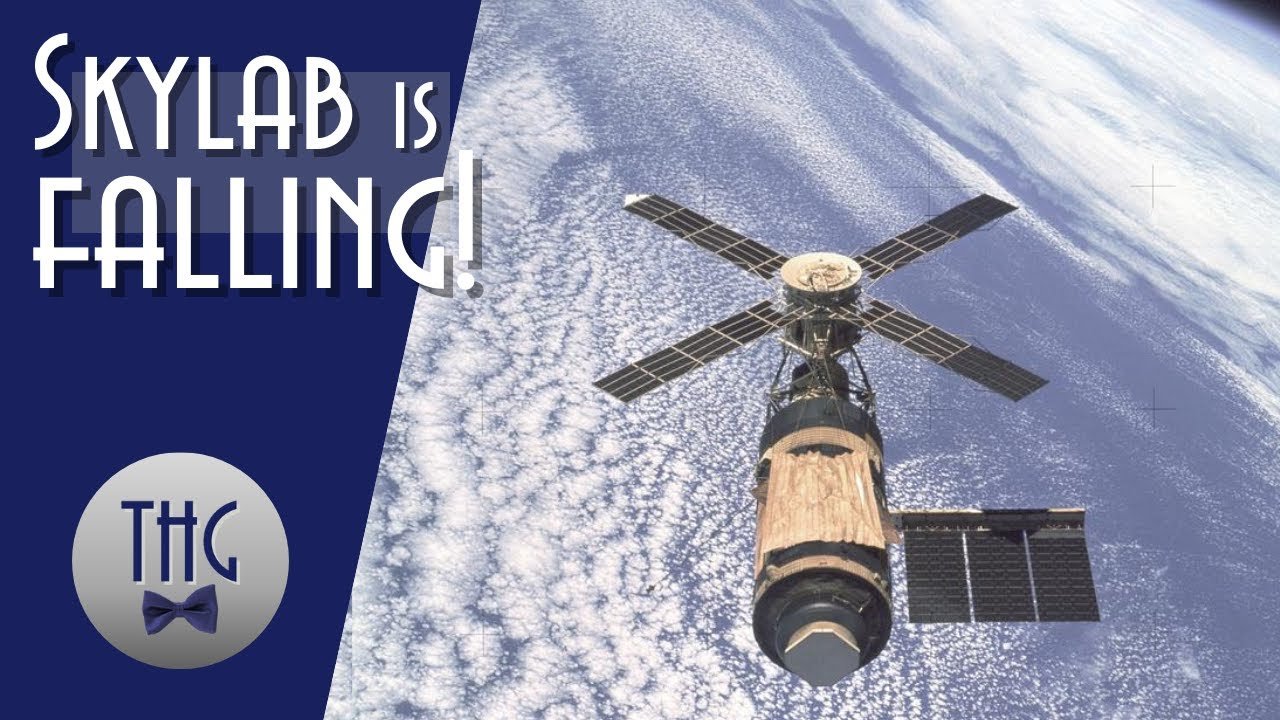
It was the first time NASA had to consider habitability, since earlier manned programs were short and Apollo missions lasted less than two weeks. The final station was about 282 feet long and held 12,417 cubic feet of pressurized habitable space.
Launch and repair
Almost immediately things went wrong. At the maximum point of vibration during launch, an important heat shield broke off and tore away one of the station's solar panels. Damage from that accident prevented another panel from unfolding, and the station was dangerously underpowered. Turning the station so the remaining panels got more sun made it overheat, because the heat shield was gone.
The first manned mission was delayed 10 days while NASA devised a repair plan. The crew launched on May 25, 1973 in an Apollo command module. Commander Charles Conrad said at launch, "this is Skylab 2, we fix anything." They made repairs with innovative solutions and two unplanned spacewalks, at the time the largest such repair done in space.
Results
Astronauts performed ten spacewalks totaling 42 hours and 16 minutes, and logged about 2,000 hours of scientific and medical experiments. These included the first videos of solar flares, Earth observation studying crops, weather and environmental change, alloy manufacturing and growing perfect crystals. Crews also learned how to move, bathe in the first zero-gravity shower, cut hair in space, and how to exercise and stay fit.
The fall
There were plans to save Skylab. Its systems were still operational in 1978, four years after the last manned mission, and the hope was that the Space Shuttle would be ready to boost its orbit. Greater than expected solar activity warmed the atmosphere, increasing friction and hastening orbital decline, and the Shuttle program was behind schedule.
NASA tried to use station telemetry to position Skylab to fall into the ocean off South Africa, but it took longer to burn up than predicted, so some debris landed in Australia. It caused no damage.
The event was treated more as a celebration than with fear. One company sold a Skylab repellent aerosol spray with a money-back guarantee, a Nebraska town painted a huge target on the ground, a family in Western Australia won a $10,000 reward from a Philadelphia newspaper for first recovering pieces, and an Australian county fined NASA $400 for littering.
Other stations
Skylab was not the first manned station; that was the Soviet Salyut 1. The first cosmonaut group could not dock, and the second spent three weeks aboard before being killed in an accident on re-entry. After Skylab the Soviets launched the Mir space station, where cosmonauts broke Skylab's records for time in space. The International Space Station has been permanently manned since November 2000.
Questions this video answers
When was Skylab launched?
Skylab launched on May 14, 1973.
What went wrong at launch?
At the point of maximum vibration, a heat shield broke off and tore away one of the station's solar panels. Damage also prevented another solar panel from unfolding, leaving the station dangerously underpowered.
How was Skylab repaired?
The first crew, launched May 25, 1973 in an Apollo command module, made repairs using innovative fixes and two unplanned spacewalks.
How long was Skylab occupied?
It was occupied for a total of 171 days across three manned missions.
How did Skylab end?
It fell to Earth on July 11, 1979. NASA tried to steer it into the ocean off South Africa, but it took longer to burn up than predicted, so some debris landed in Australia without causing damage.