SpaceX CRS-35 Dragon Docks at the ISS Harmony Zenith Port
The short version
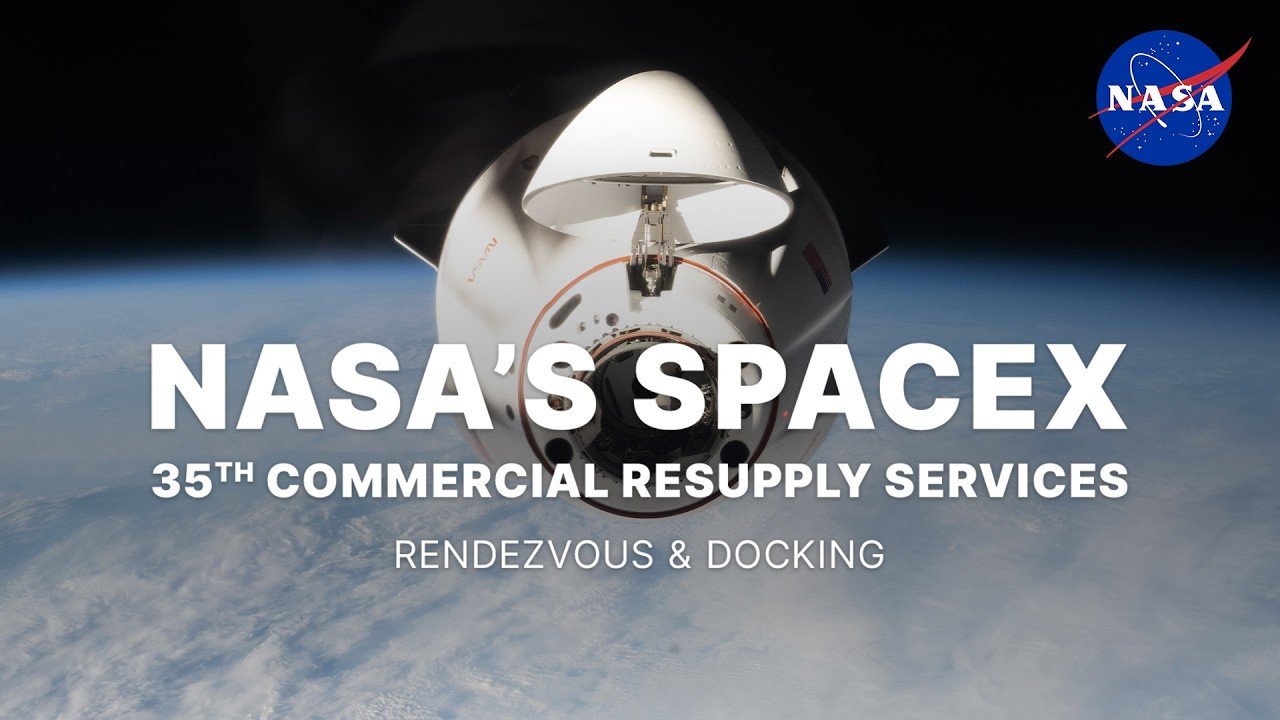
NASA's live coverage follows the uncrewed SpaceX cargo Dragon of the 35th commercial resupply mission as it approached and docked to the International Space Station's Harmony zenith port. Contact and capture came at 9:27 a.m. Central, followed by hard capture. Dragon carried over 6,300 pounds of cargo, including the final pair of roll-out solar arrays.
Full written account
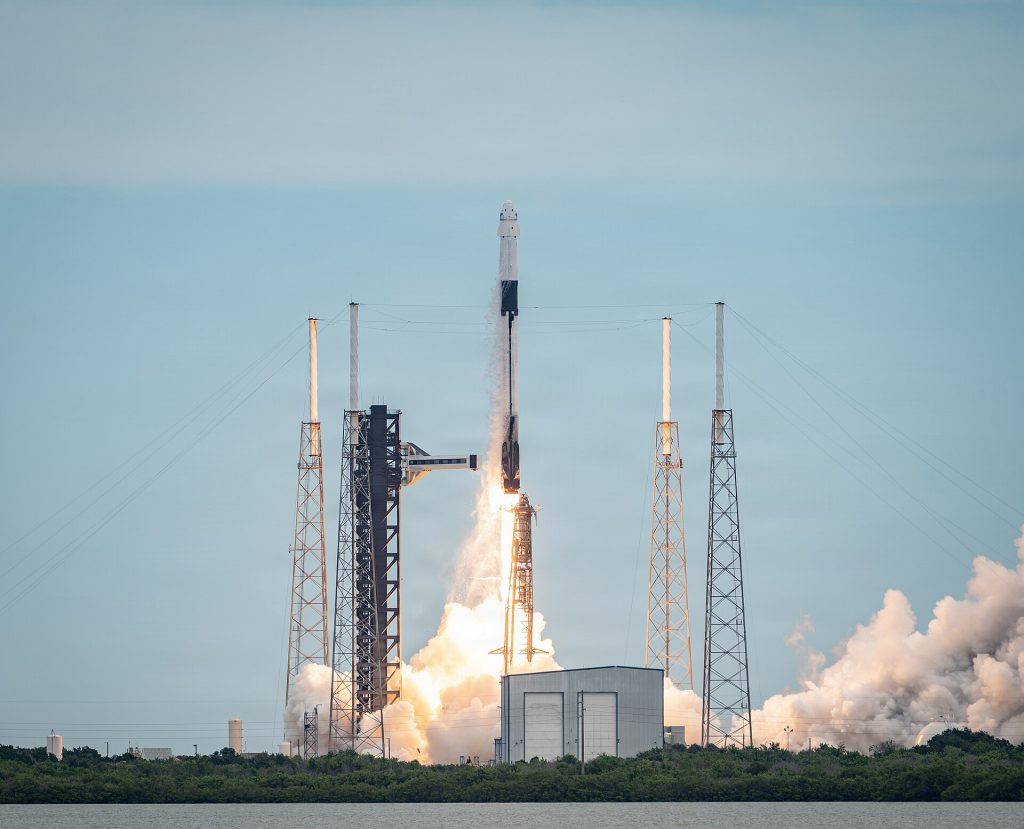
An uncrewed SpaceX Cargo Dragon carrying over 6,300 pounds of cargo, hardware and supplies docked to the zenith, or space-facing, port of the International Space Station's Harmony module at 9:27 a.m. Central while the station was flying over South Africa. The spacecraft, flying NASA's SpaceX 35 commercial resupply mission, had lifted off atop a Falcon 9 from the Cape Canaveral space launch complex. Its arrival fell on the 50th birthday of NASA astronaut Anil Menon, who was on board.
The cargo
The main hardware in Dragon's trunk is the final pair of International Space Station roll-out solar arrays (iROSA). They will be installed during upcoming spacewalks and complete the augmentation of the station's power output. The arrays already installed are smaller and are laid on top of the original arrays, yet produce much more power than the originals. Once all of them are installed, the expected increase to the station's power supply is about 30%.
Inside the spacecraft is a Canadarm2 joint flight support equipment piece, a large foam clamshell flying empty. It will return the failed robotic arm joint that was replaced during a June 30th spacewalk; teams will analyze that joint on the ground and refurbish it. Other equipment includes a toilet dose pump, a toilet pre-treat quality sensor and a robotic microconical tool for station maintenance.
The science on board covers manufacturing artificial retinas, how microgravity affects the growth of 3D heart tissue models, how glass forms when made from non-traditional elements, and how inflammation is linked to neurodegenerative disease. The crew also receives fresh food: oranges, apples, grapefruit, tomatoes, blueberries, baby carrots and mini sweet peppers, along with a pizza kit, cookies, candy and special holiday items.
This Dragon was flying for the fourth time, having previously flown the CRS-26, 29 and 33 cargo missions.
The approach
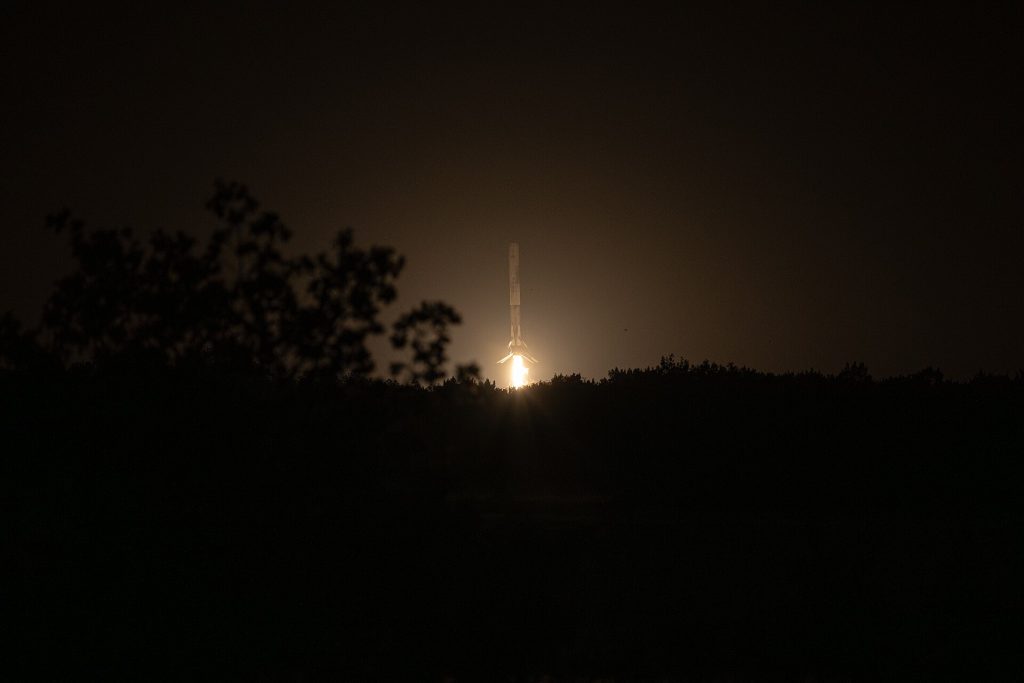
The launch cast what NASA described as a jellyfish effect across the East Coast, caused by the rocket plume and the dawn launch time. On docking day, the approach was run jointly by Mission Control Houston, led by flight director Nicole McElroy, and SpaceX controllers in Hawthorne, California. Joe Franchek served as Capcom. Menon and Canadian Space Agency astronaut Josh Kutryk monitored from the cupola using the RPOP rendezvous proximity operations panel, which shows Dragon's telemetry.
The approach was phased. Dragon performed its approach initiation burn at 7:50 a.m. Central, when it was about 2.5 km below and about 7 km behind the station. The burn swung it up to about 400 m directly below the station and inside the approach ellipsoid, an imaginary zone measuring 4 km by 2 km by 2 km. Before entering, a spacecraft must be on a 24-hour safe trajectory: if it lost control of its thrusters, at least 24 hours would pass before its orbit took it inside the ellipsoid.
The checkpoints that followed:
- Waypoint 0, 400 m directly below the station, the first checkpoint. Both control centers gave a go to proceed past it.
- Waypoint 1, about 220 m directly in front of the docking port, on the docking axis. Teams then polled for a go to enter the keep-out sphere, a 200 m radius zone.
- Waypoint 2, 20 m out, where Dragon briefly paused to align its docking system with the docking adapter. Kutryk reported the hold confirmed at 19.8 m.
Dragon steered with its 16 Draco thrusters, each providing about 90 lb of thrust. Red and green lights on the spacecraft marked its port and starboard sides, helping astronauts and automated systems verify orientation during orbital night. C2V2, the common communications for visiting vehicles system, provided a data stream between Dragon and the station.
Docking
The soft capture ring was confirmed deployed before docking. At less than 3 m, the call for "chop," the crew hands-off period, went out, after which Dragon handled everything automatically. Contact and soft capture were confirmed at 9:27 a.m. Central. The ring then retracted to pull Dragon snug against the International Docking Adapter, and the crew heard that ring retraction was complete. Twelve hooks, driven in two sets of six, then hard-mated the spacecraft. Hard capture was confirmed afterward.
During the approach, Menon was also asked to check power and data connections on Hypervisor 5, a laptop. The power cable showed no light, and a second cable nearby proved to be a ZBook power cable rather than the G9 type, so the ground told him to stand down.
After docking
Seven crew members make up Expedition 75: Menon, Kutryk, Luke Delaney and Jessica Watkins of NASA, and Roscosmos cosmonauts Sergey Kud-Sverchkov, Pyotr Dubrov and Anna Kikina. Kutryk, Delaney, Watkins and Kud-Sverchkov had arrived on October 1st with Crew 13. Menon had been aboard since July. Dragon is to stay about a month before undocking and splashing down off the coast of California with science and hardware. The hatch was expected to open later that day, and a media briefing previewing the upcoming iROSA spacewalks was set for the following Tuesday at 1:00 p.m. Central.
Questions this video answers
When did Dragon dock with the space station?
At 9:27 a.m. Central, when contact and soft capture were confirmed while the station was over South Africa.
Which port did Dragon dock to?
The zenith, or space-facing, port of the Harmony module.
What did Dragon carry?
Over 6,300 pounds of cargo, supplies and science, including the final pair of ISS roll-out solar arrays (iROSAs).
How long will Dragon stay at the station?
About a month, before returning to Earth with science and hardware and splashing down off the coast of California.
Who monitored the approach from the station?
NASA astronaut Anil Menon and Canadian Space Agency astronaut Josh Kutryk.