Challenger: How Cold-Shrunk O-Rings Led to the Booster Leak
The short version
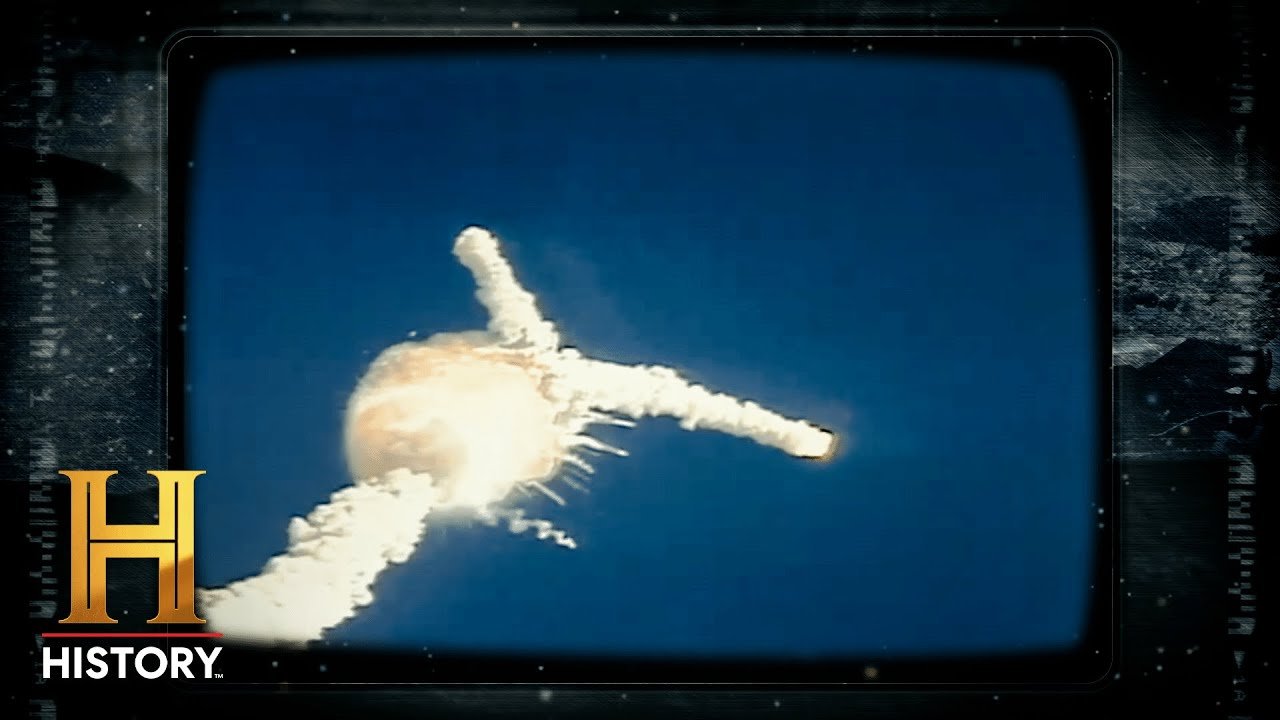
The video recounts the Challenger launch, in which a flame from a solid rocket booster appeared 73 seconds after liftoff and the vehicle came apart. It explains the O-ring problem, the cold temperatures on launch day and the pressure around the first teacher in space, Christa McAuliffe. It ends with Reagan's address after the disaster.
Full written account
Seventy-three seconds after liftoff, a flame appeared on the side of a solid rocket booster of Space Shuttle Challenger, and the vehicle then came apart. The flight was the 25th space shuttle mission and carried the first civilian in space, a teacher named Christa McAuliffe. The video presents the sequence through a dramatised history series, which includes re-creations.
A teacher goes to space
In 1984 President Reagan announced plans to send a teacher into space. Eleven thousand teachers applied. On July 19, 1985, Vice President Bush announced the choice: Christa McAuliffe, a civics and history teacher aged 37, a mother of a six-year-old and a nine-year-old. Her mission was scheduled for January, only six months away, and the publicity around a teacher in space added pressure to keep the mission on schedule.
The O-ring
Morton Thiokol, a NASA subcontractor, built giant 13-foot O-rings for the rocket boosters. The boosters are described as stacked metal cans filled with explosive propellant, and the O-ring keeps hot gas from finding an opening. If gas does leak, it could cause an explosion.
When Discovery returned in January 1985, NASA engineers found that one of its O-rings had burned and a small piece was missing. The video links the problem of heat to the cold at Discovery's launch.
The coldest launch
The night before the Challenger launch, temperatures at Cape Canaveral dropped below freezing, where a typical January low would be around 50 degrees Fahrenheit. The temperature bottomed out at 20 degrees hours before liftoff. At liftoff it was 36 degrees, the coldest launch in history. Technicians used brooms to remove icicles some two feet long from the shuttle and launch pad.
Seventy-three seconds
At 60 seconds Challenger reached 35,000 feet at Mach 1.5, and everything appeared smooth. At one minute 15 seconds the callout gave velocity 2,900 feet per second and altitude nine nautical miles. A flight controller reported that the flight dynamics officer said the vehicle had exploded.
The video explains that the O-rings had shrunk in the extreme cold and hot gases leaked from the side of the solid rocket booster. The flame acted like a torch, cutting into the liquid fuel tank and igniting the fuel, and the vehicle came apart. For over an hour pieces fell from the sky.
Two and a half million students and teachers across America were watching. Reagan postponed the State of the Union address for the first time ever and gave a speech instead.
Questions this video answers
When did the problem become visible?
73 seconds after liftoff, a flame began to appear from the side of a solid rocket booster.
Who was the teacher on board?
Christa McAuliffe, a civics and history teacher, aged 37, selected from 11,000 applicants and announced on July 19, 1985.
What does the video say about the O-rings?
The O-rings had shrunk during the extreme cold, and hot gas leaked out of the side of the solid rocket booster.
How cold was the launch?
36 degrees at liftoff, which the video calls the coldest launch in history.
Explore related missions
Connected by the topic: Space Shuttle