Crew-13 Launch Countdown: Dragon Grace Readies for the ISS
The short version
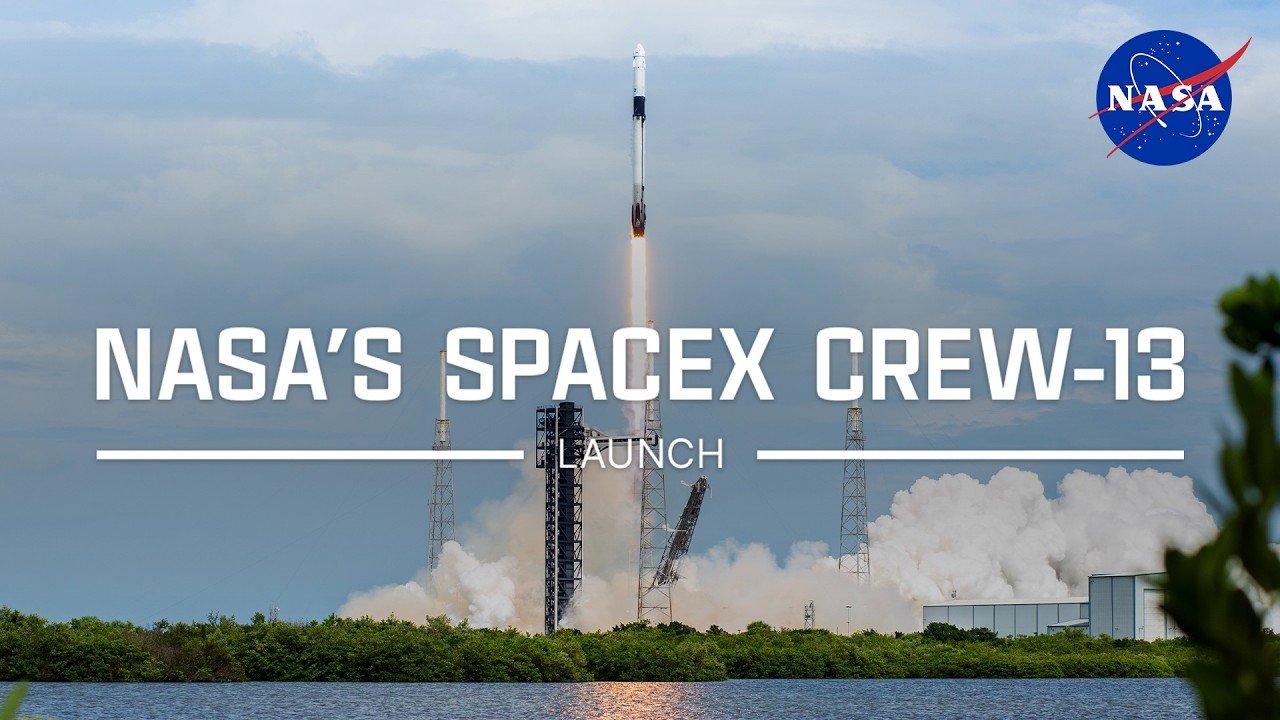
NASA's live broadcast of the Crew-13 launch countdown, covering four crew members aboard Dragon Grace on a Falcon 9 from Space Launch Complex 40, targeting liftoff at 11:10 a.m. EDT on Oct. 1. It follows the crew's launch-day preparations, the pad milestones and a weather watch, and previews the roughly six-month stay on the station.
Full written account
NASA's SpaceX Crew-13 mission was set to lift off from Space Launch Complex 40 at Cape Canaveral Space Force Station in Florida at 11:10 a.m. EDT on Thursday, Oct. 1, carrying four people to the International Space Station aboard a Falcon 9 rocket and a Crew Dragon named Grace. The crew was NASA astronauts Jessica Watkins and Luke Delaney, Canadian Space Agency astronaut Joshua Kutryk and Roscosmos cosmonaut Sergey Teteryatnikov. Because the launch was timed for an instantaneous window aligned with the station, the plan was a rendezvous of about 8 hours, which the launch team said would make it the fastest launch to docking of an American spacecraft.
The crew
Watkins, the commander, is a Colorado native and a geologist who worked at NASA's Ames Research Center and the Jet Propulsion Laboratory, where she was part of the science team studying data from the Curiosity rover. NASA selected her as an astronaut candidate in 2017, and she flew in 2022 as a mission specialist on Crew-4. Crew-13 makes her the first NASA astronaut to fly on two SpaceX Dragon missions. She is also a former college rugby player whose team won a national championship.
Delaney, the pilot, grew up in Florida and flew with the Marine Corps as a naval aviator, including combat missions in support of Operation Enduring Freedom. He later became a test pilot and instructor and a research pilot at NASA's Langley Research Center. NASA selected him as an astronaut in 2021, by which time he had logged more than 3,900 hours in 48 different aircraft. This is his first spaceflight.
Kutryk, a mission specialist, grew up on a cattle farm in Alberta and became a fighter pilot in the Royal Canadian Air Force, then a test pilot. He graduated in the same 2020 astronaut class as Watkins. He and his wife are expecting their third child while he is in space.
Teteryatnikov, also a mission specialist, graduated from the Naval Academy in St. Petersburg in 2011, specializing in ship power plant operations, and worked in naval engineering including aboard undersea vessels. He joined the Roscosmos cosmonaut corps in 2021 and has been a test cosmonaut since 2023. Only Watkins had flown before; the other three are first-time flyers.
Personal items flown include toys, games and a field notebook passed down through astronaut geologists (Watkins), Delaney's late father's dog tags and a rosary made by his mother, a 100-year-old family pocket watch (Kutryk), and photos and books on the history of his country (Teteryatnikov). Crew members share roughly a kilogram and a half of personal cargo in a volume about the size of a shoe box.
Launch morning
The day began in the crew quarters at Kennedy Space Center, in the suit-up room used by NASA astronauts for crew launches since Apollo 7 in 1968. SpaceX technicians helped the crew into custom pressure suits designed to protect them if Dragon lost pressure during launch or re-entry. The crew spoke with NASA Administrator Jared Isaacman and played the pre-launch card game that the commander has to lose, to leave bad luck behind. They then rode in Teslas with a "Lucky 13" license plate on a trip of about 20 minutes to the pad.
The crew rode the elevator up the tower, crossed the crew access arm and strapped into Dragon. The side hatch was closed, followed by leak checks of the hatch and suits and communications checks. The pad team then departed. The crew access arm, installed on this tower in 2023, was retracted in about a minute, though if the launch had been scrubbed it could have been moved back into place.
The launch escape system was armed before propellant loading began, after the crew closed their visors and sent the command themselves. The vehicle can trigger it automatically, and the crew can also pull a handle manually. It has never been needed on a Crew Dragon.
Weather and countdown
Weather was the watch item all morning. Launch weather officers at one point indicated a possible no-go, the forecast stood at 60% go with about 54 minutes to go, and later the weather officer's update reported go, though it was described as dynamic. Weather had to be good both at the pad and along the Atlantic coast, which the rocket flies up. The launch had a backup opportunity the next day at the same time.
Propellant loading began at about T-minus 35 minutes. RP-1 loading on the first stage was complete at around six minutes before launch, and engine chill was called at about seven minutes. Dragon was to take over its flight computer at T-minus 5 minutes and Falcon 9 at T-minus 1 minute. Before launch, Watkins thanked the teams at NASA, SpaceX, CSA and Roscosmos, closing with "With gratitude and grace, C13 is ready to fly."
Vehicle and flight plan
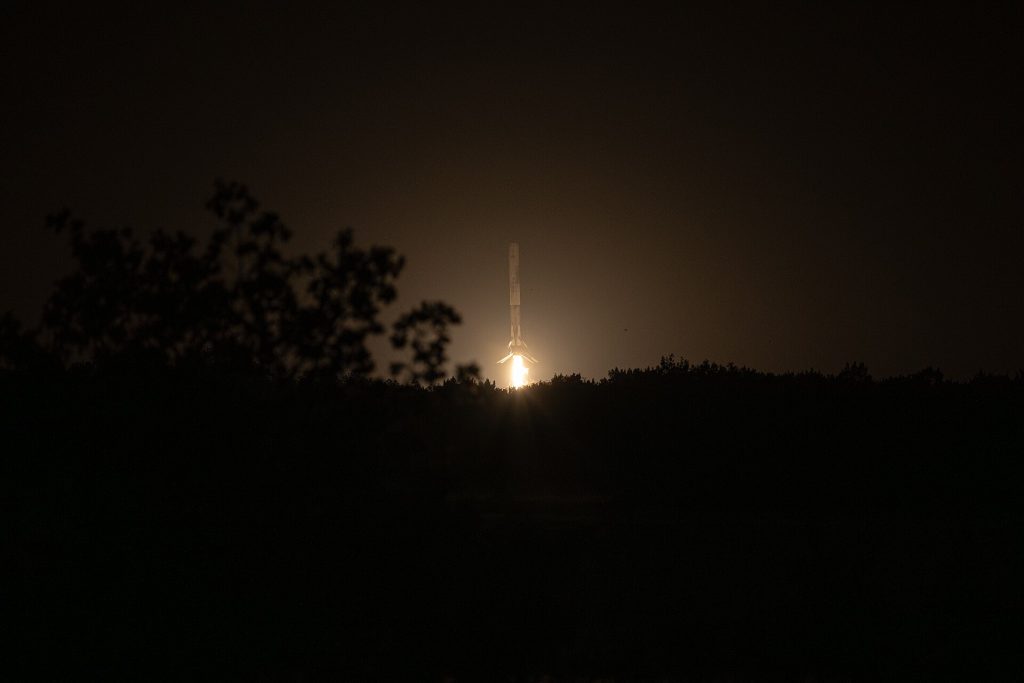
The Falcon 9 first stage has nine Merlin 1D engines generating more than 1.7 million pounds of thrust and was to be loaded with about a million pounds of propellant, kerosene (RP-1) and liquid oxygen. The booster was on its third flight, having previously launched Crew-12 and one Starlink mission. About two and a half minutes into flight the first stage would separate and return to Landing Zone 40. The second stage carries a single Merlin vacuum engine and takes Dragon to orbit.
Dragon Grace had flown once before, on Axiom Mission 4. Dragon carries up to seven people, has 16 Draco thrusters of 90 pounds of thrust each and eight Super Draco thrusters used for an abort. SpaceX described this as Dragon's 53rd visit to the station and its 21st human spaceflight mission, and Crew-13 as the 13th rotational mission.
Arrival and the station
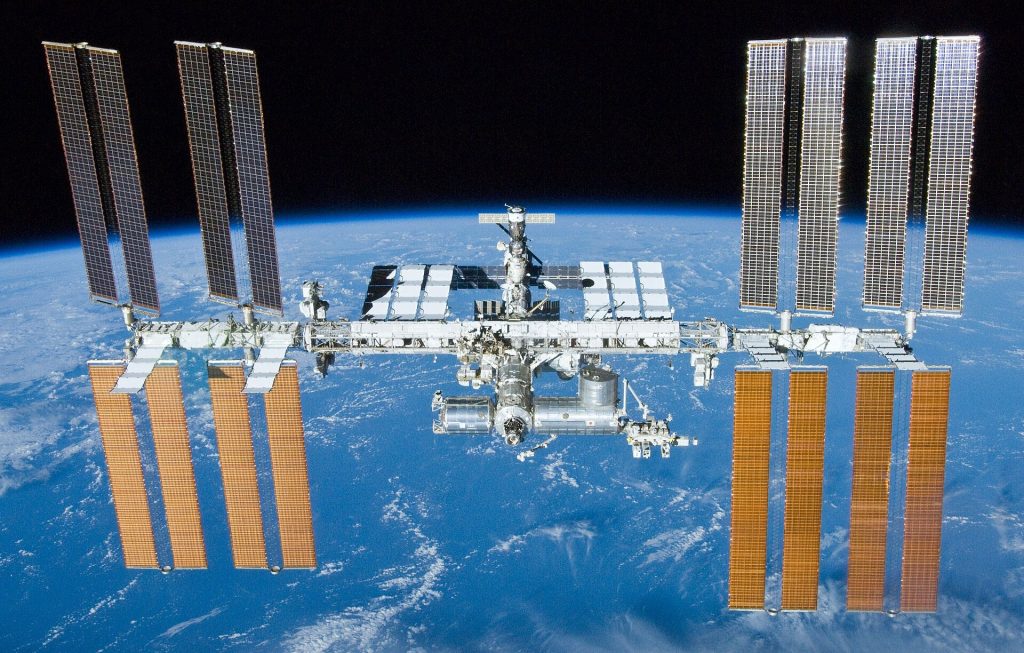
Docking was targeted for about 6 p.m. Central (7 p.m. Eastern) at the forward port of the Harmony module, using a new planar reflector installed on a recent spacewalk. Hatches were expected to open about an hour and a half after docking. Crew-13 will join Expedition 75, bringing 11 people aboard from four agencies, and is to stay about six months. Crew-12 is aboard now, and a direct handover with a few days of overlap was planned before it undocks.
The crew's research includes tissues derived from human stem cells for disease modeling, studies of blood flow, a new diagnostic device for astronaut health, the installation of a new plant growth chamber called Veggie-style O-Halo 3 and growing crops in plant pillows. Spacewalks were expected, with dates to be determined.
Questions this video answers
When and where was Crew-13 scheduled to launch?
The Falcon 9 was targeted to lift off at 11:10 a.m. EDT (1510 UTC) on Thursday, Oct. 1, from Space Launch Complex 40 at Cape Canaveral Space Force Station in Florida.
Who is on the Crew-13 crew?
NASA astronauts Jessica Watkins (commander) and Luke Delaney (pilot), CSA astronaut Joshua Kutryk and Roscosmos cosmonaut Sergey Teteryatnikov, the latter two as mission specialists.
How long will Crew-13 stay on the space station?
The crew is to spend about six months on the station, joining Expedition 75.
Which Dragon spacecraft is flying?
The Dragon is named Grace; it has flown once before, on Axiom mission 4.
When will Dragon dock with the station?
Docking was targeted for about 6 p.m. Central (7 p.m. Eastern), after a rendezvous of about 8 hours, at the forward port of the Harmony module.
Explore related missions
Connected by the topic: International Space Station