Skylab’s 1979 Reentry: How Debris Ended Up Across Western Australia
The short version
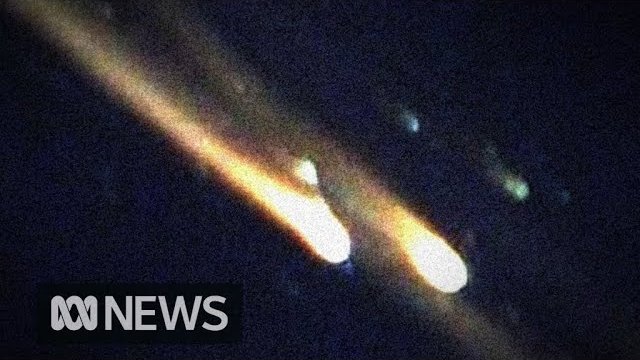
ABC television and radio coverage from July 1979 follows Skylab's return to Earth. NASA had said the crippled space station would fall into the ocean, but debris was found across Western Australia near Esperance, and the video covers the tracking, the reentry, the search for wreckage, disputes over who owned the pieces, and a NASA news conference.
Full written account
Skylab was a space station about as big as a three-bedroom house, and in July 1979 NASA assured the world it would fall harmlessly into the ocean. Instead, residents of Western Australia woke to find debris across their state. How did a station meant for the ocean end up over Australia?
Why Skylab fell
The video gives two causes that together sent Skylab to its fiery end. After the third Skylab crew shut the station down and left it in silent orbit, intense flare activity on the Sun, which was predicted and ignored, made the Sun emit more radiation, as it does every 11 years. The Earth's atmosphere warmed and expanded toward Skylab's orbit. The spacecraft met atmospheric resistance, slowed, and its orbit decayed. A rescue was out of the question because the Space Shuttle was having its own problems.
What NASA said, and what it feared
Publicly, NASA put the chance of Skylab hitting a heavily populated area as very remote and said the chance of anyone being injured or killed was one in 150. Privately, some officials were worried, and at least one NASA official had resigned over the handling of the disintegration. NASA expected at most three days of accurate warning of when Skylab would fall, but only about two hours of notice of where. The wreckage was expected to spread across a corridor 100 miles wide and 4,000 miles long.
Australia was one concern: the spacecraft crossed it six times a day, and one orbit passed over Melbourne, Sydney and Newcastle. A scientist put the probability of reentry over Australia at 1 in 50.
The final orbits
Ground control sent a last command to send Skylab into a tumble, aimed at bringing it down in the southern Atlantic or the Indian Ocean. Controllers believed the manoeuvre prolonged its flight by at least 18 minutes. Contact was lost over Ascension Island in the Atlantic, and the disintegration began later than expected. Washington then confirmed that the space station had fallen into the Indian Ocean several hundred miles off the southwest corner of Australia, at 2:38 am Australian Eastern Time, according to the director of the Skylab recovery project, Richard Smith. Control-room mood was described as a sense of release.
Western Australia
Callers in Western Australia reported bright lights in the sky with flashes of green, orange and red. One caller said that if some pieces had survived, they must have reached the continent of Australia. Officials in Houston said that Australia could be in the footprint of debris and that they would wait for sightings.
Three men travelling near Rawlinna found fibrous material and a crater, then a cylinder, and they took three hours to load it. Ownership was unclear: NASA was quoted as saying Skylab was US government property, that anyone could keep pieces, and later that it only wanted to borrow some. A San Francisco newspaper offered $10,000 for the first piece returned to the US, and the video says a 17-year-old boy won.
NASA's response
At a news conference, team leader Robert Gray said that when Skylab was launched, scientists had considered carrying fuel for a controlled reentry, but dropped the idea because of the increased danger to astronauts. He said NASA was by no means happy that Skylab had come down over land. He added that when reentry began 48 hours before, it was on a track with the least risk to human life, and a more dangerous orbit would have taken it over Europe, India and China. NASA wanted to borrow some pieces to analyse the effect of six years in space. A NASA scientist said a piece shown on film possibly could be one of the nitrogen pressurised spheres.
Afterwards
The largest debris was an oxygen tank the size of a car, and debris was scattered over hundreds of kilometres. The Shire president said it was really miraculous that no one was injured. The Esperance Shire tried to hand NASA a $400 littering fine, which was never paid. The Esperance museum holds one of the largest collections of Skylab debris in the world.
Questions this video answers
Why did Skylab fall out of orbit?
The video says intense solar flare activity warmed and expanded the Earth's atmosphere toward Skylab's orbit. The resulting atmospheric resistance slowed the station and its orbit decayed.
Where did Skylab's debris land?
NASA initially said it fell into the Indian Ocean, but debris was found over hundreds of kilometres of Western Australia around Esperance.
Was anyone injured?
The video quotes the Esperance Shire president as saying no one was injured and there was no major destruction of buildings.
What was the San Francisco Examiner prize?
The newspaper offered $10,000 to the first person to return a piece of Skylab to the US; the video says the winner was a 17-year-old boy.
What fine did Esperance issue NASA?
The Esperance Shire tried to hand NASA a $400 littering fine, which was never paid.
Explore related missions
Connected by the topic: Low Earth orbit