How the ISS Will Be Destroyed at Point Nemo in 2030
The short version
The B1M explains how the International Space Station was built from Zarya in 1998 onward and why it is planned to be brought down in 2030 by a specially modified SpaceX Dragon, ending in the ocean at Point Nemo. It covers earlier space stations, the station's modules and truss, the thermal and debris stresses it faces, the 2019 Zvezda leak, and why NASA's 2022 transition plan ruled out other disposal options.
Full written account
The International Space Station, which cost more than 160 billion US dollars to build, is planned to end in 2030 at Point Nemo, the most remote place on Earth. A specially built SpaceX Dragon will push it down in what is described as the most challenging demolition project ever attempted. Why must it come down, and why not save it?
A Dragon built for demolition
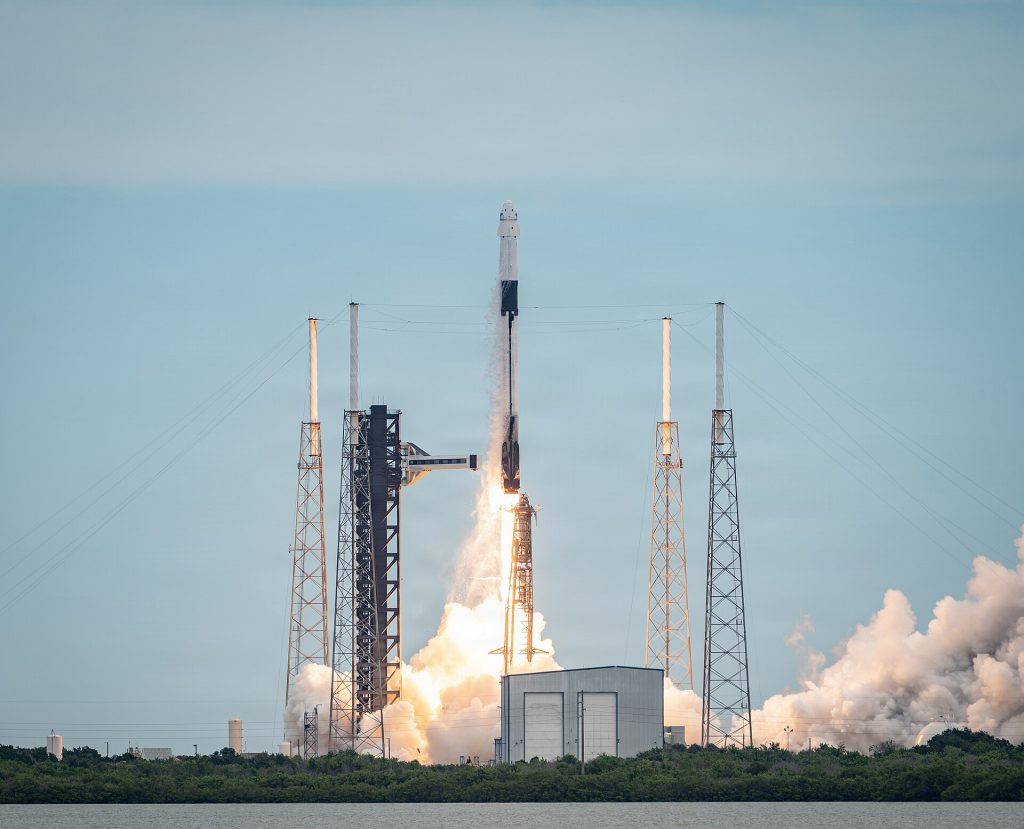
The Dragon first entered service in 2012 carrying cargo, with a crew version following nine years later. The 2030 variant has 46 Draco thrusters, each able to generate over 40 kilos of force, where a normal Dragon has 16. Its trunk is twice as long as a typical craft and carries six times the fuel, allowing up to four times the usual power.
How the station was built
The first station, Salyut 1, launched in 1971 and lasted 175 days. Soyuz 11 depressurized before re-entry, killing all three cosmonauts, and Salyut 1 was allowed to burn up less than five months after launch. Mir, launched in 1986, was the first truly modular station, built in stages over 10 years. The US station Freedom was abandoned after budget cuts, and by 1993 the US and Russia decided to cooperate.
The Russian module Zarya entered orbit in 1998. Its construction began in 1994 in Moscow, and Kevlar served as its armor. Its two solar arrays charged six nickel cadmium batteries providing 3 kW of power. A month later came Unity. Because the US Common Berthing Mechanism and the Russian APAS docking system were incompatible, pressurized mating adapters were developed, and three were added in total. Zvezda arrived on 26 July 2000, and on 2 November 2000 Bill Shepherd, Yuri Gidzenko and Sergey Krikalev became the first full-time residents. By 2011 construction was complete.
Why it cannot stay
The station flies in the upper thermosphere, where thin atmosphere still creates drag. Rockets reboost it every few months, so its altitude varies between about 370 and 460 km. Debris adds risk: objects around 10 cm are tracked and dodged, but smaller ones can travel up to 10 km a second. In 2016 ESA released an image of a 7 mm crack in a Cupola window, thought to have been caused by a fleck of paint.
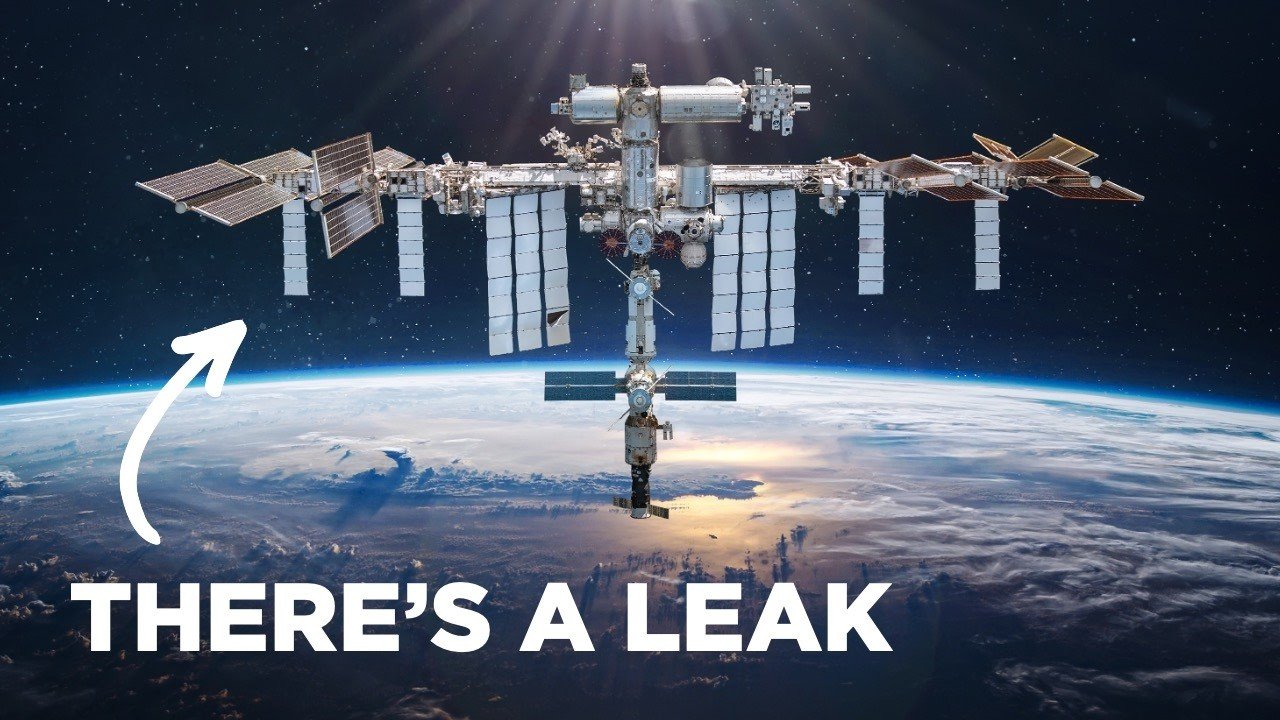
Each orbit also swings the structure from 120°C in sunlight to minus 150°C in Earth's shadow, 16 times a day. The narrator says a joint or weld will eventually fail somewhere. In 2019 a leak was found in Zvezda's transfer tunnel, the PRK. In November 2024 the decision was taken to close the hatch to the PRK during standard operations.
Options NASA rejected
NASA's 2022 transition plan looked at disassembling the station in space and returning it in pieces, but concluded it was too complex. It would need over 160 spacewalks, and no vehicle with a large enough cargo bay exists since the shuttle ended in 2011. Pushing the station into deep space is not feasible. Raising it to a higher orbit would cut its expected life before a catastrophic collision from more than 50 years to 3.8 years at 850 km, and Starship is not designed to dock at the ISS.
The final descent
The Dragon will connect at around 280 km. Its burns will make the station re-enter fast enough to ensure total destruction. Shipping lanes and flight routes will be cleared. Below 120 km the atmosphere begins to rip the station apart at 29,000 km an hour, with temperatures reaching 4,000°C and a fireball streaking 6,000 km across the sky. Only a few artifacts survive to splash down in Point Nemo.
NASA is backing commercial stations such as Starlab and Axiom Station, while China's Tiangong is the largest station in operation after the ISS.
Questions this video answers
Where will the ISS come down?
At Point Nemo in the South Pacific, the most remote place on Earth.
How will the ISS be deorbited?
A specially built SpaceX Dragon with 46 Draco thrusters, against 16 on a normal Dragon, will dock at the front and perform burns to bring the station down.
Why can't the ISS be disassembled and returned?
NASA's 2022 transition plan concluded it was too complex: it would need over 160 spacewalks, and no vehicle with a large enough cargo bay has existed since the Space Shuttle retired in 2011.
Why not move it to a higher orbit?
A study shows its expected lifespan before a catastrophic collision falls from more than 50 years at its current height to 3.8 years at 850 km, and Starship is not designed to dock at the ISS.
Who were the first full-time residents?
NASA astronaut Bill Shepherd and cosmonauts Yuri Gidzenko and Sergey Krikalev arrived on 2 November 2000.
What will follow the ISS?
NASA is backing commercial stations such as Starlab and Axiom Station; China's Tiangong is the largest other station in operation.