Hubble Space Telescope: Launch, Mirror Flaw and Servicing Fixes
The short version
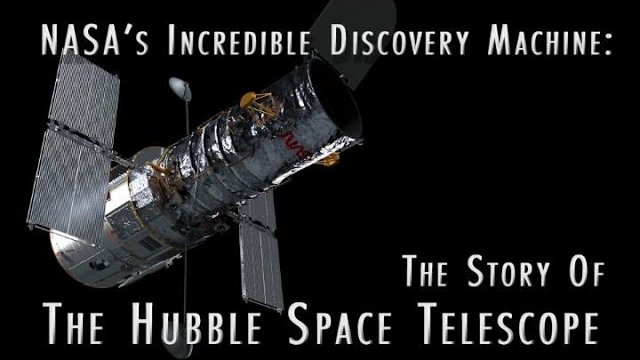
A NASA Goddard documentary on the Hubble Space Telescope, from its shuttle launch and troubled deployment to the mirror flaw and the servicing missions that followed. It includes interviews with people involved and covers the decision after Columbia to cancel and then restore the final servicing mission. The description says Hubble has operated for more than 30 years.
Full written account
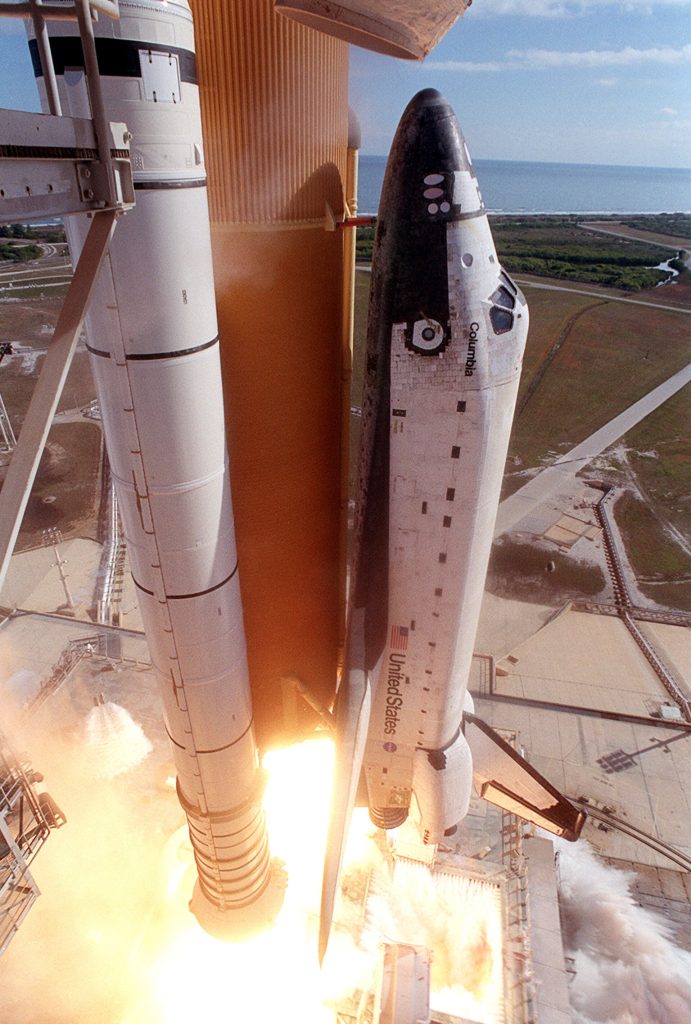
Hubble's launch and deployment in April 1990 are described in NASA Goddard's documentary as the most significant advance in astronomy since Galileo's telescope. The telescope, built around a 2.4-meter mirror, was carried aloft in the payload bay of the Space Shuttle Discovery. Its first day in orbit went badly, and its first images later turned out to be flawed. Five servicing missions and more than 30 years of operation followed.
Why a telescope in space
Astronomers had wanted a telescope above the atmosphere for generations. One interviewee cites a first reference to the idea in 1925. Earthbound telescopes, from Galileo's instrument to mountaintop observatories, are hampered by the Earth's turbulent atmosphere. The Space Shuttle offered a way to put one in orbit and to revisit it. Periodic shuttle visits would allow components to be replaced and routine maintenance done, which was expected to extend the telescope's life up to 20 years.
One interviewee recalls the first time in the clean room where Hubble was built, a space 90 feet tall and 120 feet long. The telescope looked like something Tiffany's had built. Another, who had already flown a shuttle mission, thought Hubble was too big to fit in the payload bay.
Deployment day
After Discovery lifted off with Hubble, deployment did not go as planned. Steve Hawley, working the robotic arm, was supposed to pull the 25,000-pound telescope straight out of the payload bay. As he began to lift, it began to twist and turn, and he was told to stop. He had to move the arm joint by joint, a process that took hours instead of minutes.
Hubble ran on batteries once its power umbilical was disconnected, with a maximum period of roughly four hours without its solar arrays unfurled. The first array went out without trouble. The second unfurled only about 16 inches and stopped, jammed part way out.
Bruce McCandless and Kathryn Thornton suited up with Charles Bolden's help. The airlock was sealed and half its air dumped, and they were about to go outside to crank the array open by hand. Flight controllers pressed the crew to continue toward the spacewalk, while stating they would stop it whenever they had to.
Before the hatch was opened, the ground called a halt. They suspected the tension monitoring software, a module put in to stop the array if there was a mechanical jam so it would not be ripped and destroy the telescope. McCandless had suggested that cause early that morning. A young flight controller at Goddard said he could disable the module. The ground disabled the tension monitoring and resent the command, and the array went fully out, confirmed by micro switches. Hawley then released Hubble, about a minute late. McCandless and Thornton never saw it go; their view was the inside wall of the airlock.
The flawed mirror
The first images were not as sharp as hoped. The primary mirror had a slight misshapen form, a spherical aberration. Press coverage called it a billion-dollar mistake, a technological disaster and a national disgrace, and late-night hosts joked about it.
NASA already planned maintenance visits every three years. The fix was a new camera with corrective optics, the second Wide Field and Planetary Camera, with one relay mirror shaped to cancel the primary mirror's error, much like putting glasses on for myopia. COSTAR provided corrective optics for the other instruments. NASA could not test the new optics in the actual telescope, so independent review panels used Hubble images to determine the flawed mirror's precise shape, and engineers built a simulator at Goddard and an electrical test facility with the same schematics as the original telescope.
First servicing mission
Shuttle Endeavour carried the servicing mission. Thornton worked from the end of the mechanical arm on a solar array that had a kink and a twist in its outer bi-stem. Claude Nicollier repositioned Jeffrey Hoffman so he could latch the new camera in. After five spacewalks, about two weeks later, "suddenly Hubble was fixed." A congressman who chaired the financing subcommittee called the fix the most significant contact lens in American history. The mission also showed that a telescope in space could be serviced.
The last servicing mission
Later missions flew on Discovery and Columbia. After the loss of Columbia, NASA Administrator Sean O'Keefe decided Hubble was too risky, since Hubble's orbit gave the crew no way to use the International Space Station as a safe haven. NASA spent a year on robotic servicing and concluded it would be possible in future, but not in time to be useful. A new administrator then announced a shuttle servicing mission would be added before the shuttle retired. An interviewee says the public, who contacted their congressional representatives and wrote editorials, was in some ways the telescope's savior.
Atlantis flew the final mission. Its crew repaired two failing instruments, installed new ones and replaced gyros. More than 10 years later, all four instruments alive after that mission are still going strong, and some gyros have been lost but enough remain to operate.
On funding, one scientist recalls answering a skeptical senator that for the cost of a night at the movies, every American taxpayer would get 15 years of discoveries, though he says he may have been off by a factor of three or four.
Questions this video answers
When was Hubble launched?
The launch and deployment were in April 1990, according to the description. The transcript shows the telescope launching on the space shuttle Discovery.
What was wrong with Hubble's first images?
The first images were not as sharp and crisp as hoped because the telescope's mirror had a slightly misshapen form, an aberration.
How was the mirror problem fixed?
A new wide field planetary camera with corrective optics, plus COSTAR for the other instruments, was installed during the first servicing mission. Astronauts made five spacewalks.
What went wrong on deployment day?
The solar array deployment stopped partway; ground teams suspected the tension monitoring software, disabled it, resent the command, and the array deployed fully.
How many servicing missions did Hubble have?
The description says five servicing missions.
Explore related missions
Connected by the topic: Space Shuttle