Milestone: 18 November 2026
Voyager 1 reaches one light-day from Earth
On 18 November 2026, at 2:16:07 a.m. Pacific time, NASA's projection has Voyager 1 one light-day from Earth: 25.9 billion kilometres. A command sent from there takes 24 hours to arrive and the reply takes 24 more. Here is how a 1977 probe got that far, what keeps it alive, and the videos to watch, in order.
The viewing path
A suggested order, not a chronological timeline.
5 videos
-
1977Voyager
Voyager 1 and 2: From the Grand Tour to Interstellar Space
Why it belongs
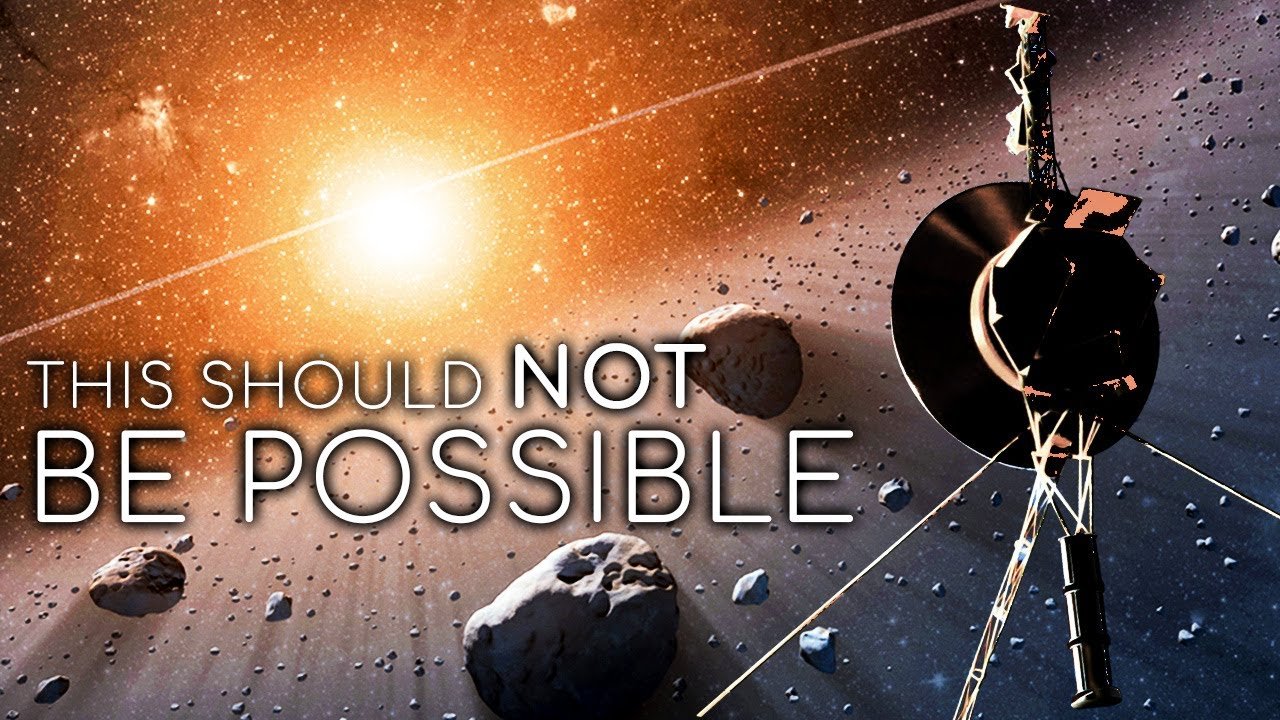
The whole story in 45 minutes, from the Grand Tour alignment and the 1977 launches to Neptune, the heliopause and the Golden Records. The best single overview here.
Play: Voyager 1 and 2: From the Grand Tour to Interstellar Space Read & explore: Voyager 1 and 2: From the Grand Tour to Interstellar Space
-
Voyager 1
Voyager 1 and 2: Launch, Grand Tour and Crossing into Interstellar
Why it belongs
The deep dive. Covers the launch where Voyager 1's Centaur stage shut down with only 3.4 seconds of propellant left, the Golden Record, both heliopause crossings and the shrinking power budget.
Play: Voyager 1 and 2: Launch, Grand Tour and Crossing into Interstellar Read & explore: Voyager 1 and 2: Launch, Grand Tour and Crossing into Interstellar
-
1977Voyager 1 and Voyager 2
Would a Voyager 3 Still Carry a Golden Record? Storage Compared
Why it belongs
Why the record is a gold-plated copper disc and what would happen to it over billions of years, set against newer ways of storing data.
Play: Would a Voyager 3 Still Carry a Golden Record? Storage Compared Read & explore: Would a Voyager 3 Still Carry a Golden Record? Storage Compared
-
Voyager 1
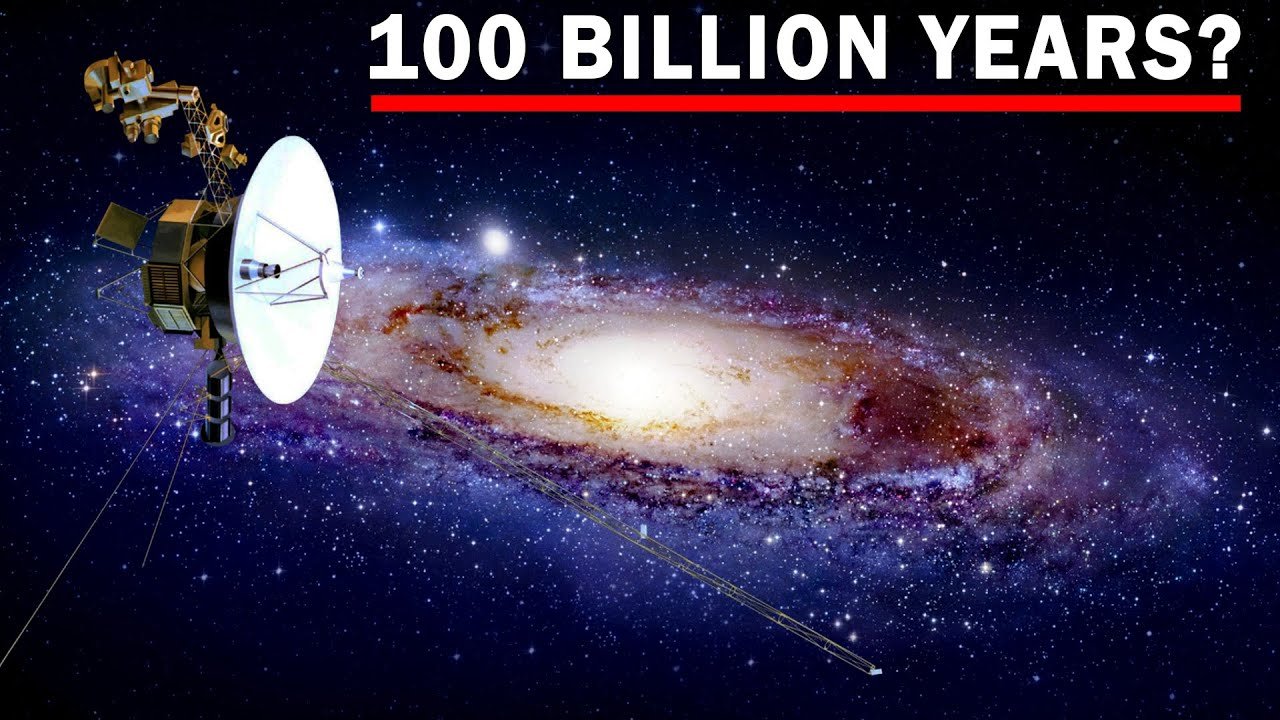
Voyager Probes: Engineering Choices That Kept Them Running
Why it belongs
What keeps a 1977 machine going: plutonium power, backup thrusters, tiny computers and tape recorders, and the choices behind each.
Play: Voyager Probes: Engineering Choices That Kept Them Running Read & explore: Voyager Probes: Engineering Choices That Kept Them Running
-
Voyager, Pioneer and New Horizons: Where the Probes End Up
Why it belongs
Ends the path where Voyager is heading: Pioneer, Voyager and New Horizons on one-way trajectories, and the stars they may pass.
Play: Voyager, Pioneer and New Horizons: Where the Probes End Up Read & explore: Voyager, Pioneer and New Horizons: Where the Probes End Up
About this collection
What does “one light-day” mean?
A light-day is the distance light travels in 24 hours: 25.9 billion kilometres, or 173 times the distance from Earth to the Sun. NASA says Voyager 1 will be there at 2:16:07 a.m. Pacific Standard Time on Wednesday, 18 November 2026 (10:16:07 UTC), when it is 16.094 billion miles (25.902 billion kilometres) away. It will be the first human-made object that far from Earth.
The number matters because radio travels at the speed of light. At that distance a signal needs 24 hours to reach the spacecraft, as JPL puts it, and 24 hours for the reply to come back. Engineers send each command without knowing the result for two days. A light-day is a unit of distance, not a place, so nothing in the probe’s surroundings changes as it passes the mark.
The time comes from NASA’s “Where Are Voyager 1 and 2 Now?” page, and it is a projection until the day. JPL’s 29 October 2026 release rounds the same milestone to 16.09 billion miles (25.89 billion kilometres).
Mission at a glance
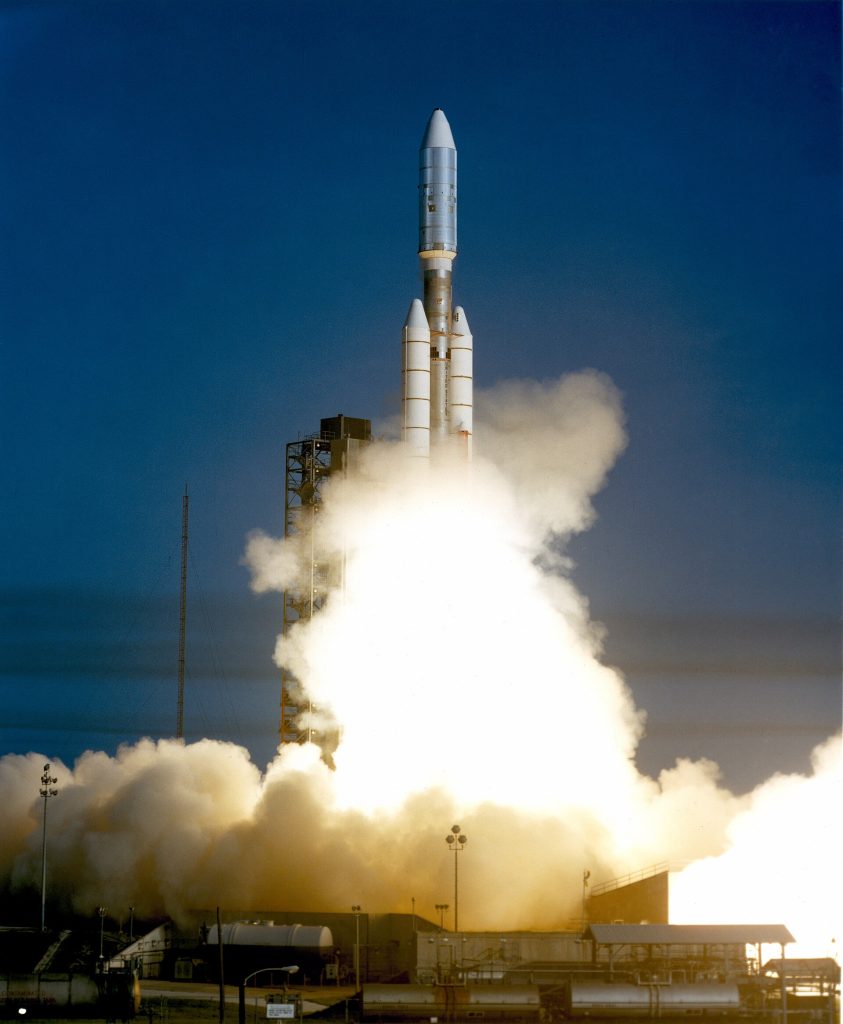
| Launched | 5 September 1977, from Cape Canaveral on a Titan IIIE-Centaur |
| Planet flybys | Jupiter, 5 March 1979 (about 280,000 km); Saturn, 12 November 1980 (about 126,000 km) |
| Left the heliosphere | 25 August 2012, about 122 astronomical units from the Sun |
| Science instruments running | Two: a plasma wave instrument and a magnetometer (NASA, April 2026) |
| Power | Falls by about 4 watts a year |
| Status | Operating; see the Voyager 1 mission page |
How did a 1977 probe get this far?
Voyager 1 and its twin Voyager 2 were built for a rare alignment of the outer planets. Voyager 2 launched first, on 20 August 1977; Voyager 1 followed on 5 September on a faster route and overtook it. The programme page has every video on both. The dates that matter for the light-day story:
- 14 February 1990. The last pictures: a mosaic of the Solar System from about 40 AU, including the “Pale Blue Dot” image of Earth that Carl Sagan made famous. The cameras were then turned off.
- December 2004. Crossed the termination shock, where the solar wind slows, at about 94 AU.
- 25 August 2012. Left the heliosphere, the bubble of the Sun’s wind, and became the first spacecraft in interstellar space.
- 14 November 2023. Stopped sending readable data. A single failed memory chip in the flight data subsystem was the cause.
- 18 to 20 April 2024. Engineers split the affected code into pieces stored in other memory, sent it on 18 April, and on 20 April the reply showed the fix worked.
- 20 March 2025. JPL revived the primary roll thrusters, dormant since 2004, before the Canberra antenna went offline for upgrades in May.
- 17 April 2026. The Low-Energy Charged Particles instrument was switched off to save power. Voyager 1 now has two instruments left.
- Early September 2026. The power-saving swap nicknamed “the Big Bang” finished: three devices replaced with lower-power alternatives.
- 18 to 20 October 2026. Two scheduled contacts, 24 hours apart, failed to detect the signal. It returned on 20 October. A group of thrusters had gone offline and its backups started automatically. The cause is still under investigation.
- 18 November 2026. One light-day from Earth, per NASA’s projection.
How long does a signal take at each step?
Each stage of the journey added hours to the one-way trip of a radio message.
What keeps it alive after 49 years?
- Power. The plutonium generators lose about 4 watts a year, so instruments and heaters are switched off one at a time. In April 2026 NASA said the instrument it shut off would buy about a year. JPL said on 29 October 2026 that without the September power swap another instrument would probably have gone as early as summer 2027. (NASA Science, 17 April 2026; JPL, 29 October 2026.)
- Memory. The 2023 fault was one failed chip. The chip could not be repaired, so engineers rewrote and relocated the code around it. (JPL, April 2024.)
- Pointing. The antenna must keep facing Earth. Residue was clogging the backup thrusters that do this, so JPL fired up a primary set that had been silent since 2004. (JPL, March 2025.)
- One dish. The Deep Space Network antenna at Canberra is the only one with enough power to send commands to the Voyagers, which is why its upgrade shutdown from May 2025 to early 2026 drove the thruster work. (JPL, March 2025.)
What about Voyager 2?
Voyager 2 will take far longer to reach the mark. It launched on 20 August 1977 and flew past Jupiter on 9 July 1979, Saturn in August 1981, Uranus on 24 January 1986 and Neptune on 25 August 1989, the only spacecraft to see the last two. It crossed the heliopause on 5 November 2018, and NASA announced it on 10 December 2018. Reports quoting NASA put its own light-day mark around November 2035, if it is still working then.
What is on the Golden Record?
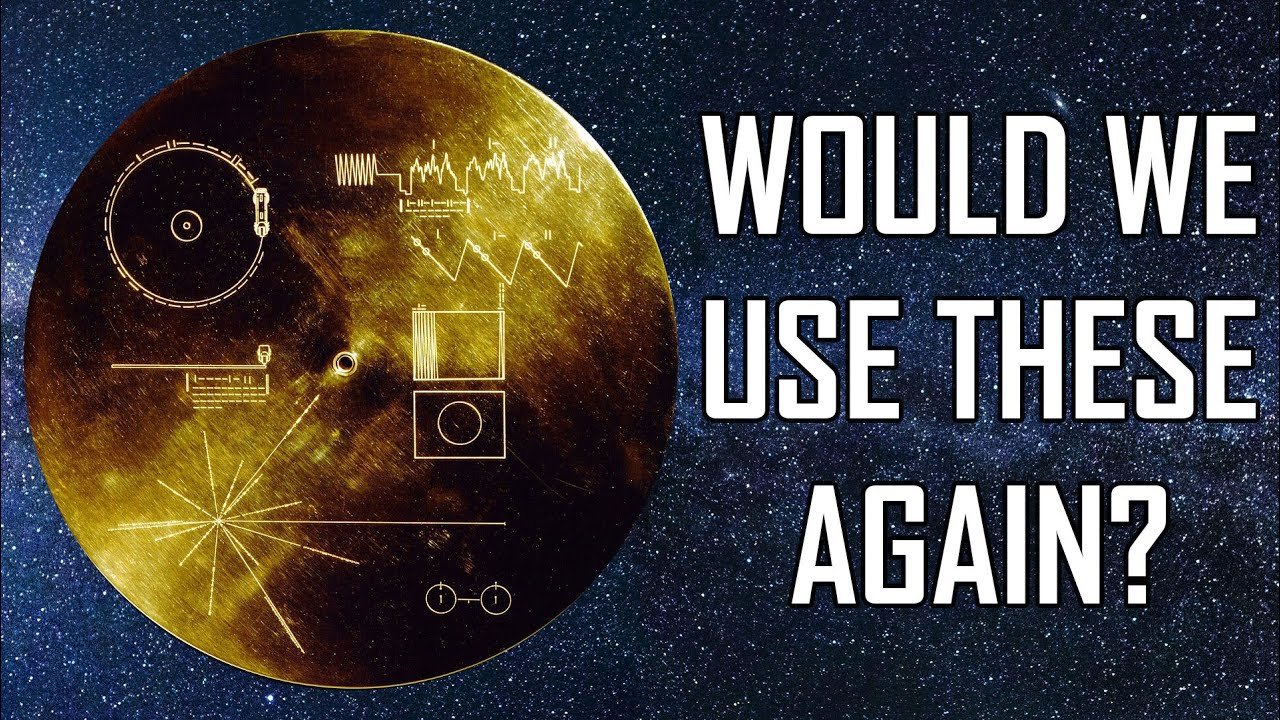
Each probe carries a 30-centimetre gold-plated copper disc meant for any finder. NASA lists 115 images, greetings in 55 languages, 35 sounds of Earth and 90 minutes of music, plus recorded greetings from President Jimmy Carter and UN Secretary-General Kurt Waldheim. The cover shows how to play it. Two of the videos above are about it.
What we still don’t know
- Why a group of thrusters went offline in October 2026. JPL says the cause is under investigation.
- How long the power lasts. NASA gives no end date for the mission, only that it aims to keep both probes running as long as possible.
- What the particle and magnetic instruments will find as the other instruments go quiet. Only two are left on Voyager 1.
Where to go next
- The Voyager 1 mission page has the timeline with a video for each step, and the twin probes page covers both.
- Where we've been shows every body spacecraft have reached, and Spacecraft out there lists what is still flying.
- For scale: the farthest people have ever been from Earth is a little over 252,000 miles, on Artemis II in April 2026. Voyager 1 is more than 60,000 times farther.
- New videos by email: get the updates.
Sources
- NASA Science, Where Are Voyager 1 and 2 Now? (the 18 November 2026 time and distance).
- JPL, NASA’s Voyager 1 Conserves Power, Resolves Brief Communications Pause, 29 October 2026.
- NASA Science, NASA Shuts Off Instrument on Voyager 1, 17 April 2026.
- JPL, Voyager 1 Resumes Sending Engineering Updates, April 2024.
- JPL, Voyager 1 Revives Backup Thrusters, March 2025.
- NASA Science, Voyager 1 and Voyager 2 mission pages; Interstellar Mission.
- JPL, Voyager 2 Enters Interstellar Space, 10 December 2018.
- EarthSky, Voyager 1 will be 1 light-day from Earth, for NASA’s Voyager 2 projection.
Facts checked against the sources above on 3 November 2026. Distances in astronomical units (AU): one AU is the Earth-Sun distance, about 149.6 million kilometres.