Challenger: O-Rings, a Cold Launch Night and NASA’s Decisions
The short version
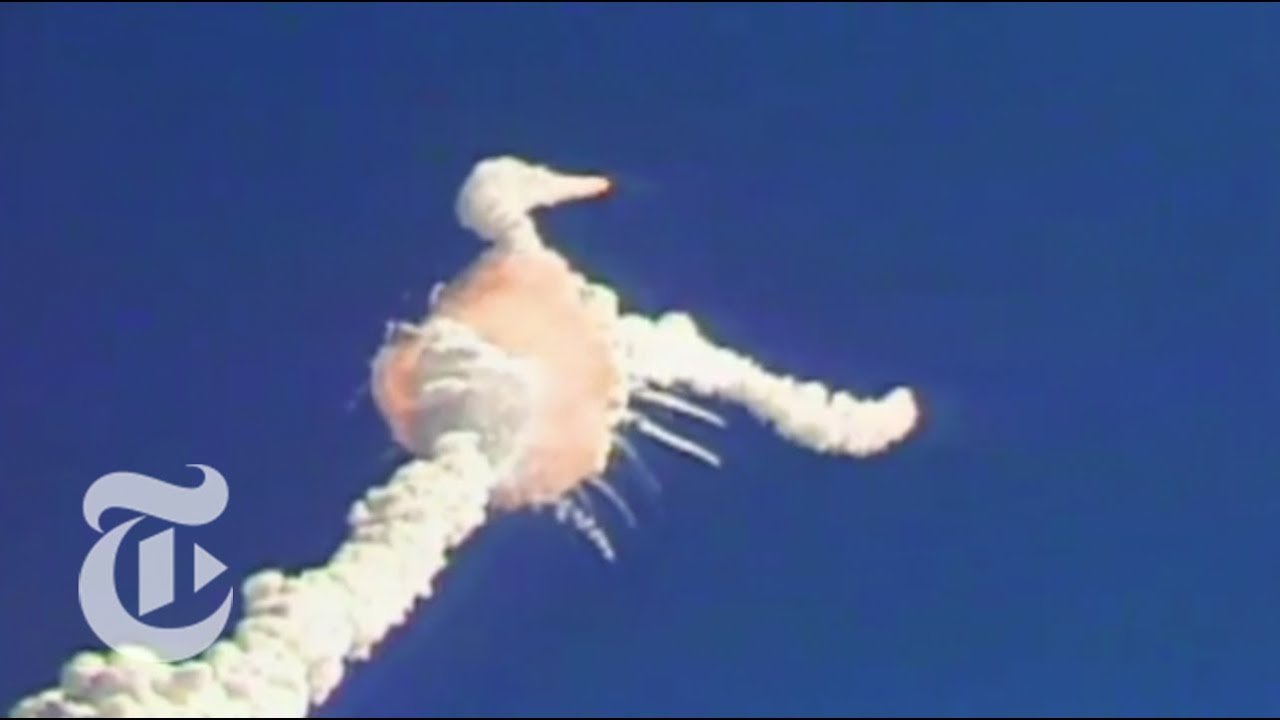
A Retro Report film from The New York Times on the Challenger disaster of Jan. 28, 1986, which killed seven astronauts. It covers the O-ring problems seen on earlier flights, the teleconference the night before launch, and the Rogers commission findings. It then compares the decision-making with the later Columbia accident.
Full written account
Seven astronauts died on Jan. 28, 1986, when the Space Shuttle Challenger was lost during its tenth flight. Mission control reported "obviously a major malfunction" and that the vehicle had apparently exploded. The flight was the first on which an ordinary citizen was to fly, and Christa McAuliffe was aboard as the payload specialist, the teacher in space.
Background
NASA had been seen internationally as a leader after the Apollo missions. The shuttle was meant to pay its way by carrying payloads for the Department of Defense and private contractors, and NASA predicted it could launch 60 shuttles a year. The program never had more than nine launches in a single year.
Each solid rocket booster was built of joined metal tubes, and the field joints were sealed with two rubber gaskets called O-rings. Engineers saw that on several flights, especially at cold temperatures, rocket propellant had blown by the primary O-ring. The secondary O-ring prevented gases from escaping each time, and NASA waived the requirements governing O-rings, which made it acceptable to fly with minimal erosion.
The night before launch
The overnight low before launch was forecast to be as low as 18 degrees. Morton Thiokol, which held the NASA contract to build the boosters, and NASA held an emergency teleconference. Roger Boisjoly of Thiokol did most of the talking, and the recommendation was to wait until it was 54 degrees before launching. Larry Mulloy, NASA's project manager for the solid rocket boosters, reacted strongly.
Thiokol's engineers asked for time offline to review the data in private. After they went offline, the vice president took the decision away from the engineers and asked the managers to decide. More than 30 minutes later, Thiokol managers voted to reverse the recommendation and launch as planned. One manager refused to sign the launch rationale, and just before midnight his boss, Joe Kilminster, signed off instead.
Findings and aftermath
The Rogers commission concluded that cold and the joint design were major factors in the O-ring failure. It also pointed at NASA managers. Sociologist Diane Vaughan, who began her own investigation, found something different from the commission: that people applied the usual rules in a situation where the usual rules did not apply.
The commission prompted changes at NASA, including a bigger budget, a third O-ring in the booster joints, and moving some managers, including Mulloy, out of the shuttle program. It took two years for NASA to launch another shuttle, and the program then had 15 years of successful missions.
Columbia
In 2003, on the 28th Columbia launch, foam from the tank hit the left wing. Requests for imagery were declined, and the management team chair, Linda Ham, ended the issue on a teleconference eight days into the mission. Columbia was destroyed on re-entry on Feb. 1, 2003. The Columbia accident investigation board concluded that NASA had ineffective leadership and a flawed safety culture. After Columbia, NASA restructured the shuttle management team and required an inspection of the orbiter underbelly on all trips to the International Space Station.
Questions this video answers
How many people died in the Challenger disaster?
Seven astronauts died when Challenger broke apart on Jan. 28, 1986, according to the video's description.
What did the Rogers commission conclude?
The Rogers commission concluded that cold and the joint design were major factors in the O-ring failure, and it also pointed to NASA managers.
What did Morton Thiokol's engineers recommend before the launch?
Morton Thiokol's engineers recommended waiting until it was 54 degrees before launching. After NASA's strong reaction and an offline review, Thiokol managers voted to reverse the recommendation.
What was special about the Challenger mission?
The video describes it as the first flight on which an ordinary citizen could fly. Christa McAuliffe was the payload specialist, the teacher in space.
What happened after Challenger?
The program had 15 years of successful missions after the return to flight, and Columbia was lost in 2003 on re-entry.
Explore related missions
Connected by the topic: Space Shuttle