Challenger STS-51-L: The O-Ring Seals, Cold Launch and Rogers Report
The short version
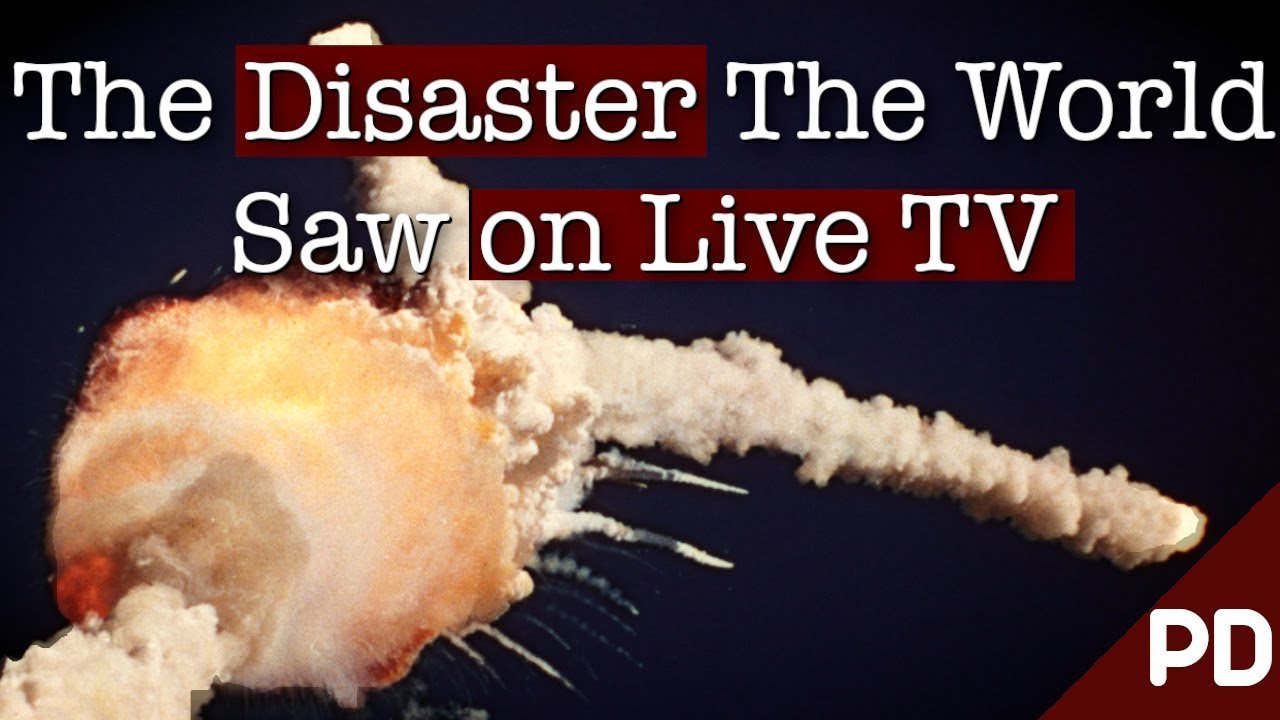
Challenger lifted off from Kennedy Space Center on January 28, 1986 and broke apart 73 seconds into flight. The documentary traces the history of the shuttle and the flawed solid rocket booster joint O-ring seals, the cold-weather launch decision, and the Rogers Commission findings. It also covers the recovery effort and the concept of normalized deviance.
Full written account
Space Shuttle Challenger broke apart 73 seconds into its flight on January 28, 1986, about 46,000 feet above the Atlantic Ocean. It lifted off from Kennedy Space Center at 11:38 a.m., carrying Christa McAuliffe, the first participant of the Teacher in Space Program. The video gives the crew's fate as uncertain in its exact timing, but the crew compartment fell for approximately 2 minutes and 45 seconds before hitting the ocean.
Background: a flawed joint
Each solid rocket booster (SRB), built by Morton Thiokol in Utah, was assembled from sections joined at the Kennedy Space Center by a tang and clevis joint. Two rubber O-ring seals ran around the circumference of each joint and contained the hot gases from the motor. The seal was originally rated critical but redundant, on the idea that the secondary O-ring could be relied on if the primary failed.
Issues were found in the early 1970s: the O-ring would not always compress and would instead extrude. A 1977 test found the joint could bend away from itself, weakening the compression, and lower temperatures made it worse. NASA engineers requested a redesign with a shim, sent a second memo, and a 1980 test again showed more joint movement than predicted. NASA replied that the joint had been sufficiently verified.
O-ring erosion was noticed on the second shuttle mission, and again in 1983 and 1984, when soot blew past the primary O-ring. After 1982 the redundant designation was removed, yet launches continued. STS 51-C in January 1985, the coldest launch to that date, had an estimated O-ring temperature of 53°F, and both boosters showed erosion and blowby. Morton Thiokol began a case redesign, but the original design stayed in use until it was ready.
The decision to launch
The mission had been delayed several times. The air temperature was forecast to fall to 18°F the night before the January 28 launch. In a conference call, Morton Thiokol's Robert Lund and Joe Kilminster advised against launching below 50°F. Lund later said they had been trying to prove to Marshall that it wouldn't work, and could not prove the motor wouldn't work. After a 30-minute break, Morton Thiokol came back and gave final approval.
Overnight lows on the boosters were recorded at 25°F on the left and 8°F on the right. Ice formed on the fixed service structure, and an hour's delay was ordered. Air temperature at launch was around 36°F.
The flight
- Liftoff: a gray puff of smoke appeared around the right booster's joint, then stopped as solid fuel temporarily sealed the gap.
- 36 seconds: severe wind shear; the shuttle's corrections dislodged the fuel plug.
- About 58 seconds: a plume of smoke reappeared at the same spot.
- 64 seconds: a hole burned into the external tank, leaking liquid hydrogen.
- 68 seconds: the call to throttle up.
- 73 seconds: the external tank's dome failed and the vehicle began to break up.
The load factor reached up to 20 G. The crew compartment stayed relatively intact. Recovery could not begin until 12:37 because of falling debris. The crew compartment was found on March 7, 1986, and the crew's remains were removed on April 4. Gregory Jarvis's body had floated away and was recovered just over a week later.
Investigation
The Presidential Commission on the Space Shuttle Challenger Accident, the Rogers Commission, was set up in February 1986, with Neil Armstrong as vice chairman. It held over 160 interviews. On February 11, Richard Feynman put an SRB O-ring sample in ice water during a televised hearing and showed it had no resilience at 32°F. His criticisms appeared in the report's Appendix F.
The video describes a culture shift from proving the shuttle was safe to proving it was not, and links it to sociologist Diane Vaughan's term normalization of deviance. The disaster led to a redesigned SRB joint with reduced tang rotation risk.
Questions this video answers
When did Challenger launch?
On January 28, 1986, at 11:38 a.m. from Kennedy Space Center.
When did Challenger break apart?
Challenger broke apart 73 seconds into its flight, about 46,000 feet above the Atlantic Ocean.
What caused the disaster?
The cause was the poor decision to launch in cold weather, which reduced the effectiveness of the solid rocket booster O-ring seal.
What did Richard Feynman demonstrate?
Richard Feynman placed an SRB O-ring sample in ice water during a televised hearing on February 11 and showed it had no resilience at 32 degrees F.
Who investigated the accident?
The presidential Commission on the Space Shuttle Challenger Accident, known as the Rogers Commission, chaired by William P. Rogers.
Explore related missions
Connected by the topic: Space Shuttle