Expedition 1: The First ISS Crew and the Start of Continuous Presence
The short version
Expedition 1 launched on October 31st, 2000 aboard a Soyuz spacecraft from Kazakhstan and docked with the International Space Station on November 2nd. Commander William Shepherd and cosmonauts Yuri Gidzenko and Sergei Krikalev stayed aboard for 136 days, working through a long checklist of problems in a partly ready station. When they left in March 2001 the next crew had already arrived, beginning the continuous human presence in space that has continued since.
Full written account
Expedition 1 launched on October 31st, 2000 aboard a Soyuz spacecraft from Kazakhstan and docked with the International Space Station on November 2nd. Three men floated through the hatch: Commander William Shepherd and cosmonauts Yuri Gidzenko and Sergei Krikalev. Since that day, according to the video's sources (NASA, Roscosmos and ISS program records), there has not been a moment when no human being was living in space.
A project of five space agencies
The station was a project of five space agencies led by NASA and Russia's space agency, with Europe, Japan and Canada. After the Cold War, building something together was both a scientific plan and a political one. Russia had spent years operating the Mir space station, and the United States had been planning its own station. Merging them meant sharing technology, money and responsibility between former rivals.
Building the outpost
Construction began in orbit on November 20th, 1998, when a Russian Proton rocket launched the first piece, a module called Zarya, meaning sunrise. It was built in Russia but paid for by the United States. Two weeks later the space shuttle Endeavour delivered the American module Unity, and its crew, with Russian cosmonaut Sergei Krikalev among them, connected the two in orbit. A Russian service module called Zvezda arrived in July 2000, providing living quarters and life support.
The first residents
The crew was chosen in 1999. Shepherd was a former Navy SEAL and a veteran astronaut. Krikalev was already a legend: in 1991 he had been aboard the Soviet space station Mir when the Soviet Union dissolved, and his return home was delayed for months by politics and money. He ended up spending 311 days in space.
Life aboard a partly ready station
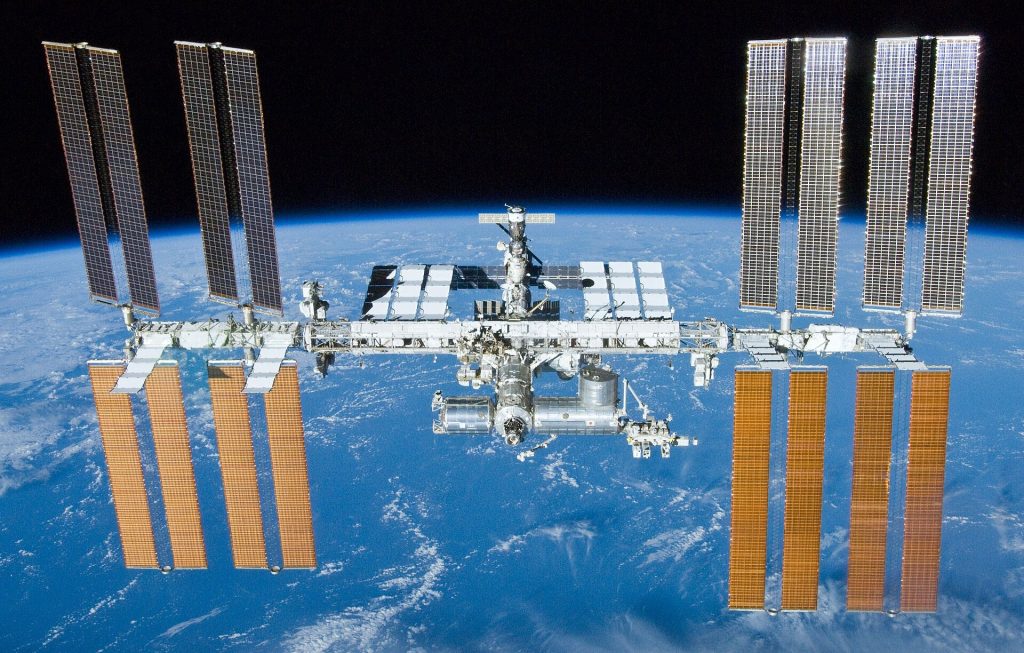
The station they entered had two modules with power, life support and a computer system, but little else: no laboratory, no solar arrays of the size they would eventually have, and not much space. They spent their time getting systems working, installing equipment and learning how to live there.
In orbit, Shepherd asked that the station be called Alpha, a name he preferred over the formal designation. The mission's radio call sign became Alpha, which both countries accepted for the length of the expedition.
Their work was a long checklist of problems. Computers needed fixes, and equipment arriving on shuttle flights had to be unpacked, tested and installed. A shuttle brought the first big power-generating solar arrays in December 2000, and the crew helped install them. They also lived with Russian and American approaches to engineering side by side.
Handover
The crew stayed aboard for 136 days, longer than any station crew in the American program until then. When they left in March 2001, the next crew had already arrived. That handover has continued without interruption, with crews of six or seven living aboard for months at a time. Hundreds of people from more than 20 countries have lived and worked there, and the station has grown to the size of a football field. It has housed thousands of experiments in fields from medicine to material science to the study of how humans live in microgravity.
Questions this video answers
Who was on the first ISS crew?
Commander William Shepherd and Russian cosmonauts Yuri Gidzenko and Sergei Krikalev.
When did Expedition 1 launch and dock?
It launched on October 31st, 2000 aboard a Soyuz from Kazakhstan and docked with the station on November 2nd.
How long did Expedition 1 stay aboard?
136 days, longer than any station crew in the American program until then.
Why was the station called Alpha?
Shepherd asked that it be called Alpha, a name he preferred over the formal designation, and the mission's radio call sign became Alpha.
What did the station have when they arrived?
Two modules with power, life support and a computer system, but no laboratory and no solar arrays of the size it would eventually have.
Explore related missions
Connected by the topic: International Space Station